Supreme Court Warns ECI Over Bihar Voter List Clean-Up, Says Entire Process Could Be Scrapped if Found Illegal
The Supreme Court made it clear that it will not issue a partial or limited opinion on the Bihar SIR, stating that its final ruling will apply to all SIR exercises carried out across the country.

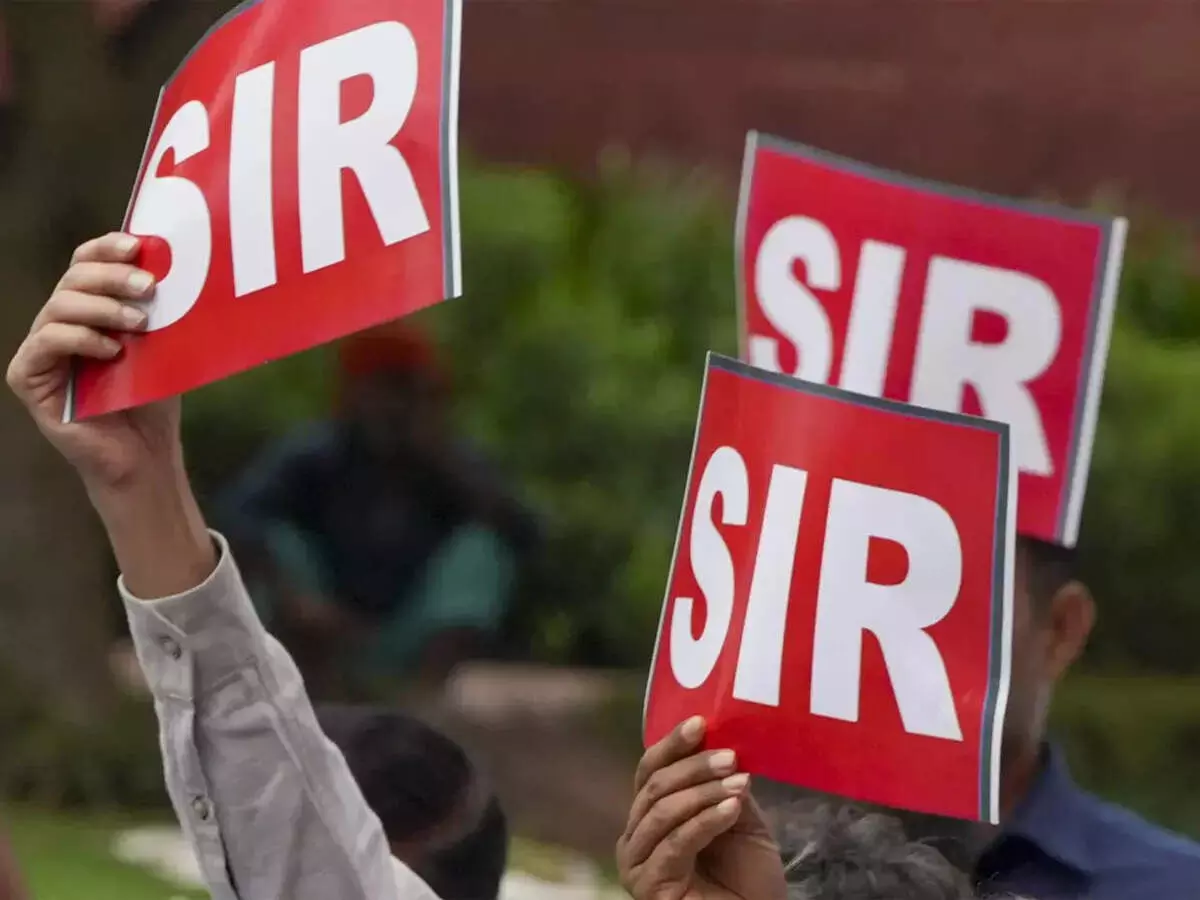
The Supreme Court on Monday said it may scrap the entire Special Intensive Revision (SIR) process of electoral rolls in Bihar if any illegality is found in the methodology adopted by the Election Commission of India (ECI). The court emphasized that its final verdict will not be limited to Bihar alone but will apply to SIR exercises conducted across the country.
A bench comprising Justices Surya Kant and Joymalya Bagchi made it clear that it will not issue any interim or piecemeal opinion. Instead, the court will give a comprehensive ruling after hearing final arguments, which it scheduled for October 7. The judges also noted that they presume the ECI, being a constitutional authority, is acting in accordance with the law and following all mandatory procedures during the SIR process.
The case stems from growing concerns raised by opposition parties in Bihar, who allege that the SIR exercise is being used to unfairly delete names of genuine voters. The controversy intensified after the ECI revealed on August 18 that 65 lakh names had been removed from the draft electoral rolls in the state as part of the revision process.
One of the key points of contention is the exclusion of Aadhaar as an accepted document for adding names to the electoral rolls. Opposition leaders argue that Aadhaar is one of the most widely held forms of identification and that rejecting it has led to large-scale, unjust deletions.
Responding to these concerns, the Supreme Court had earlier intervened on September 8, directing that Aadhaar be accepted as the twelfth valid document for voter registration during the ongoing SIR. This came after reports that election officials were refusing to accept Aadhaar, despite previous instructions.
While the ECI had expressed reservations—stating that Aadhaar cannot establish citizenship—the court maintained that Aadhaar remains a valid proof of identity and residence.
With the Bihar elections approaching, the outcome of this case could have far-reaching implications for voter registration processes nationwide.