Tamil Nadu Seat-Sharing Row: BJP Cadre Question AIADMK Deal, Leadership Under Fire
Grassroots discontent grows as BJP faces criticism over allocation of ‘unwinnable’ seats in AIADMK alliance; questions raised on state and central leadership decisions.

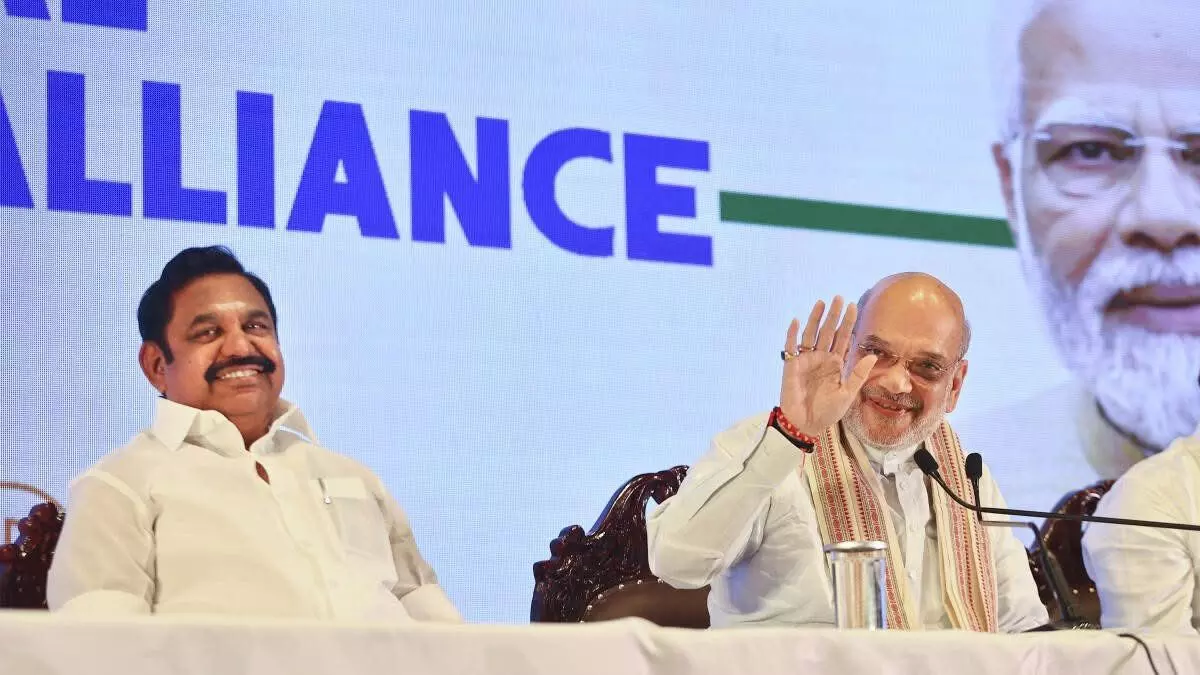
The Tamil Nadu political arena has always treated seat-sharing as a game of chess. This time, the alliance agreement between the AIADMK and the BJP has shocked not only political analysts but also the party’s own cadre. A strong sense of resentment is emerging among grassroots workers, who feel that the BJP has been reduced to a “deceived pawn.” There is widespread talk in political circles that, out of the 27 constituencies allocated to the BJP by Edappadi K. Palaniswami, nearly 20 offer little to no chance of victory for the party. Questions are now being raised whether a seasoned strategist like Amit Shah himself has been outmaneuvered by Edappadi’s local political calculations, with party workers increasingly viewing the current BJP leadership in Tamil Nadu as weak.
In particular, sharp criticism is being directed at key BJP faces in Tamil Nadu, including Nainar Nagendran and Tamilisai Soundararajan. It is being alleged that both leaders, during the seat-sharing negotiations, conceded too much to the AIADMK instead of safeguarding the party’s interests. There is growing frustration over whether Nainar Nagendran, who holds influence in the southern districts, failed to identify winnable constituencies or knowingly let them slip away. Similarly, despite her experience, Tamilisai Soundararajan’s presence in the negotiation team has come under scrutiny, with criticism that she failed to secure constituencies with viable winning prospects from the AIADMK. Allegations suggest that both leaders prioritized short-term compromise over the party’s long-term future.
A large section of party workers believes the situation would have been entirely different had Annamalai been at the helm or actively involved in the field. Known for his assertive and uncompromising political style, Annamalai, they argue, would have forcefully negotiated with Edappadi K. Palaniswami and secured constituencies favorable to the BJP. He would have presented a list of around 70 winnable constituencies and pushed aggressively, citing areas where the BJP had recorded higher vote shares than its ally. However, in his absence, it is perceived that Edappadi capitalized on the leadership vacuum and allocated challenging constituencies to the BJP.
A closer look at the constituencies allotted to the BJP reveals that many of them have long been strongholds of the DMK or the AIADMK. Several of these areas have significant minority populations or lack even a basic organizational structure for the BJP. Observers believe that Edappadi K. Palaniswami deliberately assigned such constituencies, effectively sidelining the BJP in the political contest. Difficult seats like Tiruchirappalli West and Ottanchathiram, which the AIADMK avoided, have reportedly been passed on to alliance partners, including the BJP, under the guise of coalition dharma. Political observers interpret this as part of Edappadi’s “master plan.” Criticism is now being directed at BJP’s central representatives who signed off on the deal without fully grasping these dynamics.
Even senior observers such as Piyush Goyal are believed to have misread the ground realities in Tamil Nadu, relying heavily on reports from local leaders. This episode highlights the difficulty of assessing Tamil Nadu politics from Delhi. While there is debate over whether leaders like Amit Shah underestimated the BJP’s actual strength in the state or conceded seats due to dependency on the AIADMK, the immediate impact has been a decline in morale among party workers. Many now feel that campaigning in constituencies with negligible chances of victory is futile.
Overall, this electoral episode has served as a major lesson for the BJP. It underscores that relying solely on top-level relationships is insufficient and that strong grassroots leadership is crucial for successful alliance negotiations. The absence of a figure like Annamalai has set the party back. While questions remain over how leaders like Nainar Nagendran and Tamilisai Soundararajan will respond to mounting criticism, the BJP, in this instance, appears to have been outplayed by Edappadi’s political strategy. The growing discontent among party workers could potentially reflect in the election results.