The Judiciary on Trial: Justice Varma Case and the Fragility of In-House Mechanisms in India
The Justice Varma case sparks debate on judicial accountability, transparency, and constitutional checks and balances in India, as the Supreme Court examines its in-house disciplinary mechanisms.

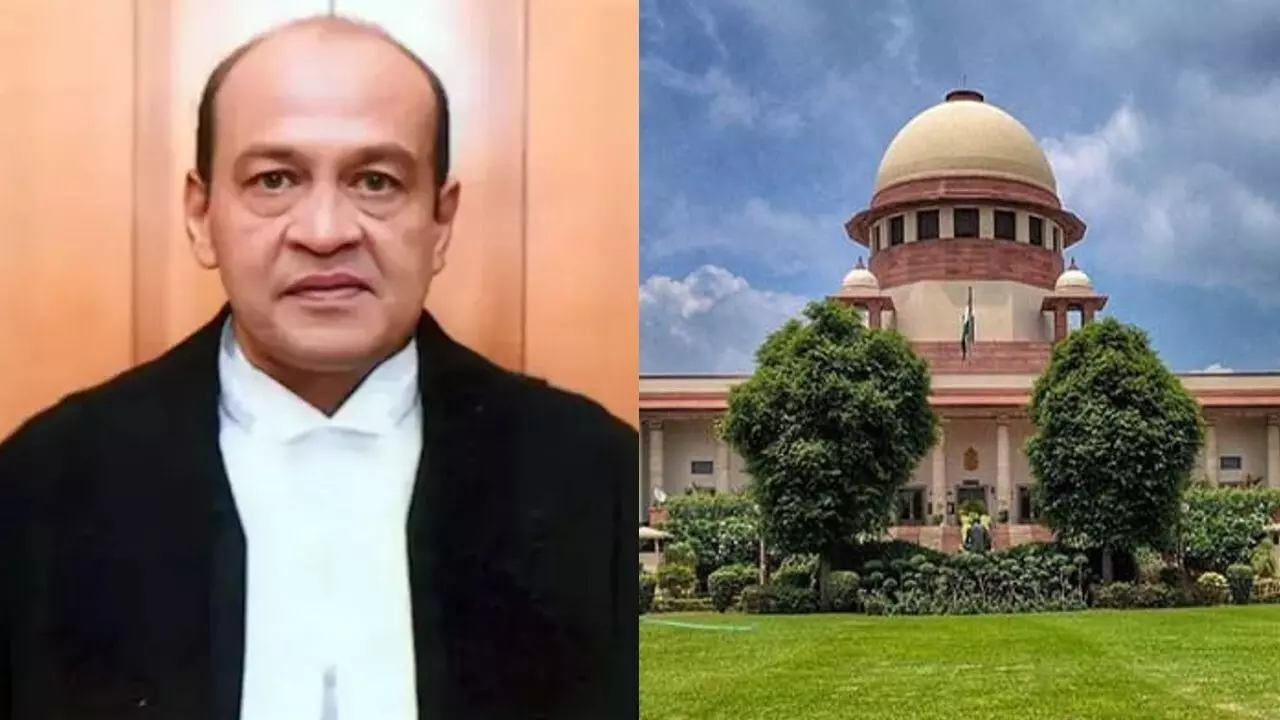
The recent developments surrounding Justice Yashwant Varma have sparked a storm of debate within India’s legal and constitutional circles. What began as an internal investigation into the conduct of a sitting High Court judge has now evolved into a full-blown constitutional dilemma, forcing the Supreme Court of India to examine the limits of its own in-house disciplinary mechanisms. The incident not only highlights questions of judicial accountability but also probes the very architecture of India’s constitutional checks and balances.
Justice Yashwant Varma, formerly a judge of the Delhi High Court and later transferred to the Allahabad High Court, became the subject of a rare in-house inquiry initiated by the then Chief Justice of India (CJI), Sanjiv Khanna. The probe was set into motion following the discovery of large amounts of burnt cash in his official residence after a fire incident. In accordance with the Supreme Court’s 1999 in-house procedure, a three-judge panel was constituted to inquire into the matter. The panel reportedly found sufficient evidence of “serious misconduct” and submitted its findings to the CJI, who then recommended initiation of impeachment proceedings against Justice Varma to the President of India and the Prime Minister.
However, rather than accepting the findings and allowing Parliament to carry forward the process, Justice Varma challenged the legality of the entire in-house procedure before the Supreme Court itself. The challenge argued that the internal mechanism violates the constitutional framework outlined in Article 124(4) and Article 217 read with the Judges Inquiry Act, 1968. His petition raised concerns about the lack of transparency, absence of natural justice, and non-adherence to procedural safeguards usually available in quasi-judicial proceedings.
The Supreme Court’s reaction was sharp. A bench comprising Justices Dipankar Datta and A. G. Masih grilled Justice Varma’s counsel on why he chose to participate in the inquiry if he believed the process was unconstitutional. The bench noted, “Your conduct does not inspire confidence,” and added that “the CJI is not a post office.” This comment was particularly significant—it reasserted the idea that the Chief Justice of India bears responsibility not merely for forwarding information but for exercising judgment in safeguarding the credibility of the judiciary.
At the heart of the debate lies the nature of the in-house procedure, a framework not found in any statute or Constitution but formulated through a 1997 Full Court resolution of the Supreme Court, and officially documented in 1999. Its purpose is to maintain the dignity and integrity of the judiciary while avoiding premature and often politically motivated public controversies. The procedure allows the CJI to initiate preliminary fact-finding inquiries into allegations against judges and, based on the findings, make further recommendations. However, since it is purely administrative and lacks any statutory or constitutional backing, its validity and scope remain ambiguous.
The constitutional provisions relating to the removal of High Court and Supreme Court judges are explicitly outlined in Article 124(4) and Article 217(1)(b) of the Indian Constitution. These provisions mandate that a judge can only be removed by the President following a motion passed by both Houses of Parliament by a special majority on grounds of “proved misbehaviour or incapacity.” The Judges Inquiry Act, 1968, further outlines the procedure for investigation and presentation of evidence in such cases, including the establishment of a three-member inquiry committee comprising a Supreme Court judge, a Chief Justice of a High Court, and an eminent jurist.
Justice Varma’s counsel, senior advocate Kapil Sibal, argued that the in-house mechanism bypassed these constitutional protections. He pointed out that no cross-examination was allowed, no opportunity was given to contest evidence, and that the findings were forwarded to the highest executive offices without adhering to the procedural safeguards available under the Judges Inquiry Act. Moreover, he contended that participation in an unconstitutional process should not be interpreted as consent, especially when the implications are as serious as impeachment.
However, the Supreme Court's bench did not appear to find merit in this defense. The judges remarked that having voluntarily submitted to the process, Justice Varma could not now seek to invalidate the same. In essence, the Court appeared to hold the view that procedural fairness does not override the principle of consistency and good faith conduct—especially from someone occupying a high judicial office. The Court also emphasized that the in-house procedure, while not statutory, is not unconstitutional per se, as it does not recommend removal but only advises the CJI and, through him, the executive branch.
This case brings into sharp relief the inherent tension between judicial independence and judicial accountability. On one hand, judges are insulated from political and external pressures to ensure fearless adjudication. On the other hand, in the absence of effective mechanisms for dealing with judicial misconduct, this independence can sometimes appear as immunity. India’s record on judicial impeachment is minimal—only one judge, Justice V. Ramaswami, faced impeachment proceedings in 1993, which ultimately failed in the Lok Sabha due to political maneuvering despite a damning inquiry committee report.
The Justice Varma case, thus, forces us to confront a critical question: are our existing mechanisms adequate to deal with judicial misconduct while preserving the independence of the judiciary? The lack of statutory or constitutional status for the in-house mechanism makes it susceptible to both misuse and legal challenge. Yet, the cumbersome process of impeachment under Article 124(4) makes it nearly impossible to hold judges accountable through Parliament alone. This gap creates a grey zone, where integrity may falter but constitutional remedies are impractical or unavailable.
Furthermore, the public image of the judiciary suffers when allegations such as those against Justice Varma are not dealt with decisively. The legitimacy of judicial authority stems not only from constitutional provisions but from public trust. When mechanisms designed to uphold this trust are challenged from within the institution, the entire edifice of rule of law risks being shaken.
What the Supreme Court ultimately decides in this case will have lasting implications. If the Court upholds the validity of the in-house procedure, it will solidify the role of the CJI and the judiciary in self-regulation. If it strikes it down or limits its applicability, it may necessitate a legislative rethink on more robust statutory mechanisms for judicial accountability. Either way, the judgment must aim to reinforce the delicate balance between fairness to judges and fidelity to public interest.
At the end of day, the Justice Varma case is more than an internal administrative issue. It is a litmus test for how the Indian judiciary chooses to hold itself accountable, how seriously it treats misconduct within its ranks, and whether it can adapt institutional practices to remain credible and constitutional in the eyes of the nation it serves. As the Supreme Court reserves its verdict, the eyes of the legal fraternity and the public remain firmly fixed on the outcome—not just to determine Justice Varma’s fate, but to gauge the integrity and resilience of India’s judicial system.