The Sikkim Lesson: Why Bhutan Stayed Calm While South Asia Burned
Refugee expulsions, restrictive citizenship laws, and cultural engineering insulated the Wangchuck monarchy from the volatility destabilizing Nepal, Sri Lanka, Myanmar, and Bangladesh.

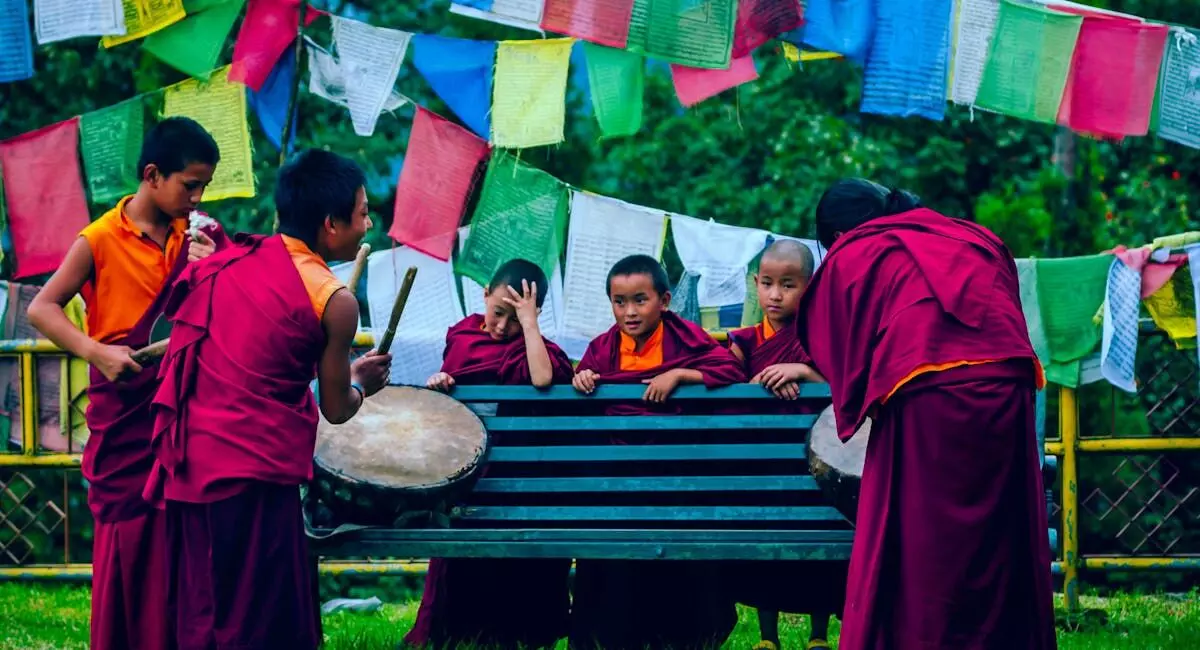
While Myanmar, Sri Lanka, Bangladesh, and Nepal convulse under crises of legitimacy, ethnic conflict, and economic fragility, Bhutan appears unusually calm. This paper argues that Bhutan’s stability is not accidental but the product of deliberate authoritarian strategies adopted after the 1975 annexation of Sikkim by India. The Nepali refugee expulsions of the 1990s, restrictive citizenship policies, and an uncompromising Drukpa cultural project insulated Bhutan from the demographic and political pluralism destabilizing its neighbors. Calm in Bhutan is therefore a manufactured equilibrium, sustained by monarchy, exclusion, and strategic alignment with India.
1. Introduction
South Asia in the 2020s is marked by volatility:
Myanmar faces civil war after the 2021 coup.
Sri Lanka collapsed into debt and popular uprising in 2022.
Bangladesh oscillates between authoritarianism and mass protest.
Nepal confronts party fragmentation and youth-driven rebellion in 2025.
Against this backdrop, Bhutan remains an outlier of calm. This essay explores why.
2. The Sikkim Shock (1975)
In 1975, India annexed Sikkim after protests by its Nepali-speaking majority undermined the monarchy.
For Bhutan, a fellow Himalayan monarchy with a significant Nepali-speaking minority, the message was existential: demographics can dethrone kings.
The Wangchuck monarchy interpreted Sikkim’s fate as a warning and moved to prevent any similar challenge.
3. Bhutan’s Response: Citizenship and Identity Engineering
3.1 The 1985 Citizenship Act
Introduced stringent requirements for citizenship documentation.
Many Lhotshampas (Nepali-origin settlers) failed to meet these criteria and were reclassified as “illegal immigrants.”
3.2 Refugee Expulsions (1990s)
Over 100,000 Lhotshampas were expelled to camps in Nepal.
Official justification: protection of Bhutanese culture.
Real logic: elimination of a potential demographic majority that could destabilize the monarchy, as in Sikkim.
3.3 Driglam Namzha Cultural Code
Imposed Drukpa dress, language (Dzongkha), and etiquette nationwide.
Institutionalized Drukpa Buddhist supremacy over plural identities.
4. Manufactured Stability
4.1 Monarchy as Anchor
The monarchy retained supreme legitimacy by presenting itself as guardian of “Gross National Happiness,” while quietly maintaining absolute control over identity and security.
4.2 Controlled Democratization
Bhutan introduced parliamentary democracy in 2008, but within strict limits: the king remains final arbiter, and opposition operates within boundaries set by the palace.
4.3 Strategic Compliance with India
Unlike Nepal, Bhutan does not oscillate between Delhi and Beijing. It accepts India’s primacy in exchange for security guarantees and economic support. This alignment eliminates the external rivalries that destabilize Kathmandu, Colombo, or Dhaka.
5. Regional Contrast
Country Source of Instability Contrast with Bhutan
Myanmar Ethnic insurgency, military repression Bhutan preemptively removed its minority “threat.”
Sri Lanka Populist debt, ethnic violence Bhutan avoided external debt and ethnic pluralism.
Bangladesh Polarised parties, street violence Bhutan limits political competition.
Nepal Party fragmentation, ethnic demands Bhutan expelled potential challengers, codified cultural dominance.
6. Deep Insight: Calm at a Cost
Bhutan’s stability is a manufactured calm:
Paid for by the suffering of expelled refugees.
Secured by narrowing citizenship to a single identity.
Reinforced by monarchy as a permanent anchor, not a negotiable institution.
Supported by India, which prefers a quiet Bhutan to another contested buffer.
7. Future Risks
Bhutan’s model buys calm, but not immunity:
Youth and modernisation: educated Bhutanese may demand more genuine democracy.
Climate vulnerability: as a Himalayan state, Bhutan faces resource and migration pressures.
China factor: growing border tensions could test Bhutan’s strategy of quiet India alignment.
The “million-dollar question” of why Bhutan remains calm while its neighbours burn is answered through the Sikkim Lesson: Bhutan learned that unchecked pluralism can destroy monarchies. Its solution was exclusion, preemption, and tight control. The price was high — the forced exile of tens of thousands — but the reward is visible stability today. Bhutan is not an exception to South Asia’s turbulence; it is a case where turbulence was suppressed before it could erupt.