The Silent Exodus: Assamese Migrant Deaths and the Paradox of Development
Zubeen Garg’s death dominates public grief, while fatalities of youth at distant worksites expose fragile foundations of Assam’s prosperity.

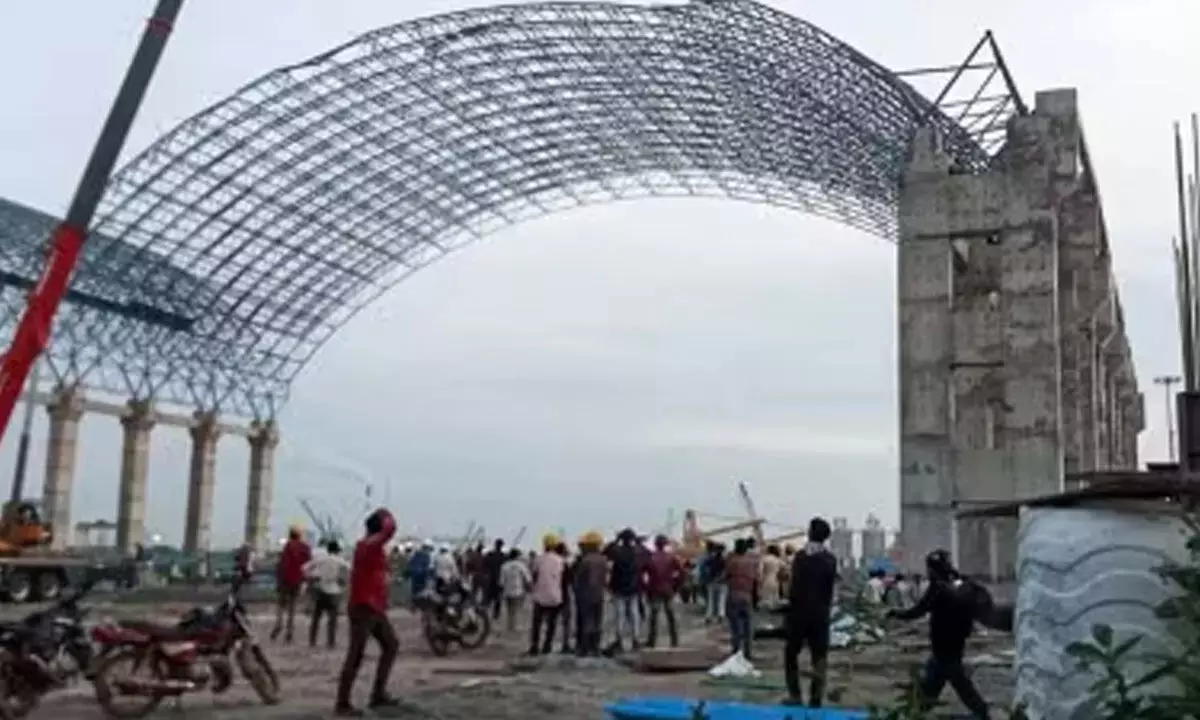
Assam, in recent days, has lived through contrasting tragedies. The passing of cultural icon Zubeen Garg shook the state to its core, dominating media headlines, political debates, and public sentiment. At the same time, another tragedy unfolded quietly—the deaths of Assamese youth at distant worksites: 9 in a power transmission project accident in Tamil Nadu. These losses, though equally grave, passed with muted response, barely registering in Assam’s collective consciousness.
This contrast is not accidental—it reveals the layered paradox of Assam’s socio-political and economic life.
Development: Rich, Richer, Richest
Assam today showcases an expanding architecture of welfare and development. Schemes like Orunodoi, Skill Development Missions, Mission Basundhara, and countless livelihood initiatives are presented as markers of progress. On paper, Assam appears to be on a steady trajectory of growth—rich, richer, richest in terms of welfare commitments, budgetary outlays, and policy announcements.
Yet, beneath this surface prosperity lies a different reality. The fact that thousands of Assamese youth continue to migrate to states as far as Tamil Nadu, Karnataka, and Kerala for work in construction sites, factories, and infrastructure projects tells a story of economic compulsion, not opportunity. The paradox is stark: while Assam speaks the language of welfare and empowerment, its youth build the infrastructures of other states, often at the cost of their lives.
The Migration Paradox
Migration from Assam is no longer an exception; it is a recurring pattern. Each tragedy—from the Tamil Nadu power project to Manipur’s landslides—underscores how deeply entrenched this phenomenon has become. Migration is not driven by adventure or aspiration, but by the absence of local opportunity.
These repeated deaths act as grim markers of the structural gaps in Assam’s development:
Social Welfare without Anchoring – Schemes provide subsidies but do not create stable employment.
Education without Absorption – An educated youth population struggles against limited industrial and service-sector jobs.
Development without Retention – The state develops infrastructure, but fails to retain its human capital.
Social and Political Psychology
The difference in how Assam responded to Zubeen Garg’s death versus the migrant tragedies reflects the state’s social psychology. Icons become symbols of identity; their loss is shared loudly. Migrant workers, by contrast, embody uncomfortable truths—poverty, unemployment, and marginalisation. Mourning them would mean confronting Assam’s structural failures. Hence, their deaths pass silently, absorbed privately within families, but never entering the public-political discourse.
The Fragile Base of Prosperity
Assam’s situation can be described as a paradox of “rich, richer, richest development”:
Rich in welfare announcements,
Richer in symbolic policies,
Richest in rhetoric of growth.
But this layered richness is not deeply rooted. It masks a fragile economic base where youth are compelled to seek dignity and livelihood elsewhere. The repeated tragedies at worksites outside Assam are reminders that beneath the glitter of development, there remains an unresolved question: why does Assam’s prosperity fail to hold its own children?
A Mirror for Assam
The deaths of Assamese workers in Tamil Nadu is not isolated accidents they are mirrors. They reflect the distance between Assam’s visible prosperity and its invisible vulnerabilities. They reveal how social mourning is selective, how politics gravitates to symbolism over substance, and how economics pushes its youth outward even as development narratives grow richer.
In this mirror, Assam must see itself clearly: a state where development is expanding, yet fragile; where cultural icons are celebrated, yet migrant workers remain forgotten; where welfare schemes multiply, yet tragedies of migration repeat. The task ahead is not to apportion blame, but to confront this paradox honestly—if Assam wishes to transform its “rich, richer, richest development” into development that truly anchors its people.