The Silent Sonowal: When Discipline Turns into Political Isolation
Once the moral compass of Assamese politics, Sonowal’s restraint now risks being mistaken for retreat — a meditation on power, fatigue, and relevance in the age of Himanta Biswa Sarma.

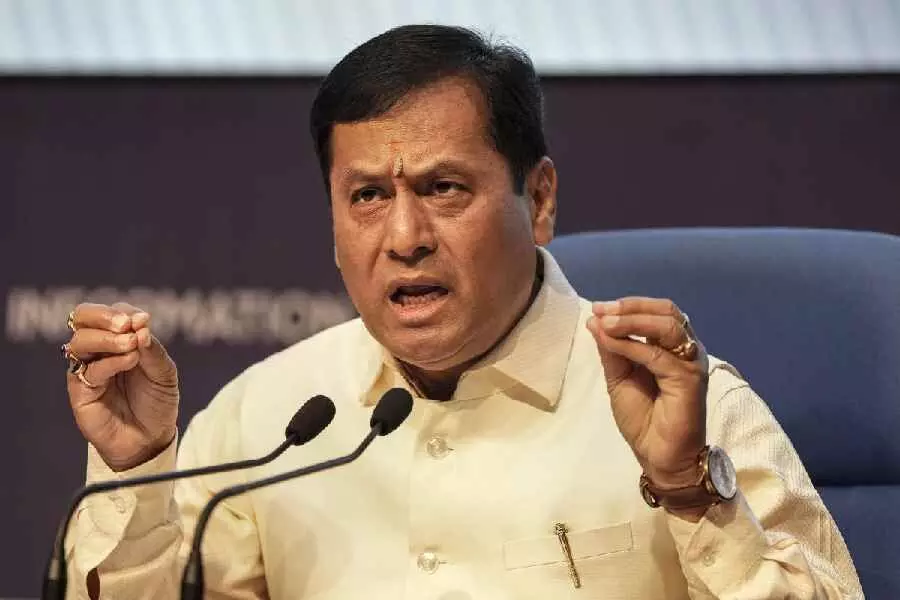
In an Assam that thrives on loud rhetoric, Himanta Biswa Sarma’s restless visibility stands in stark contrast to the stoic quietness of Sarbananda Sonowal — former Chief Minister, now Union Minister. Once hailed as the embodiment of Assamese integrity and discipline, Sonowal’s silence has become a subject of unease within BJP circles and among political observers.
Is this silence a residue of AASU’s discipline, or the defence mechanism of a man disillusioned by power? A shield against political warfare, or the exhaustion of someone who has simply seen too much?
The answer lies somewhere between moral restraint, political trauma and strategic caution.
Sarbananda Sonowal’s political instincts were forged during his years in the All Assam Students’ Union (AASU), where restraint was virtue and silence a symbol of inner strength. In turbulent times, control was leadership, not passivity.
This early conditioning made him a figure of discipline, sincerity and ethical conduct. Even after aligning with the BJP, Sonowal carried the belief that politics must rest on character, not choreography. But as the BJP culture hardened around aggression and optics, his AASU moral grammar began to feel out of place.
Sonowal entered office in 2016 as the champion of jati-mati-bheti — the Assamese promise of dignity, identity and protection. But power tested him brutally.
The Amchang eviction drive, where tribal families were displaced; the AIIMS protest, where a young tribal man died in police firing; the anti-CAA unrest, where five Assamese youths were killed — each scarred his image.
The “clean CM” became the silent witness to state violence. From that point, his silence changed tone — no longer dignified, it became defensive. He had touched real power, and it scorched.
Sarma’s dynamic, media-driven, command-style politics pushed Sonowal’s meditative leadership into the shadows. Sarma filled headlines; Sonowal vanished into rituals, temple ceremonies, and devotional speeches — a borrowed bhaktibad, a visibility without engagement.
Inside the BJP, the contrast was stark: Sarma inspired fear and following; Sonowal inspired respect, but no momentum. The moral man was overtaken by the master of optics.
After 2021, Sonowal withdrew into a ring of loyal bureaucrats, old AASU confidants and devotional admirers. They polished his image, but insulated him from ground realities. They guarded his honour, but at the cost of his relevance.
He now lives in a zone of ceremonial respect — neither interfering nor intervening. A political retirement without declaration. Harmless. Revered. Irrelevant.
Whispers in Delhi and Dispur hint that Prime Minister Modi has gently nudged Sonowal to “step forward” as Assam churns with allegations of corruption and fatigue under HBS’s singular dominance.
But Sonowal hesitates.
Delhi never commands; it observes. It waits for initiative. Sonowal’s silence, meant as restraint, risks being read as lack of resolve.
It is not Himanta Biswa Sarma the man that Sonowal fears — it is the machinery he has built: a network of loyalty, money, media and intimidation. Any move against it could trigger leaks, whispers, character assassination — the invisible warfare of Indian politics.
So Sonowal waits. Not for orders, but for the right fracture in time. He is betting on exhaustion — that one day, Assam will tire of aggression and rediscover value in restraint. It is patience, but in politics, patience is often mistaken for paralysis.
Assam stands on edge — ethnic embers glowing, corruption murmurs rising, BJP cadres restless. In this volatile air, Sonowal’s silence is being recast: once seen as virtue, now as abdication.
Grassroots workers whisper: “If Delhi wants change, why won’t Sonowal speak?”
In moments of moral crisis, his absence threatens the core of his identity — the clean conscience of Assamese politics.
With power experienced and abandoned, Sonowal now appears detached — neither seeking return, nor resisting withdrawal. Ritual presence, spiritual engagements, no appetite for combat.In psychological terms, he carries the fatigue of betrayal and burden — power’s post-script.
Sarbananda Sonowal remains a contradiction:
A moral man in an era of manipulators.A disciplined leader adrift in a culture of dominance.A silent witness to his own eclipse.
His silence is both armour and liability. If he does not break it soon, he may be remembered not as the leader who could have reclaimed Assam, but the saint who watched in silence.
In the whispers of Delhi and the murmurs of Dispur, one sentiment grows: Assam may still need Sarbananda Sonowal. But Sonowal may no longer need Assam.