Union Cabinet Approves Chandrayaan-4 Mission to Develop Technologies for Moon Landing and Return
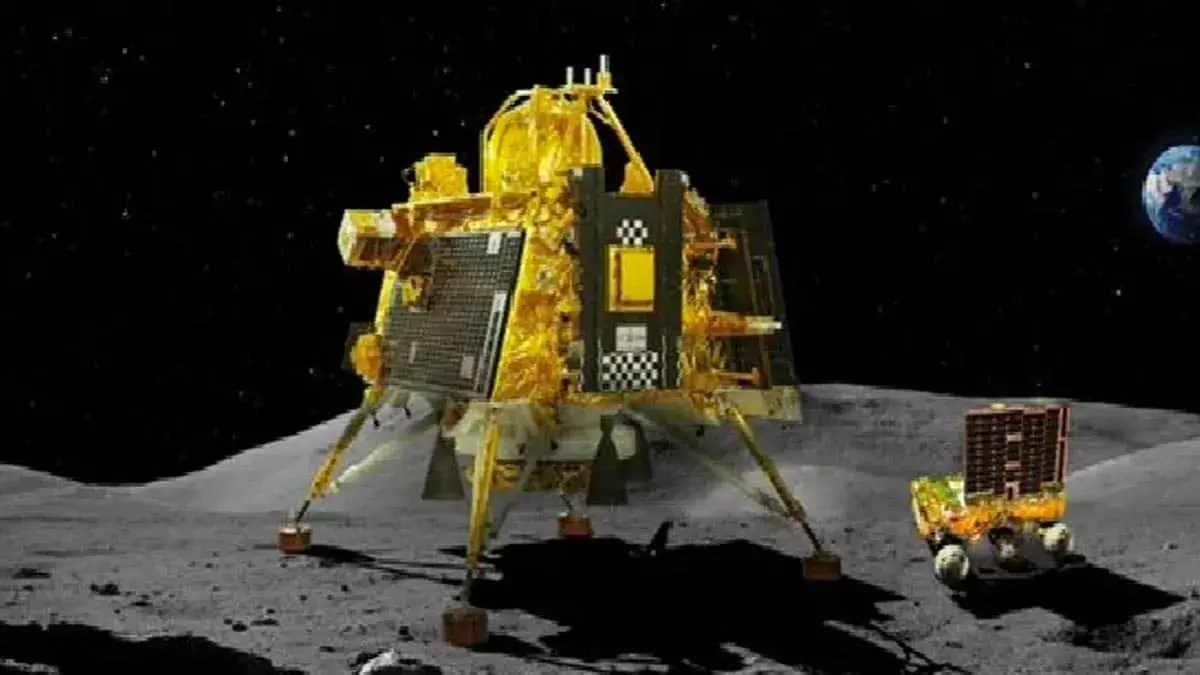
In a major leap for India’s space ambitions, the Union Cabinet chaired by Prime Minister Narendra Modi has approved the Chandrayaan-4 mission, aimed at developing and demonstrating technologies necessary for landing on the Moon and returning to Earth. The mission will focus on collecting lunar samples, bringing them back to Earth for analysis, and establishing the foundational technologies for future manned lunar missions, planned for the year 2040.
The Chandrayaan-4 mission marks the next critical step in India's growing space program following the success of Chandrayaan-3. Chandrayaan-3 achieved a soft landing on the Moon, positioning India among an elite group of nations capable of this feat. Now, with Chandrayaan-4, India will demonstrate the ability to not only land on the Moon but also return safely with lunar samples—a significant milestone in its quest for human space exploration.
According to the government’s announcement, the mission aligns with the broader vision for India’s space program, particularly during the Amrit Kaal, a period leading up to India’s centenary of independence. This vision includes ambitious plans like the establishment of an Indian Space Station (Bharatiya Antariksh Station) by 2035 and a manned landing on the Moon by 2040.
Key Technologies and Objectives
The Chandrayaan-4 mission will demonstrate major technological capabilities, such as docking and undocking, landing on the lunar surface, and safely returning to Earth. The collection and return of lunar samples will provide critical insights into the Moon’s composition, aiding future exploration efforts. These technologies are essential building blocks for India's future manned space missions.
ISRO (Indian Space Research Organisation) will lead the development of the spacecraft and launch vehicle, leveraging its proven expertise. The project will be completed within 36 months of approval, with significant participation from Indian industry and academia. Chandrayaan-4 will be a collaboration across sectors, generating substantial employment opportunities and technological advancements.
Government Support and Funding
The total cost for the Chandrayaan-4 mission is estimated at ₹2104.06 crore. This includes spacecraft development, two LVM3 launch vehicle missions, deep space network support, and specialized testing for design validation. The mission is expected to set the stage for more advanced space transportation systems, positioning India as a leader in space exploration technologies.
The government also emphasized the indigenization of critical technologies, ensuring that India becomes self-reliant in space technology development. The Chandrayaan-4 mission will pave the way for long-term scientific and economic benefits, including technology spin-offs to other sectors.
Vision for India's Space Future
The approval of Chandrayaan-4 is part of the Indian government's ambitious space roadmap, which envisions a thriving space program with both scientific and commercial applications. Alongside the Chandrayaan and Gaganyaan programs, India aims to develop an Indian Space Station and pursue deep-space exploration.
Significant efforts will be made to engage with academic institutions and the scientific community through science meets and workshops, furthering the educational and research opportunities in space science.
This historic mission will not only enhance India’s position in space exploration but also provide critical scientific data, ensuring that the country continues to push the boundaries of space research and technology.
With Chandrayaan-4, India edges closer to its goal of landing humans on the Moon, an achievement that could redefine the nation's role in the global space race.