UP to Launch India’s First Air-Shed Based Clean Air Programme in January 2026

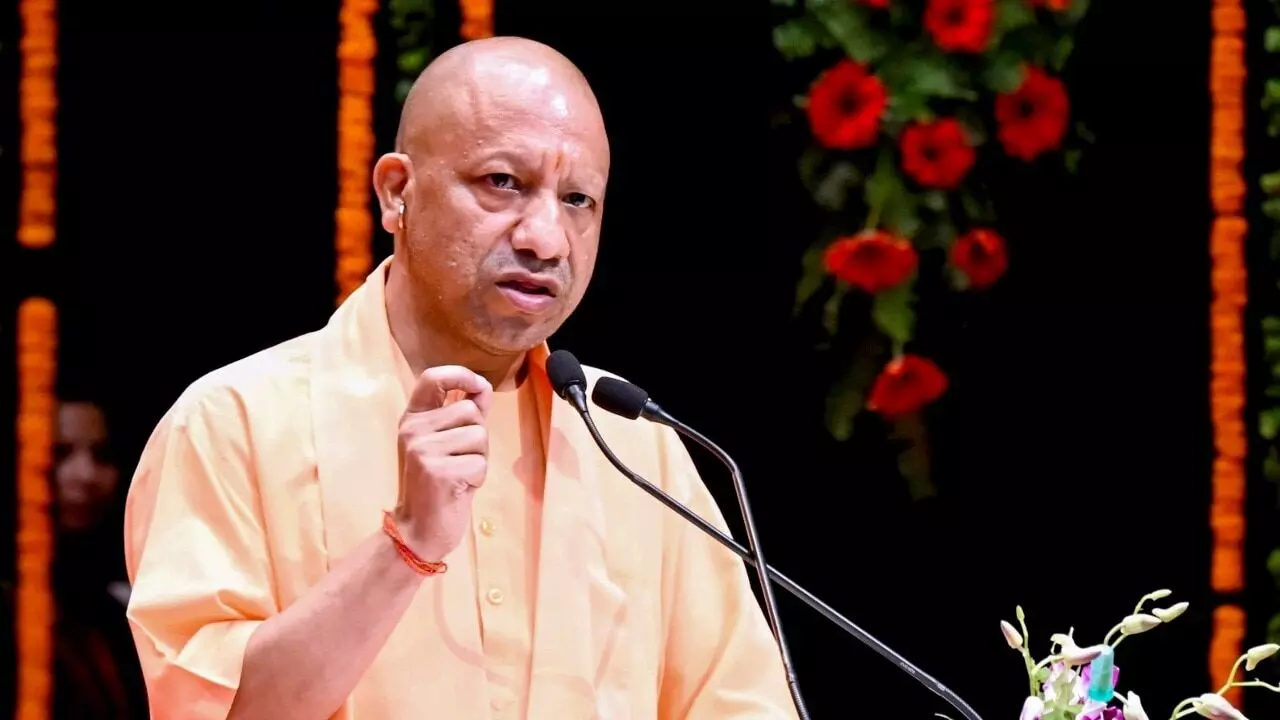
Chief Minister Yogi Adityanath will launch the Uttar Pradesh Clean Air Management Program (UPCAMP) in January 2026. The governing body of this project will be chaired by the Chief Secretary, while the Additional Chief Secretary will be nominated as a member.
The state government is implementing the project with support from the World Bank. The second meeting of the governing body of the UPCAMP Authority was recently held under the chairmanship of the Chief Secretary, with senior officials from the Department of Environment, Forest and Climate Change and other departments in attendance.
During the meeting, the Chief Secretary directed that updated, time-bound progress on all necessary steps related to project implementation be presented in the next meeting.
Earlier, on November 3, a successful project negotiation was held in New Delhi between the Department of Economic Affairs (DEA), the World Bank, and the state government. On December 10, the World Bank's Board of Directors formally approved the project.
The governing body was briefed in detail on the project structure, financing arrangements, and implementation preparations through the UPCAMP Authority, which has been constituted as a special purpose vehicle.
UPCAMP is India's first air-shed-based air quality management project, designed as a multi-sectoral programme targeting the major sources of air pollution in the Indo-Gangetic plains. The project is based on extensive scientific studies conducted by the World Bank in collaboration with reputed institutions such as IIT Kanpur, IIT Delhi, and the Norwegian Institute for Air Research (NILU).
The total outlay of UPCAMP is USD 304.66 million, which includes a loan of USD 299.66 million (approximately 46,188 crore yen) and a grant of USD 5 million. The project will be implemented in a phased manner over a six-year period from 2025 to 2031. It focuses on key sectors such as industry, transport, agriculture, road dust, waste management, and clean cooking, enabling a coordinated and effective strategy for emission reduction.
Under the project, clean cooking solutions will be provided to about 3.9 million households. Additionally, clean mobility will be promoted through the operation of 15,000 electric three-wheelers and 500 electric buses in Lucknow, Kanpur, Varanasi, and Gorakhpur, along with incentives for the replacement of 13,500 polluting heavy vehicles.
In the agriculture and livestock management sector, the project will promote nutrient use efficiency technologies. This includes the deployment of nitrogen monitoring systems in fields, strengthening laboratories of state agricultural universities, and improving livestock waste management through the standardized use of manure-based fertilizers and biogas slurry.
In the industrial sector, UPCAMP will encourage the adoption of resource-efficient brick manufacturing and tunnel kilns. Clean air management plans will be prepared for industrial clusters, and policy formulation and feasibility studies will be undertaken to facilitate the transition from mini boilers to common boiler facilities.
To achieve effective reductions in air pollution, the Uttar Pradesh government will enhance cooperation with neighboring states to address cross-border emissions, ensuring more cost-effective and impactful outcomes.