US, China to Reopen Military Communication Channels After Hegseth–Dong Talks
Defense Secretary Pete Hegseth says ties are “better than ever” following Trump–Xi meeting, even as Washington continues to warn Beijing over its assertive actions in the South China Sea and Taiwan Strait.

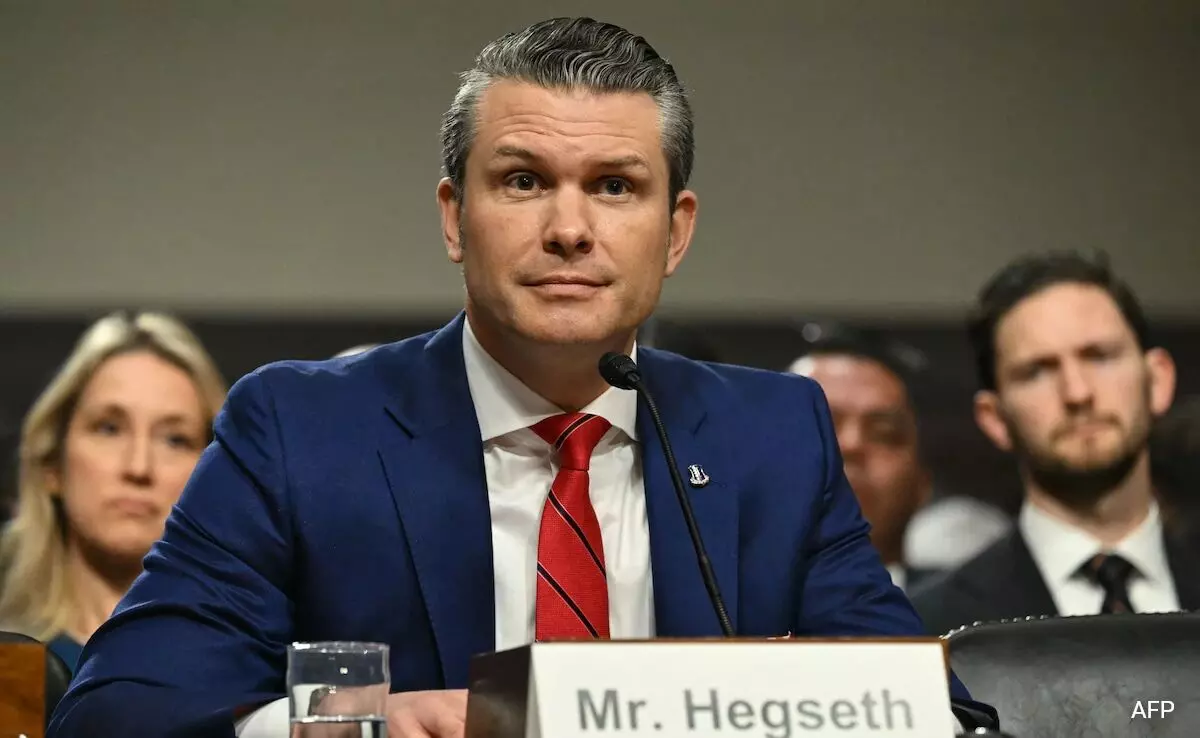
US Defense Secretary Pete Hegseth announced today that the United States and China will soon establish military-to-military communication channels, describing bilateral ties as “better than ever.”
The statement, shared on X, followed Hegseth’s meeting with Chinese Defense Minister Admiral Dong Jun on the sidelines of a regional security summit. The announcement came just hours after Hegseth delivered one of Washington’s sternest warnings yet to China over its actions in the South China Sea.
"I just spoke to President Trump, and we agree — the relationship between the United States and China has never been better. Following President Trump’s historic meeting with Chairman Xi in South Korea, I had an equally positive meeting with my counterpart, China’s Minister of National Defense Admiral Dong Jun in Malaysia. And we spoke again last night. The Admiral and I agree that peace, stability, and good relations are the best path for our two great and strong countries. As President Trump said, his historic “G2 meeting” set the tone for everlasting peace and success for the U.S. and China. The Department of War will do the same — peace through strength, mutual respect, and positive relations. Admiral Dong and I also agreed that we should set up military-to-military channels to deconflict and deescalate any problems that arise. We have more meetings on that coming soon. God bless both China and the USA!" Hegseth said in a post on X.
“I spoke with my Chinese counterpart late Saturday,” Hegseth said, noting that both sides agreed that “peace, stability, and good relations are the best path for our two great and strong countries.”
He also briefed President Donald Trump, emphasizing that their discussions reflected an unprecedentedly positive tone in US-China relations. Hegseth praised Trump’s recent meeting with Chinese President Xi Jinping in South Korea, saying it “set the tone for lasting peace and success” between the two nations. The conciliatory remarks marked a sharp shift from Hegseth’s earlier comments, in which he urged Southeast Asian countries to bolster maritime forces against China’s “destabilizing” activities.
During his visit to Malaysia on October 31, Hegseth expressed concern over China’s increasing military assertiveness around Taiwan and in the South China Sea. He stressed the importance of maintaining a balance of power in the Indo-Pacific, underscoring Washington’s commitment to defending its interests and supporting regional allies.
Admiral Dong, meanwhile, reiterated China’s long-standing position on Taiwan, urging the US to oppose any move toward independence. Despite this, Hegseth reaffirmed America’s commitment to Taiwan’s defense under existing US law.
China has ramped up its coercive measures in recent years, including frequent military drills, near-daily incursions into Taiwan’s airspace, and aggressive posturing in the Taiwan Strait. US intelligence reports indicate Xi Jinping has directed China’s military to prepare for a potential invasion of Taiwan by 2027.
Earlier this week, during a visit to Tokyo, Hegseth warned that China’s rapid military buildup poses a “real and urgent threat” to the Indo-Pacific. Praising Japan’s decision to strengthen its defense capabilities, he emphasized that the US-Japan alliance remains key to deterring Chinese aggression and maintaining regional stability.