When the State Studies Protest: A Citizen’s View on Amit Shah’s Directive
From JP to Shaheen Bagh, India’s history shows protests arise from grievance, not logistics. Can barricades ever substitute for listening?

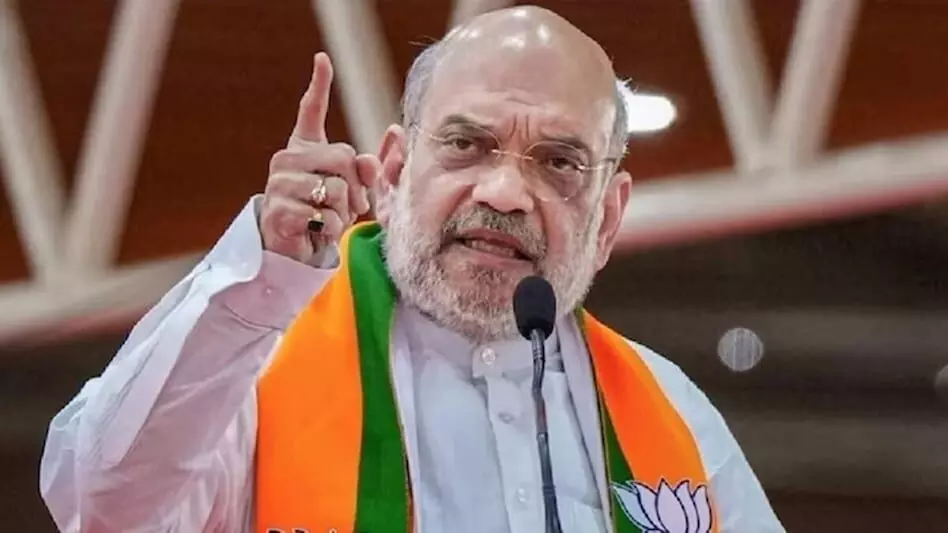
As a citizen, I read with interest — and some unease — the recent directive of Union Home Minister Amit Shah asking the Bureau of Police Research & Development to study India’s past agitations, their funding patterns, and to prepare a Standard Operating Procedure (SOP) for protest management. On paper, this appears routine: any state, mindful of internal security, will want to understand how mass movements form, spread, and sustain themselves.
Yet the timing cannot be ignored. In Nepal, Bangladesh, and Sri Lanka, recent unrest has unsettled governments, often triggered by unemployment, corruption, and widening inequality. At home, India too faces a dangerous widening gap between the haves and the have-nots. From my vantage point as a citizen, I cannot help but ask: is this directive simply an administrative exercise, or does it reflect an anxiety that India itself may be on the cusp of another mass mobilisation?
Lessons from the Past: Citizens in Motion
Our history shows that agitations are never merely disturbances; they are mirrors to the state of the republic.
The JP Movement (1974–75): What began with student anger against corruption in Bihar soon became a nationwide call for “Total Revolution.” Citizens saw in Jayaprakash Narayan a moral compass. The state, instead of addressing grievances, declared the Emergency. That moment still warns us: suppression can silence voices, but it cannot erase discontent.
The Assam Agitation (1979–85): For six years, ordinary Assamese, led by student bodies, braved bullets and barricades to demand recognition of their identity. It ended not through force but through the Assam Accord, reminding us that citizens’ endurance can outlast repression.
Anna Hazare’s Movement (2011–12): In Delhi’s Ramlila Maidan, middle-class citizens gathered around a fasting Gandhian, demanding accountability. They donated, volunteered, debated — proving that urban India too could be stirred by a moral cause.
CAA/NRC Protests (2019–20): Ordinary women at Shaheen Bagh, sitting day and night in the cold, turned into icons of resistance. These leaderless, citizen-driven occupations could not be easily co-opted.
Farmers’ Protest (2020–21): At Delhi’s borders, farmers built mini-republics with kitchens, schools, and clinics. Supported by diaspora funding, they stood firm until the laws were repealed. For a year, these encampments became a living reminder of citizen power.
In every case, ordinary people — not professional politicians — were at the heart of the agitation.
Why Now? The Timing Question
As a citizen, I see this directive against a wider backdrop:
1. Regional contagion: Youth in Kathmandu demanding jobs, protests in Dhaka over rising prices, Sri Lankan citizens still on the streets after economic collapse — all show how quickly inequality can turn into unrest. Can India’s rulers be unaware of this?
2. Domestic pressures: Unemployment, inflation, and corruption are not abstract. For many of us, they are daily realities. The widening gulf between those who flourish and those who are left behind is not sustainable.
3. Electoral cycles: With state elections due in 2026 and the national election in 2029, those in power know that even a single spark — like JP in 1974 or Anna Hazare in 2011 — can redraw the political map.
Thus, while officials may call it “routine,” citizens like me can see the anxiety beneath: the state senses the storm before it arrives.
The Limits of SOPs
Standard Operating Procedures may help the police manage traffic diversions, crowd control, or funding audits. They may disrupt the logistics of protest. But as a citizen, I know what they cannot do: they cannot address the reasons why people protest.
An unemployed graduate will not be pacified by barricades.
A farmer in debt will not be calmed by surveillance.
A woman demanding dignity will not be silenced by an SOP.
History teaches us that when structural grievances mount, policing can delay but not prevent eruptions. The Emergency proved that repression breeds long-term scars. The Farmers’ Protest proved that sustained citizen resolve can force governments to retreat.
Conclusion: Citizens and the State
The Home Ministry’s order is, in form, administrative. But in meaning, it is political. As a citizen, I see it as the state preparing its armour against possible dissent, rather than repairing the cracks in our social fabric.
Past agitations — from JP to Shaheen Bagh — remind us that protests are not threats to democracy, but its most raw expression. If inequality grows unchecked, if voices remain unheard, no SOP will suffice. The state may learn how to manage citizens on the streets; but citizens, too, learn how to endure, organise, and outlast.
The true lesson is simple: to prevent unrest, listen before you barricade.