A Moment Generations in the Making: India’s Historic Women’s World Cup Triumph
Explore India's victory in the ICC Women's Cricket World Cup and its impact on women's cricket globally.

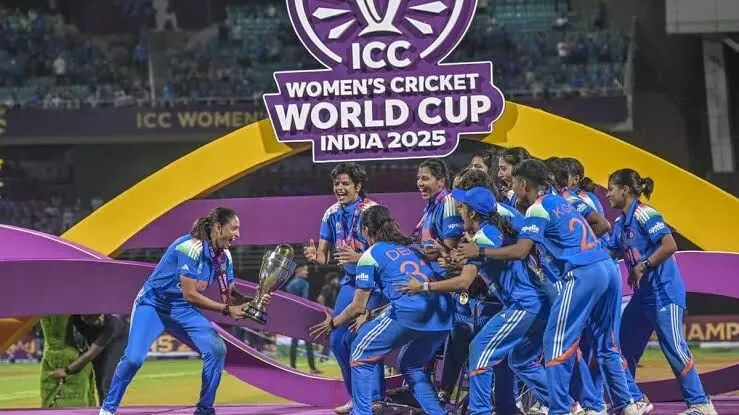
On a rain-delayed Sunday evening in Navi Mumbai, history wasn’t just made—it was reclaimed, rewritten, and rededicated to generations of women cricketers who dared to dream when the odds were stacked impossibly high. India’s 52-run victory over South Africa in the ICC Women’s Cricket World Cup final represents far more than a trophy lifted or a scoreboard settled. It marks the culmination of decades of struggle, the validation of countless sacrifices, and potentially, the dawn of a new era for women’s cricket globally.
The bare facts tell one story: Shafali Verma’s magnificent 87, Deepti Sharma’s match-winning five-wicket haul, a total of 298 runs defended on home soil. But the deeper narrative is one of perseverance against systematic neglect, of brilliance emerging despite inadequate infrastructure, of athletes who juggled multiple jobs just to afford the privilege of representing their country. When Captain Harmanpreet Kaur lifted that trophy, she wasn’t just celebrating for her team—she was honoring legends like Mithali Raj and Jhulan Goswami, pioneers who played with limited resources and even more limited recognition.
The significance of this victory cannot be overstated, particularly for a nation where cricket borders on religion yet women’s cricket has long existed in the shadows. India had come close twice before, reaching finals in 2005 and 2017 only to fall at the final hurdle. Those near-misses weren’t failures—they were foundations. Each tournament built muscle memory, each heartbreak forged resilience, and each generation passed the torch to the next with the unspoken promise: one day, we will get there.
What makes this triumph particularly remarkable is the context in which it arrived. The tournament witnessed unprecedented financial commitment to women’s cricket, with a prize pool of $13.88 million—nearly 300 percent higher than the previous World Cup and exceeding even the men’s 2023 edition. The winner’s purse of $6.58 million surpassed what the men received, a watershed moment for gender equity in sport. Combined with the BCCI’s additional cash prize of INR 51 crore for the team, this represents not just reward but respect—a tangible acknowledgment that women’s cricket is valuable, marketable, and worthy of investment.
The impact on the ground in India has been palpable. From Prime Minister Narendra Modi to President Droupadi Murmu, the nation’s leadership has embraced this victory as a transformative moment. But beyond the congratulatory messages from corridors of power, something more organic is happening. Young girls across the country are picking up cricket bats with renewed purpose. Parents who might have steered daughters toward “safer” pursuits are reconsidering. The pathway from playground to podium suddenly seems navigable rather than mythical.
Can this revolutionize women’s cricket? The answer is both already evident and still being written. The revolution has begun in the economics: the prize money signals that women’s cricket can generate revenue and deserves proportional investment. It continues in the visibility: this World Cup attracted unprecedented viewership, with stadiums packed and television ratings surging. The final itself was a master class in high-stakes cricket, with tension, brilliance, and drama that would satisfy any sporting connoisseur regardless of gender.
The tactical sophistication on display challenges any lingering prejudices about women’s cricket being a “softer” version of the men’s game. India’s successful chase of a record total against Australia in the semifinals—the highest successful chase in women’s ODI history—showcased fearless batting. The bowling variations, field placements, and strategic maneuvers throughout the tournament revealed cricket at its cerebral best. South Africa captain Laura Wolvaardt’s centuries in both the semifinals and finals demonstrated individual excellence, while India’s collective effort emphasized the team’s depth.
Moreover, this victory could catalyze structural changes across cricket-playing nations. When a passionate cricket market like India invests heavily in women’s cricket and reaps both sporting and commercial dividends, other nations take notice. The Women’s Premier League has already transformed the landscape by offering competitive salaries and platforms. A World Cup victory amplifies that momentum exponentially. Sponsors will increase investments, broadcasters will pay more for rights, and most crucially, cricket boards will allocate resources more equitably.
The psychological impact may be the most profound. For decades, women cricketers had to justify their existence, prove their worthiness for the same facilities, the same attention, the same respect afforded to their male counterparts. This victory shifts the burden of proof. It demonstrates unequivocally that given equal opportunity, women’s cricket can deliver moments of transcendent sporting drama. Young girls no longer need to imagine their names on a World Cup trophy—they can see their heroes holding one.
Yet challenges remain. Infrastructure development must extend beyond metropolitan centers to smaller towns and rural areas where talent often goes undiscovered. The domestic cricket structure needs strengthening to create pipeline depth. Media coverage, while improved, must become consistent rather than episodic, celebrating the sport beyond tournament peaks. The gains must be consolidated through sustained investment rather than temporary enthusiasm.
The comparison to other sports is instructive. When the U.S. women’s soccer team won the World Cup, it didn’t just celebrate—it used that platform to fight for equal pay and better conditions, catalyzing changes that benefited women’s soccer globally. India’s women cricketers now have that platform. How they and cricket’s governing bodies leverage it will determine whether this is an isolated peak or the beginning of a sustained ascent.
This World Cup victory is a moment generations in the making, one that belongs as much to the players who lifted the trophy as to those who paved the path through obscurity and indifference. It arrives at a moment when women’s sport globally is experiencing unprecedented growth, when the business case aligns with the moral imperative, and when audiences have demonstrated their appetite for quality cricket regardless of who plays it.
Can this revolutionize women’s cricket? It already has. The question now is how far we’ll let this revolution run—whether this becomes a singular achievement to celebrate or the foundation upon which an entire ecosystem flourishes. Based on the determination, skill, and courage India’s women have displayed, betting against them would be unwise. They’ve spent decades proving doubters wrong. They’re just getting started.