Ambedkarite Defiance: Kamaltai Gavai Rejects RSS Outreach
Kamaltai Gavai, mother of CJI B.R. Gavai, rejects reports of accepting RSS Vijayadashami invitation. Her stance highlights Ambedkarite resistance to Hindutva outreach.
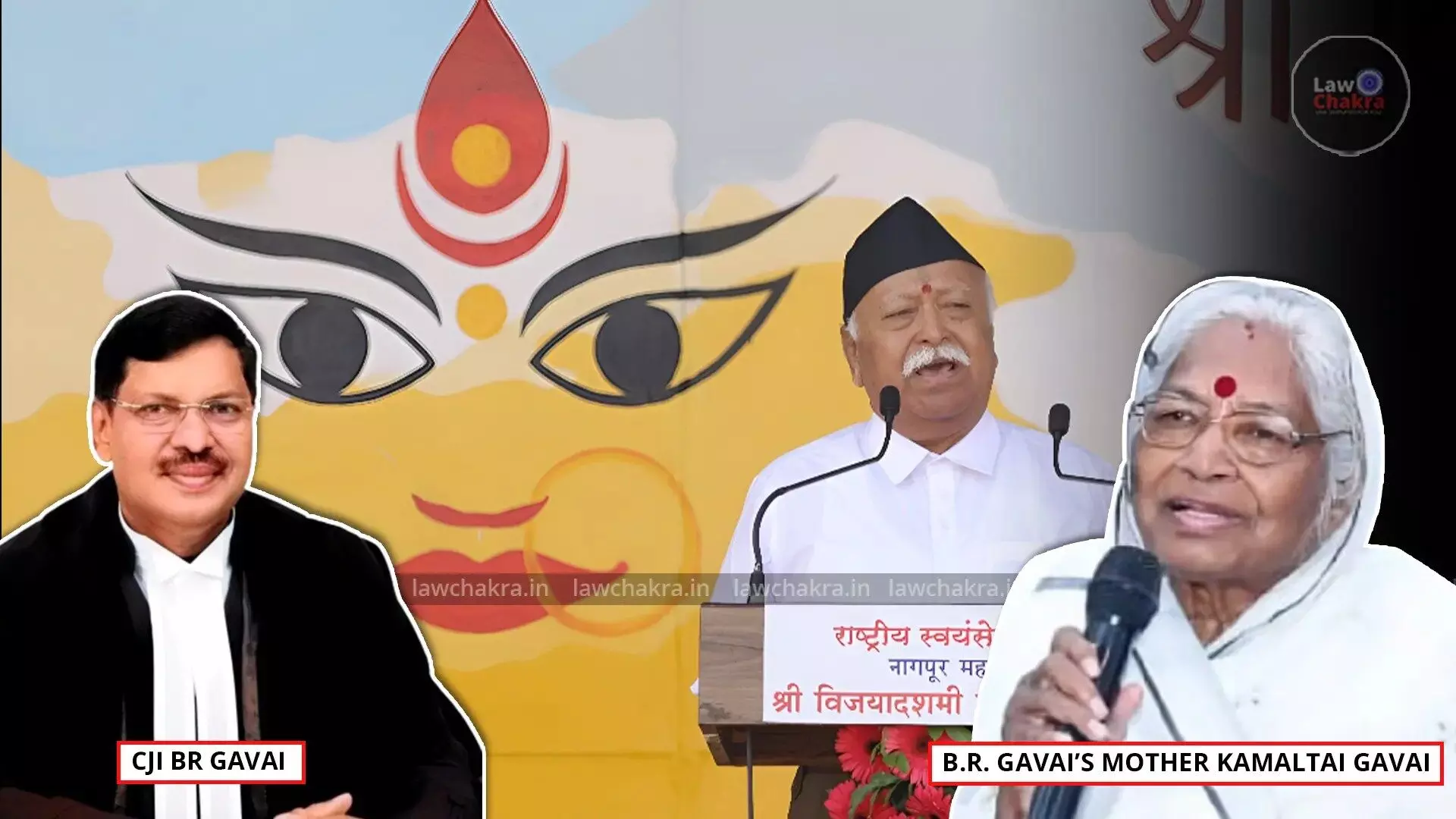
Images Credit - LawChakra
The controversy surrounding Chief Justice of India B.R. Gavai’s mother, Kamaltai Gavai, and her alleged invitation to the Rashtriya Swayamsevak Sangh’s (RSS) Vijayadashami event in Amravati is more than a personal episode—it reflects the ideological fault lines that continue to shape India’s public discourse. Her categorical rejection of the invitation, reportedly conveyed through a handwritten letter, has triggered a wave of speculation, rebuttal, and political interpretation. At the heart of this episode lies a deeper question: why would the RSS seek to associate itself with a staunch Ambedkarite family, and what does this reveal about its current outreach strategy?
Kamaltai’s statement, if authentic, is unequivocal. She not only denies accepting any invitation but also frames the reports as part of a “false conspiracy” and “RSS propaganda.” Her emphasis on Ambedkarite ideology and constitutional commitment is not merely a personal declaration—it is a political assertion. By distancing herself from the RSS event, she reaffirms the historical tension between Ambedkarite thought and Hindutva ideology. Her words—“I will never attend or support the upcoming RSS program in Amravati under any circumstances”—are not just a rejection; they are a rebuke.
In recent years, the RSS has made visible attempts to broaden its appeal beyond its traditional base. Inviting Kamaltai Gavai, mother of the sitting Chief Justice and widow of R.S. Gavai—a respected Ambedkarite leader—appears to be part of this strategy. But the backlash reveals the limits of symbolic outreach. For many Ambedkarites, Vijayadashami is not the central cultural marker; Ashok Vijayadashami, or Dhammachakra Pravartan Din, holds far deeper significance. Kamaltai’s reference to Emperor Ashoka’s renunciation of violence and embrace of Buddhism is a reminder that cultural memory and political identity are not easily co-opted.
The confusion deepened when Rajendra Gavai, Kamaltai’s younger son, initially claimed she had accepted the invitation, citing past precedents set by his father. His remarks attempted to normalize the association, suggesting that attending events across party lines did not imply ideological compromise. However, his later retraction—expressing support for his mother regardless of her decision—added ambiguity. His admission that she was depressed and unreachable further complicated the authenticity of the letter, though its content remained consistent with her long-established ideological stance.
This episode raises uncomfortable questions about political messaging and the ethics of symbolic appropriation. If the RSS indeed extended the invitation to showcase ideological inclusivity, the backlash exposes the fragility of such gestures. The attempt to associate with Kamaltai Gavai, without her explicit consent, undermines the credibility of the outreach and reinforces suspicions of political maneuvering. It also highlights the vulnerability of public figures—especially elderly ones—to being drawn into narratives they may not endorse.
The media’s role in amplifying unverified claims adds another layer of concern. The Wire’s inability to confirm the letter’s authenticity, despite repeated attempts to contact Kamaltai, underscores the challenges of reporting in a polarized environment. In such cases, the rush to publish can inadvertently serve the very propaganda it seeks to expose. Responsible journalism must tread carefully, especially when dealing with figures whose words carry ideological weight.
At a broader level, the incident reflects the ongoing contest over India’s moral and cultural leadership. The RSS-BJP ecosystem has long sought to position itself as custodian of national values. But resistance from Ambedkarite voices like Kamaltai’s reminds us there are parallel traditions of constitutionalism, social justice, and ethical governance that do not align with majoritarian narratives. Her rejection is not just personal—it is emblematic of a community’s refusal to be tokenized.
In the end, whether or not Kamaltai Gavai authored the letter, the sentiments expressed resonate with a larger constituency. Her purported words have struck a chord because they articulate a principled stand against ideological dilution. They remind us that true credibility cannot be manufactured through invitations or appearances—it must be earned through consistent commitment to values. As India navigates its complex political terrain, voices like Kamaltai’s—firm, rooted, and unapologetic—serve as moral compasses. They challenge us to look beyond spectacle and ask harder questions about who we are, what we stand for, and how we choose to remember.