Breaking the Silence: Why Menstrual Health Is a Matter of Constitutional Rights

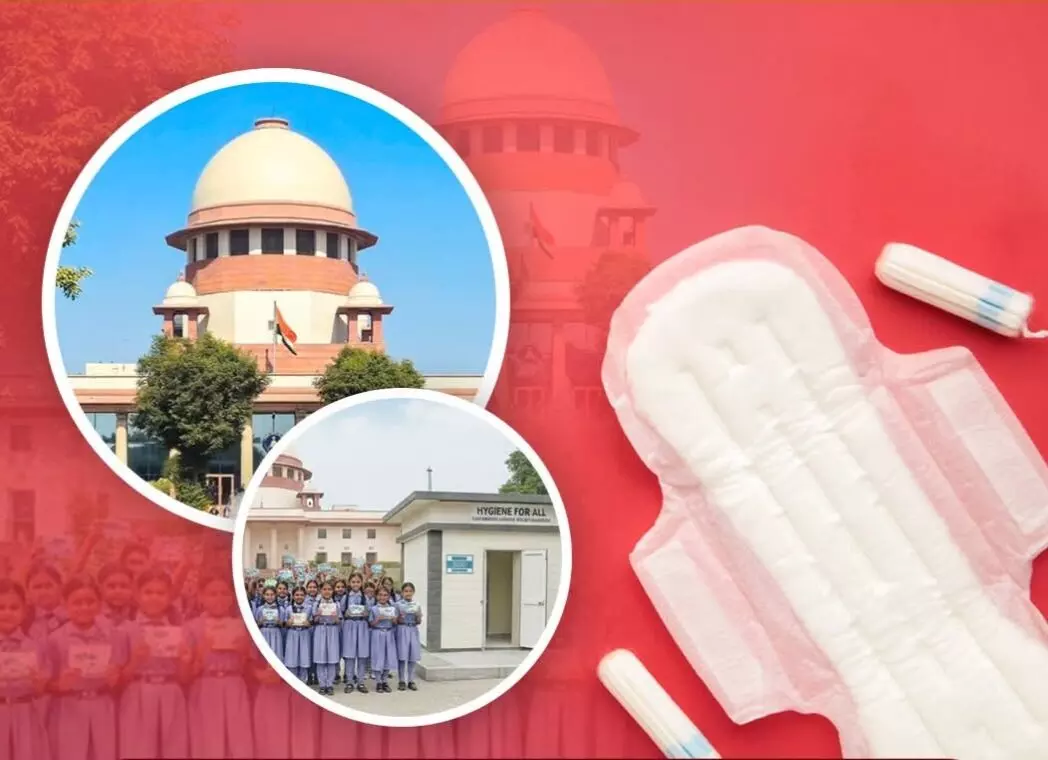
The Supreme Court’s recent landmark judgement recognising the right to menstrual health and hygiene as a fundamental right represents far more than a legal victory. It marks a decisive moment in India’s ongoing struggle to reconcile its constitutional promises of equality and dignity with the lived realities of millions of women and girls. While the judgement grabbed headlines across the nation last week, its true significance lies not merely in judicial recognition but in its potential to transform how India addresses one of its most pervasive yet least discussed barriers to gender equality.
The need for such recognition becomes starkly apparent when confronted with uncomfortable truths. Thousands of girls drop out of school every year in India, not because of academic failure or economic hardship alone, but because they lack access to clean, safe toilets with running water during menstruation. This reality exposes a fundamental failure of India’s educational infrastructure and social policy. When basic biological needs cannot be met with dignity, education becomes inaccessible, and the constitutional right to education rings hollow for countless young women.
The stigma surrounding menstruation in India operates as a silent but powerful force of exclusion. Despite nearly half the population experiencing periods, menstruation remains wrapped in layers of shame, superstition, and enforced silence. Women and girls are subjected to restrictions that range from the inconvenient to the degrading: exclusion from kitchens, prohibition from religious spaces, isolation from family activities, and whispered euphemisms that treat a natural biological process as something shameful or impure. This collective silence does more than cause discomfort. It creates an environment where girls grow up internalising shame about their bodies, where seeking help for menstrual health issues becomes difficult, and where policy interventions remain inadequate because the problem itself cannot be openly discussed.
The Supreme Court’s judgement addresses these interconnected challenges by establishing menstrual health and hygiene as fundamental rights protected under Articles 14, 15, 19, and 21 of the Constitution. This constitutional anchoring transforms menstrual health from a welfare concern into a rights issue, creating obligations for the state that cannot be easily dismissed or deprioritised. By recognising that the denial of menstrual health facilities violates rights to equality, non-discrimination, and life with dignity, the Court has provided a powerful legal tool for advocacy and accountability.
The judgement’s emphasis on infrastructure is particularly significant. It acknowledges that rights remain theoretical without practical implementation. Clean toilets with running water, disposal facilities, and privacy are not luxuries but necessities for menstrual dignity. Schools, workplaces, and public spaces must be designed with these needs in mind. This infrastructural imperative extends beyond urban areas to rural India, where the challenges are often most acute and where girls are most vulnerable to dropping out when their needs are not met.
Yet infrastructure alone cannot solve the problem without confronting the cultural attitudes that perpetuate menstrual stigma. This is where the Court’s recognition of the need for education and sensitisation becomes crucial. Conversations about menstruation must begin early and must include everyone, not just girls who will experience periods. The inclusion of boys in these discussions is particularly important for several reasons.
First, sensitising boys helps normalise menstruation as a biological reality rather than a mysterious or shameful condition. When boys understand menstruation as a natural process, the teasing, mockery, and discomfort that often characterise mixed-gender environments during adolescence can be reduced. This creates safer, more supportive school environments where girls feel less anxiety about managing their periods.
Second, educating boys today creates more understanding partners, fathers, and policymakers tomorrow. The men who will eventually occupy positions of power in families, workplaces, and government need to understand menstrual health issues if they are to make informed decisions that affect women’s lives. The absence of this understanding has historically resulted in policies blind to women’s needs and workplaces hostile to their requirements.
Third, comprehensive menstrual education in schools serves a broader purpose of building gender equality. It teaches young people that women’s biological needs deserve respect and accommodation, establishing patterns of thought that extend beyond menstruation to broader questions of gender justice. When schools treat menstrual health as important, they send a message about women’s value and dignity that resonates throughout students’ lives.
Period poverty, the inability to afford menstrual products and adequate hygiene facilities, cuts across India’s social and economic landscape, though its impacts vary by context. For girls from economically disadvantaged backgrounds, the cost of sanitary pads can be prohibitive, forcing them to use cloth, paper, or other makeshift materials that pose health risks and cause anxiety. This economic barrier intersects with inadequate school facilities to create a powerful incentive for girls to stay home during menstruation, leading to missed classes, falling behind academically, and ultimately dropping out.
For working women, period poverty manifests differently but remains significant. Women in informal sector employment, domestic work, or agricultural labour often lack access to clean toilets, privacy for changing menstrual products, or the ability to take breaks when experiencing pain or discomfort. These conditions force difficult choices between health and livelihood, dignity and economic survival.
Even women in formal employment face challenges. Workplaces that lack adequate toilet facilities, refuse to stock menstrual products, or stigmatise women who need accommodations during menstruation create hostile environments that affect women’s economic participation and advancement. The absence of menstrual leave policies in most workplaces means women must choose between pushing through pain or losing wages, a choice that men never face.
The health impacts of poor menstrual hygiene extend beyond immediate discomfort. Infections, reproductive health problems, and chronic conditions can result from inadequate access to clean facilities and appropriate products. Yet women often delay seeking treatment due to embarrassment or the normalisation of menstrual suffering. This silence around menstrual health problems contributes to broader patterns of women’s health being deprioritised and under-researched.
The Supreme Court’s recognition of menstrual health as a fundamental right provides a framework for addressing these interconnected challenges, but implementation will determine whether the judgement translates into meaningful change. State governments must audit and upgrade toilet facilities in schools, colleges, and public spaces. Educational curricula must be revised to include comprehensive, age-appropriate menstrual health education for all students. Workplaces must develop policies that accommodate menstrual needs without stigma or penalty.
Beyond government action, the judgement should catalyse broader social change. Families must begin having open conversations about menstruation, replacing shame with matter-of-fact discussion. Media and popular culture can play a role in normalising these conversations. Civil society organisations must monitor implementation and hold authorities accountable for failures to provide adequate facilities and education.
The path from judicial recognition to social transformation is neither short nor straightforward. Deeply entrenched cultural attitudes do not change simply because a court has spoken. Yet the Supreme Court’s judgement provides both legal authority and moral weight to efforts that activists, educators, and health workers have pursued for years. It affirms that menstrual health is not a private problem to be endured in silence but a public concern that demands collective action.
India’s treatment of menstruation serves as a measure of its commitment to gender equality. A society that cannot provide clean toilets for menstruating students, that forces girls to drop out because of a natural biological process, and that shrouds half its population’s experience in shame has not achieved true equality regardless of what its laws proclaim. The Supreme Court has now made clear that menstrual dignity is not negotiable and that constitutional rights extend to the most intimate aspects of women’s lives. The question now is whether India’s institutions and citizens will rise to meet this challenge.