Cricket and Conflict: The India-Pakistan Match in the Shadow of Pahalgam
The upcoming India-Pakistan cricket match is marred by the recent Pahalgam attack, raising questions about the role of sports in times of conflict and tragedy.

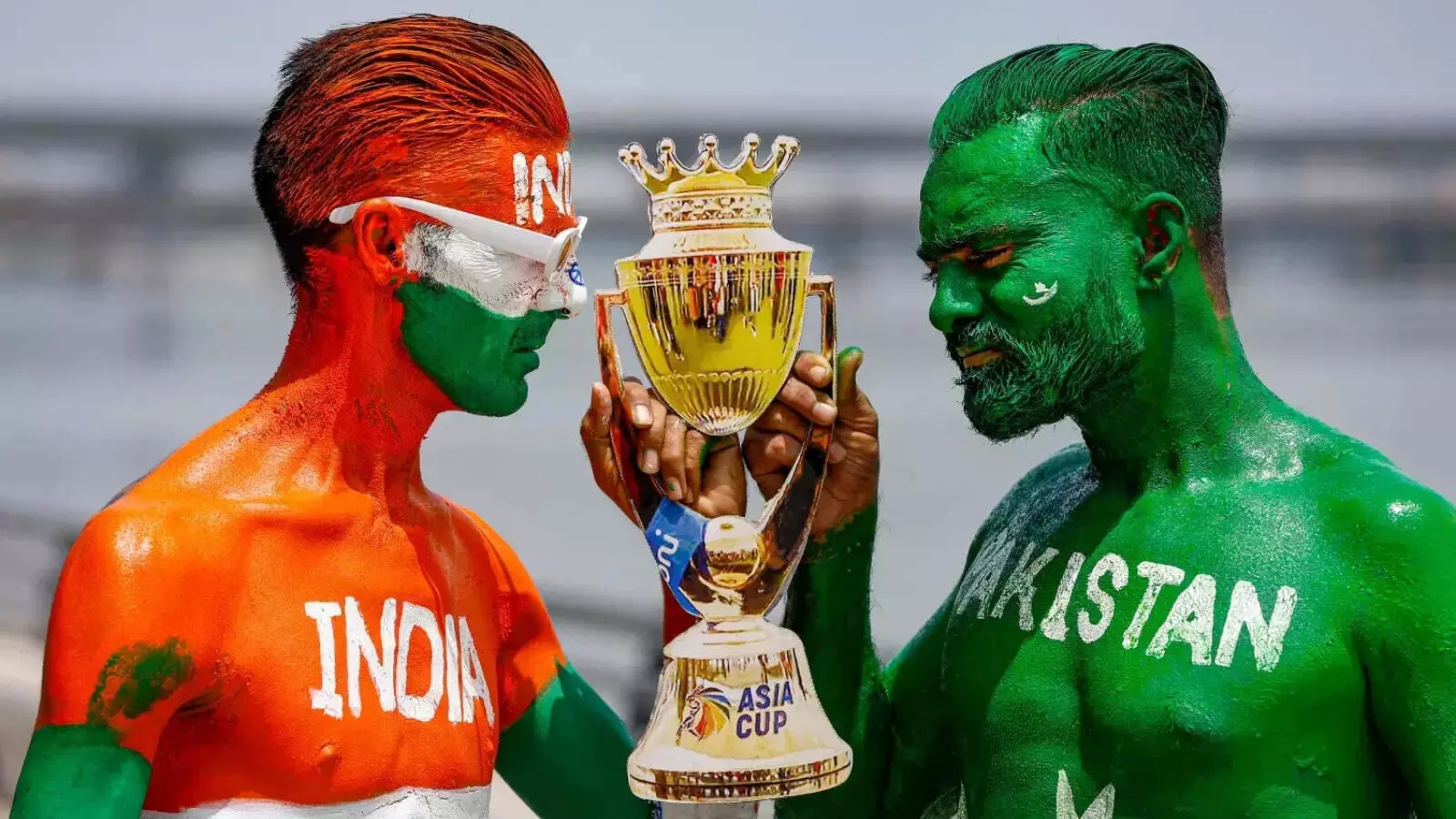
India- Pakistan Asia Cup match carries the weight of Pahalgam violence
Cricket, in the Indian subcontinent, is more than a sport—it is a religion, a unifier, and, at times, a battleground. When India and Pakistan face each other on the cricket field, the stakes transcend runs, wickets, and boundaries. The match becomes a proxy for history, politics, and national pride. But what happens when the shadow of violence looms large over the game? The recent Pahalgam attack, which claimed the lives of innocent civilians, has cast a dark cloud over the upcoming India-Pakistan cricket match. As the two nations prepare to clash on the field, the question arises: Can cricket be just a game in the wake of such tragedy?
*Cricket as Diplomacy*
For decades, cricket has served as a rare platform for diplomacy between India and Pakistan. The sport has often been a tool to thaw frozen relations, offering a glimmer of hope amid political tensions. Matches between the two nations have been celebrated as moments of cultural exchange, where fans from both sides come together to cheer, jeer, and, occasionally, bond over their shared love for the game.
Yet, cricket is not immune to the geopolitical realities of the subcontinent. Every match is scrutinized through the lens of history— Partition, the wars of 1965 and 1971, Kargil, and the countless acts of terrorism that have marred relations. The Pahalgam attack, which targeted civilians and left families shattered, is a stark reminder of the fragility of peace in the region. In such a context, can a cricket match truly be apolitical?
*The Burden of Expectations*
For players, an India-Pakistan match is already the most high-pressure fixture in world cricket. The expectations of billions of fans, the weight of national pride, and the relentless media scrutiny make it a crucible of nerves and skill. But when a match is played in the aftermath of a terrorist attack, the burden becomes even heavier.
Players are not just athletes; they become symbols. Every run scored or wicket taken is interpreted as a statement—of resilience, of defiance, or even of reconciliation. The Indian team, in particular, will carry the emotional weight of a nation mourning its lost citizens. The Pakistani team, too, will face questions about the role of sport in bridging divides or perpetuating them.
*The Role of the Fans*
Fans are the lifeblood of cricket, especially in the subcontinent. The passion, the noise, and the sheer energy they bring to the stadiums are unmatched. But in the wake of Pahalgam, the mood is somber. There is anger, grief, and a sense of injustice. For many, the idea of celebrating a cricket match feels tone-deaf when families are burying their loved ones.
Yet, there is also a counter-narrative: that cricket can be a distraction, a moment of joy in a time of sorrow. The question is whether the match will serve as a unifying force or deepen divisions. Will fans use the occasion to express solidarity, or will the stadium become a cauldron of political slogans and tensions?
*The Dilemma of the Authorities*
The decision to go ahead with the match is not an easy one. On one hand, canceling the game could be seen as a victory for those who seek to disrupt peace. It would send a message that terrorism can dictate the terms of engagement between the two nations. On the other hand, proceeding with the match without acknowledging the gravity of the situation risks trivializing the loss of life.
Authorities on both sides must tread carefully. Security will be paramount, not just for the players but for the fans. The last thing anyone wants is for the match to become a target or a platform for further unrest. The challenge is to ensure that the game is played in a spirit of sportsmanship, without becoming a stage for political grandstanding.
*Cricket as a Mirror*
The India-Pakistan match is a mirror reflecting the complexities of the relationship between the two nations. It is a reminder that while cricket can bring people together, it cannot erase the deep-seated issues that divide them. The Pahalgam attack is a tragic example of how quickly the narrative can shift from celebration to mourning.
As the players take the field, they will not just be representing their teams; they will be carrying the hopes and sorrows of their nations. The match will be a test—not just of skill, but of character. Can the players rise above the noise and play the game with the dignity it deserves? Can the fans separate their love for cricket from their anger over the attack? And can the authorities ensure that the match is a celebration of sport, not a spectacle of division?
*A Call for Reflection*
In the end, the India-Pakistan match is more than a game. It is a moment for reflection. It is an opportunity to ask what cricket means in a region where violence and peace are locked in a perpetual struggle. It is a chance to honor the victims of Pahalgam by showing that, even in the darkest times, there is room for unity and hope.
As the first ball is bowled, let us remember that the true spirit of cricket lies not in victory or defeat, but in the shared humanity of those who play and watch it. Let the match be a tribute to the resilience of the people of both nations, and a reminder that, no matter how deep the divides, the love for the game can still bring us together.
*Final Thought:*
Will this match be remembered for the cricket, or for the shadows that loomed over it? The answer lies not just in the hands of the players, but in the hearts of the fans and the wisdom of the leaders. Let us hope that, for once, cricket can be the winner.