Kiski Setting Hai, Exactly?
Court clears Arvind Kejriwal in Delhi excise policy case; Rekha Gupta’s ‘set’ remark ignites political storm, puts focus on ED-CBI investigation, judicial credibility, and narrative-driven politics.

In The Trial, Josef K. is arrested one morning without ever being told what his crime is. What follows is not a trial in the conventional sense, but a slow, suffocating process where accusation itself becomes punishment. The system moves, files pile up, whispers grow louder, but clarity never arrives. Guilt is assumed, proof is optional, and the verdict, when it comes, feels almost secondary to the ordeal of being judged in public long before any court speaks. Kafka wrote it as fiction. Modern politics, occasionally, treats it as a manual.
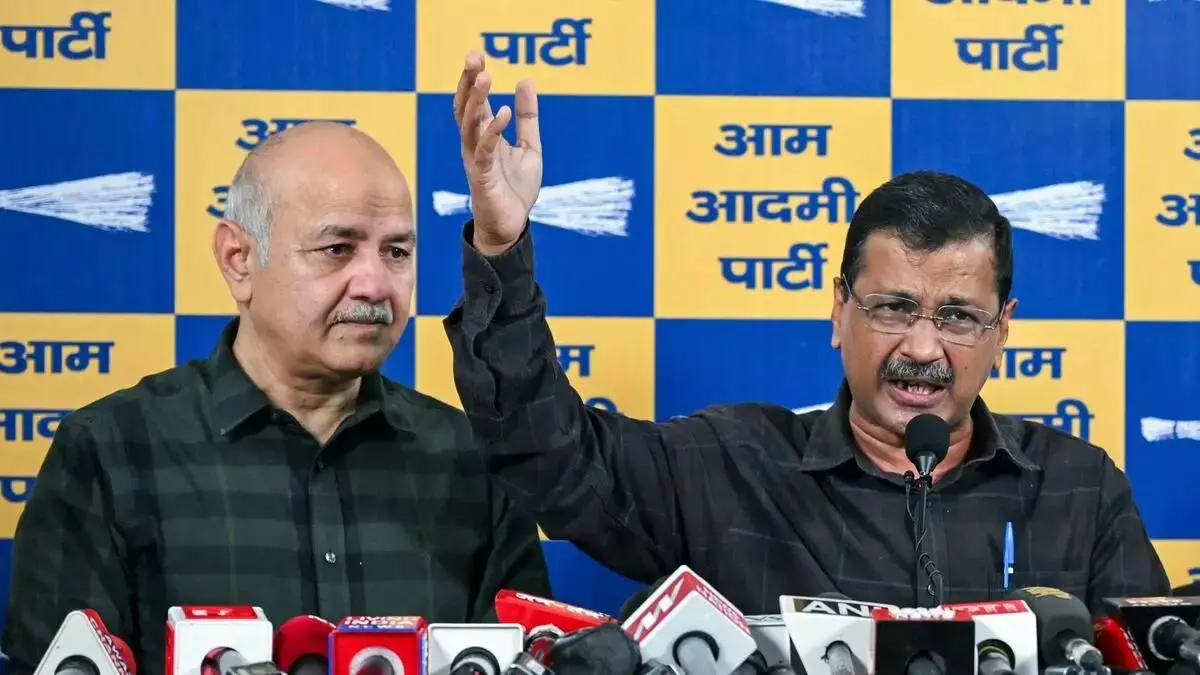
For nearly two years, the Delhi excise policy case functioned less like a legal proceeding and more like a long-running primetime serial, complete with cliffhangers, dramatic arrests, and conveniently timed “sources say” leaks. The protagonists were familiar: the Enforcement Directorate, the Central Bureau of Investigation, and a political class that has mastered the art of turning accusation into conviction long before any judge enters the frame. The script was tight, the messaging relentless, and the conclusion, at least in the public mind, seemed pre-written. Except, of course, the court had other ideas.
It takes a certain confidence, some might say audacity, for a ruling establishment to cast doubt on a judicial outcome that emerged from an investigation conducted under its own watch. When Rekha Gupta described the discharge of Arvind Kejriwal and others as somehow “set,” she may have intended a sharp political jab. Instead, she opened a far more inconvenient line of questioning: if the system is indeed “set,” who has been holding the remote control all along?
When the Rouse Avenue Court found no prima facie case strong enough to proceed, it did not merely close a file. It disrupted a narrative. And narratives, unlike legal arguments, do not collapse quietly, they sputter, they resist, and occasionally, they lash out. The “set” remark belongs to that last category.
There is something almost charmingly circular about the logic at play here. Investigative agencies function under a central government. The prosecution builds its case over months, if not years. The arrests are defended, the allegations amplified, the political dividends extracted. But when the same case fails to hold in court, the insinuation suddenly is that the outcome has been manipulated. It is like cooking a meal yourself, serving it with great flourish, and then, upon tasting it, accusing the kitchen of sabotage.
This is where the Indian political imagination, with its love for jugaad and jugaadu explanations, finds fertile ground. The word “set” is not just a word; it is a cultural shorthand. Matches get “set,” deals get “set,” even traffic challans sometimes get “set.” It carries within it a certain wink-and-nod understanding of how things supposedly work. But to extend that casual cynicism to a court of law is to cross from satire into something more corrosive. And yet, the remark did not emerge in a vacuum.
Over the past decade, Indian politics has witnessed the rise of what is colloquially known as the “washing machine.” Leaders enter with allegations hanging over them; they exit, often after a strategic political realignment, noticeably cleaner. Cases lose momentum, investigations slow down, and the moral outrage that once accompanied them quietly evaporates. The metaphor is crude, but its persistence in public discourse suggests that it resonates.
Against this backdrop, the excise policy case was always going to be read not just on its legal merits, but on its political context. The Aam Aadmi Party, after all, has long occupied an awkward space in the national landscape—too successful to be dismissed, too disruptive to be comfortably accommodated. Its rise in Delhi was built on a promise of clean governance, and that promise made it both attractive to voters and inconvenient to opponents. The allegations, therefore, struck at the heart of its brand.
For months, the drip-drip of accusations did its work. In the age of WhatsApp forwards and studio debates, nuance rarely survives. A charge sheet becomes a conviction in waiting; an arrest becomes proof; a denial becomes evasion. By the time the matter reaches a courtroom, the political damage is often already done. In Delhi, where the electorate has shown both loyalty and volatility in equal measure, the impact was visible. The AAP’s moral high ground, once its strongest asset, began to look less secure. But here is the uncomfortable truth about political mud: it sticks unevenly. Some emerge from it remarkably unscathed, even rejuvenated. Others find that no amount of legal clarity can fully restore what was lost in the court of public opinion.
Consider, for a moment, the broader pattern. Cases against opposition leaders often arrive with great urgency, accompanied by high-decibel messaging about accountability and zero tolerance. Yet, when those very leaders switch sides, the urgency has a curious way of dissipating. Files gather dust, hearings are delayed, and the narrative quietly shifts from outrage to amnesia. It is not that the law explicitly endorses such transformations; it is that the system appears remarkably adaptable in accommodating them. In such an environment, the line between enforcement and politics begins to blur.
The discharge of Arvind Kejriwal, therefore, is not just a legal milestone; it is a moment of narrative dissonance. It asks whether the story we were told was ever as solid as it seemed. It raises the possibility that the spectacle may have outpaced the substance. And it forces those who invested heavily in that spectacle to confront an awkward question: what now?
One response, evidently, is to question the verdict itself. But that response comes at a cost. Institutions, like reputations, are easier to undermine than to rebuild. When political actors casually suggest that judicial outcomes are “set,” they chip away at the very credibility they rely on when outcomes go their way. It is a risky game, one that may yield short-term rhetorical gains, but carries long-term institutional consequences.
There is, of course, another way to read this moment, one that is less cynical, but perhaps more instructive. Democracies are messy, contested spaces. Investigations will be launched, cases will be filed, and courts will, at times, disagree with the narratives that precede them. That is not a flaw; it is the system working as intended. The problem arises when political discourse refuses to accept that possibility, preferring instead to see every unfavourable outcome as evidence of manipulation.
For the Bharatiya Janata Party, this presents a delicate balancing act. Its political success has been built, in part, on a promise of decisive governance and institutional strength. To now appear dismissive of a judicial outcome risks undercutting that very promise. For the Aam Aadmi Party, the moment offers a chance at partial redemption, but also a reminder of how fragile political capital can be when it is tied so closely to moral positioning.
And for the rest of us, the voters, the observers, the reluctant consumers of this never-ending political theatre, the episode offers a familiar lesson, delivered with a distinctly desi twist. In a system where everything is suspected to be “set,” the real challenge is to identify what, if anything, is not.
Because if every verdict can be dismissed as manipulation, and every investigation as vendetta, we are left with a peculiar kind of nihilism, one where truth becomes a matter of convenience, and institutions are valued only when they validate our preferences. That, ultimately, is the real danger of the “set” remark. Not that it offends a particular party or leader, but that it normalises a way of thinking in which nothing is trusted and everything is transactional. And once that idea takes root, it is very hard to unset.