Democracy’s Watchdog Under Scrutiny: Examining Rahul Gandhi’s Election Commission Allegations
Rahul Gandhi's allegations against the Election Commission of India raise questions about the independence of electoral institutions and the integrity of democratic processes.

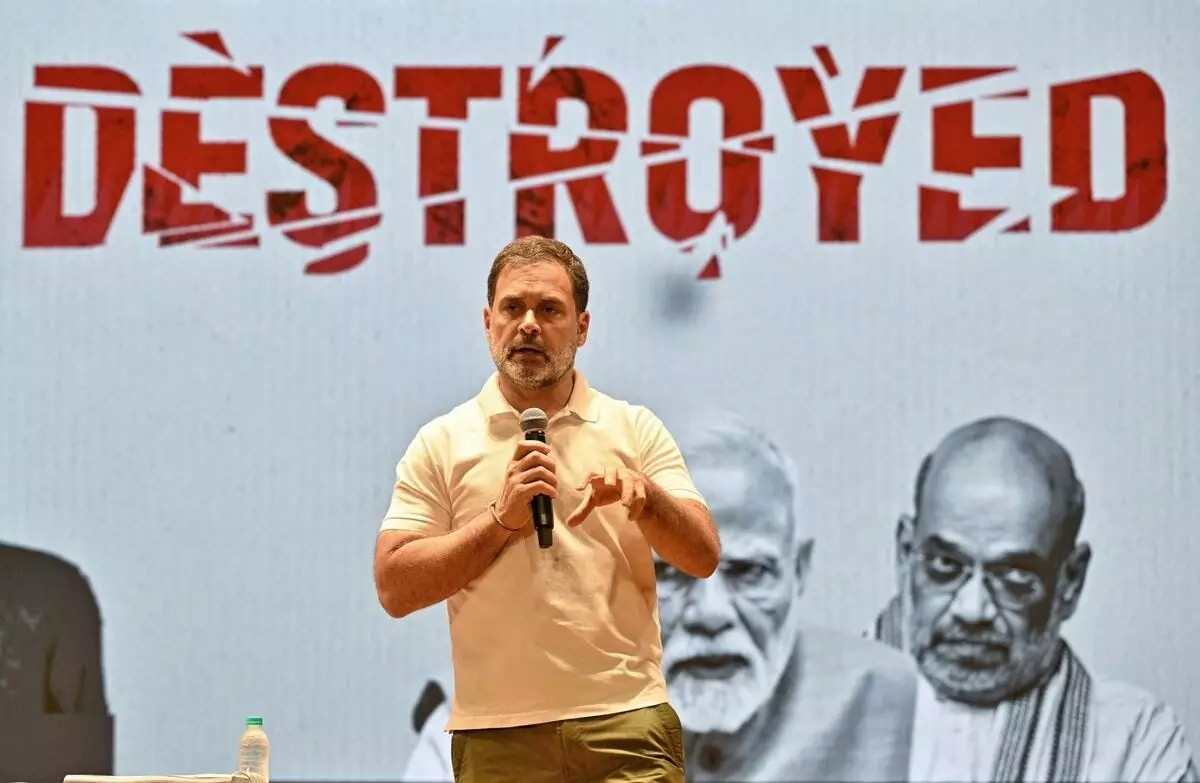
Photo Credit: Shashi Shekhar Kashyap
The health of any democracy rests fundamentally on the integrity of its electoral processes and the institutions that safeguard them. In recent months, Congress leader and Leader of Opposition Rahul Gandhi has leveled serious allegations against the Election Commission of India (ECI), raising questions that strike at the very heart of our democratic framework. While political criticism of electoral bodies is not uncommon in any democracy, the specific nature and persistence of these allegations demand careful examination.
Rahul Gandhi’s primary contention centers on what he perceives as the ECI’s compromised independence, particularly in its handling of electoral disputes, enforcement of the Model Code of Conduct, and the pace of decision-making on complaints filed by opposition parties. These allegations are not merely political rhetoric; they touch upon constitutional principles that define the separation of powers and the autonomy of constitutional bodies in India’s democratic structure.
The Allegations in Context
The Congress leader has specifically pointed to several instances where he believes the ECI has failed to act with the impartiality expected of a constitutional body. These include delayed responses to complaints about hate speech during campaigns, perceived selective enforcement of election guidelines, and what he characterizes as inadequate action against ruling party violations of electoral norms. Gandhi has also questioned the timing of certain ECI decisions, suggesting they favor the ruling dispensation.
Most significantly, Rahul Gandhi has raised concerns about the appointment process of Election Commissioners, arguing that the current system lacks transparency and adequate checks to ensure independence from executive influence. This criticism gains particular weight given recent changes in the appointment mechanism, which have been subject to legal scrutiny.
Historical Precedent and Constitutional Framework
To understand the gravity of these allegations, one must consider the ECI’s constitutional position. Established under Article 324 of the Constitution, the Election Commission was designed as an independent body with the Chief Election Commissioner enjoying security of tenure similar to that of Supreme Court judges. The founders’ intent was clear: electoral administration must remain insulated from political pressure.
However, this is not the first time the ECI’s independence has been questioned. Previous election commissioners have faced similar criticism from various political quarters. During the 1970s Emergency, the ECI’s role was severely compromised. More recently, different political parties have, at various times, raised concerns about the Commission’s functioning, suggesting this is a systemic issue that transcends party lines.
The Institutional Perspective
The Election Commission, for its part, has consistently maintained its independence and rejected allegations of bias. The institution points to its track record of conducting free and fair elections across multiple states and at the national level, often under challenging circumstances. ECI officials argue that criticism from losing parties is par for the course and that the Commission’s decisions are based on legal frameworks and established procedures.
The Commission’s defenders also highlight the practical challenges of election administration in a country as vast and diverse as India. They argue that what may appear as delayed decision-making often reflects the complexity of investigating complaints and ensuring due process. The ECI has also emphasized its commitment to technological improvements and transparency measures, including the use of EVMs and VVPATs.
The Broader Democratic Implications
Rahul Gandhi’s allegations, regardless of their merit, highlight a crucial democratic principle: the perception of fairness in electoral processes is as important as fairness itself. When major political figures question the integrity of electoral institutions, it can erode public confidence in the democratic process. This concern is particularly acute in an era of increasing polarization and declining trust in institutions globally.
The international context is also relevant. Democratic backsliding in various countries has often begun with the erosion of electoral institutions’ independence. While India’s situation may not be comparable to these extreme cases, the allegations serve as a reminder of the vigilance required to protect democratic norms.
*The Need for Systemic Reform*
Perhaps the most constructive aspect of this controversy is its potential to drive meaningful reform. Several concrete measures could address the concerns raised while strengthening democratic institutions:
First, the appointment process for Election Commissioners could be made more transparent and inclusive, potentially involving parliamentary committees or other checks and balances. The recent Supreme Court intervention in this matter suggests judicial recognition of these concerns.
Second, the ECI could enhance its communication strategy, providing more detailed explanations for its decisions and timelines. Greater transparency in decision-making processes could help address perceptions of bias or delay.
Third, strengthening the ECI’s investigative capacity and resources could enable faster responses to complaints, reducing the perception that the Commission is either overwhelmed or selectively attentive.
*A Path Forward*
The debate surrounding Rahul Gandhi’s allegations should not be viewed merely through a partisan lens. Instead, it presents an opportunity for constructive dialogue about strengthening India’s electoral democracy. The ECI, political parties, civil society, and citizens all have roles to play in this process.
Political parties must recognize their responsibility in maintaining the dignity of electoral discourse while legitimately raising concerns about institutional functioning. The Election Commission, meanwhile, must remain responsive to criticism while maintaining its constitutional independence. Most importantly, the focus should remain on strengthening institutions rather than undermining them.
Rahul Gandhi’s allegations against the Election Commission of India reflect deeper questions about institutional independence and democratic accountability in contemporary India. While the specific charges require careful scrutiny and evidence-based evaluation, the broader conversation they have sparked is both necessary and healthy for Indian democracy.
The strength of democratic institutions lies not in their immunity from criticism but in their ability to respond constructively to legitimate concerns while maintaining their core functions. As India continues to evolve as a democracy, ensuring the independence and effectiveness of its electoral machinery remains paramount.
Rather than allowing this controversy to further polarize political discourse, all stakeholders should view it as an opportunity to strengthen democratic institutions and processes. The ultimate beneficiary of such efforts would be the Indian people, whose faith in democratic governance depends on the integrity and effectiveness of institutions like the Election Commission of India.
The health of Indian democracy requires not just the formal structures of electoral competition but also the continuous nurturing of democratic norms and institutions. In this context, both criticism and institutional response must be guided by the larger goal of strengthening democratic governance for current and future generations.