Erosion of Journalistic Ethics: A Serious Threat to India’s Democratic Foundations
Erosion of journalistic ethics is endangering Indian democracy. A powerful call for media self-regulation, integrity, and fearless investigative journalism.”

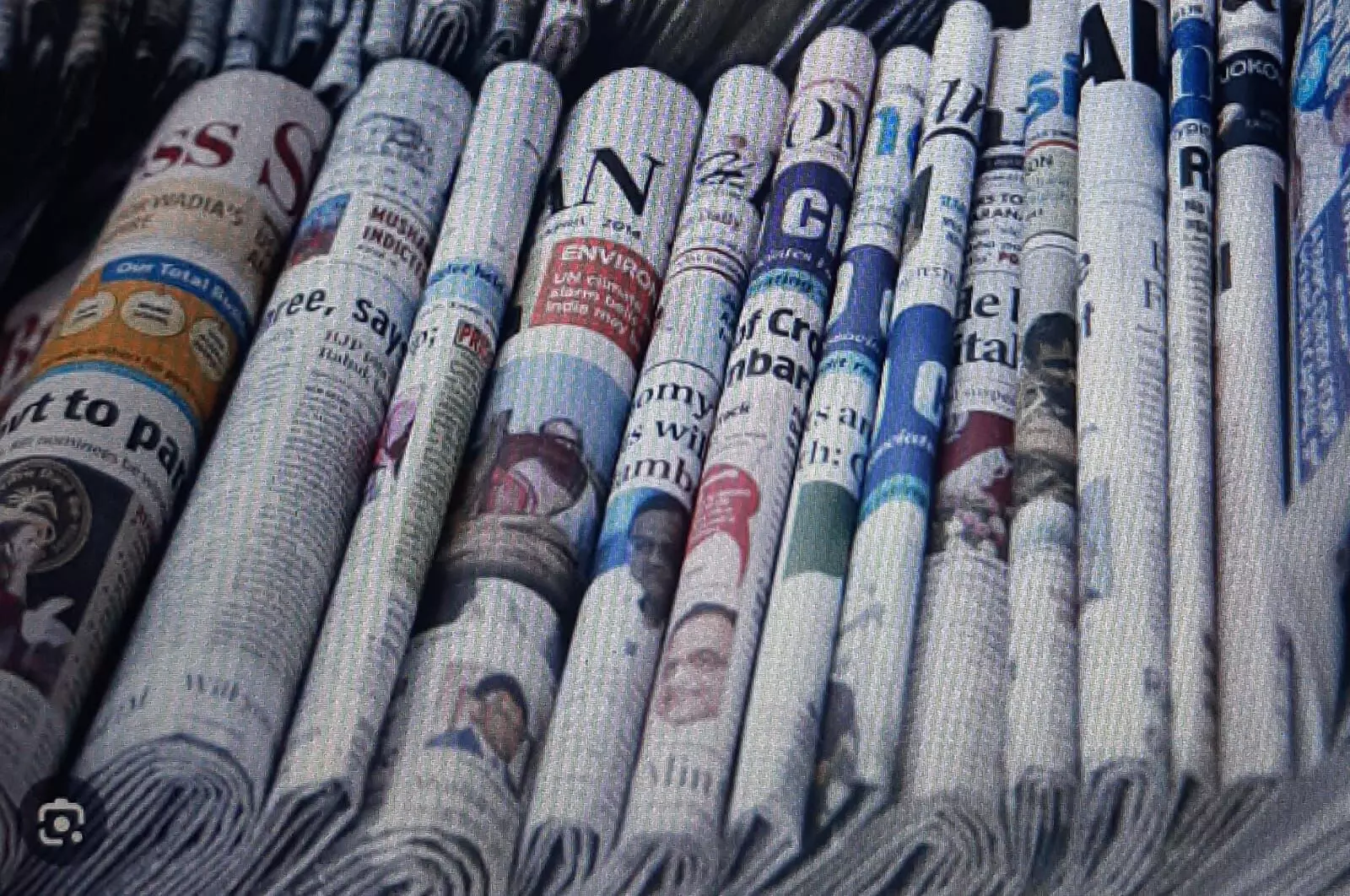
The steady decline in journalistic ethics has emerged as one of the gravest threats to Indian democracy today. A free press is the backbone of a functioning democracy, but freedom without responsibility can become destructive. As the media enjoys independence from direct state control, self-regulation remains the only credible mechanism to preserve its integrity. Sadly, instead of acting as the vigilant watchdog of power, much of today’s media has surrendered itself to sensationalism, celebrity culture, corporate interests, and political patronage.
Newspapers and news channels are rightly described as the fourth pillar of democracy. They shape public opinion, inform citizens, and hold those in power accountable. An aware and enlightened population is the strongest guarantee of democratic success, and a free, fearless press is the foundation on which this awareness rests. However, the current trajectory of large sections of Indian media raises serious concerns. Paid news, advertorials, sponsored features, and market-driven “responses” now dominate newsroom priorities, often overshadowing genuine editorial content. Profit has overtaken purpose.
Over the years, the media has increasingly projected politicians, industrialists, film stars, sportspersons, models, and page-three celebrities as societal role models. In doing so, it has shifted attention away from real issues affecting ordinary citizens—corruption, misgovernance, poverty, unemployment, inequality, and abuse of power. Investigative journalism, once the pride of Indian media, is today an endangered practice.
At this critical juncture, it is imperative to revisit Mahatma Gandhi’s philosophy of journalism. Gandhiji viewed journalism not as a profession for personal gain but as a sacred instrument of public service. He believed a newspaper had three essential duties: to understand popular sentiment and express it, to cultivate noble values among the people, and to fearlessly expose social and political evils. His own publications carried no advertisements, as he felt dependence on commercial revenue compromised editorial independence.
In Young India (July 2, 1925), Gandhiji wrote:
“I have taken up journalism not for its sake but merely as an aid to what I have conceived to be my mission in life.”
For him, journalism was an extension of moral duty, not a commercial enterprise.
He further emphasized that newspapers exist primarily to educate the public and familiarize them with contemporary history. This responsibility, he said, demanded accuracy, restraint, and integrity. Publishing unchecked or distorted information was a betrayal of public trust. Gandhiji warned that if newspapers truly recognized their educational role, they would verify every report before printing it, no matter how long it took.
On the issue of advertisement-driven journalism, he was even more direct:
“It is now an established practice with newspapers to depend for revenues mainly on advertisements rather than on subscriptions. The result has been deplorable.”
In today’s context, where corporate and political advertisements dictate editorial tone, Gandhiji’s warning appears almost prophetic.
We are witnessing a general decline in moral standards across public life, and the media is no exception. But the erosion of journalistic values is uniquely dangerous because it weakens democracy at its roots. When the press fails, citizens are left misinformed, manipulated, and disempowered.
Instead of relentlessly chasing “juicy” stories about political gossip, celebrity lifestyles, social media controversies, and soundbite-driven debates, the media must redirect its energy toward exposing corruption and wrongdoing in governance. Our nation would be far better served if journalists investigated who looted public money, how much was looted, and through which mechanisms. Such work must be comparative, non-partisan, and fearless, because corruption is not confined to one party or ideology.
Today, news cycles are dominated by who said what, who tweeted what, and who reacted to whom. This endless chain of statements, counter-statements, and social media theatrics has replaced serious journalism. The real questions—who did what, who abused power, who siphoned off public wealth, and how systems were manipulated—remain largely unanswered.
Indian politics has long been trapped in a toxic mix of caste calculations, religious polarization, and black money. People are disillusioned. Courts have tried to intervene through various judgments and reforms, but they alone cannot cleanse the system. The responsibility now rests heavily on the fourth pillar of democracy.
A credible solution lies in collective media action. A consortium of conscientious journalists and media houses must come together to expose the criminalization of politics and the plunder of public resources. The nation must be told how individuals with serious criminal records—rapists, murderers, dacoits, fraudsters, and habitual offenders—are being rewarded with election tickets and elevated to positions of power as MPs, MLAs, ministers, and even chief ministers.
These individuals, by virtue of their alleged crimes, should have been behind bars. Instead, they are celebrated as “leaders,” and the media spends endless hours analyzing their political strategies, alliances, and electoral prospects—thereby legitimizing their presence in public life. This is not journalism; it is complicity.
The crimes committed by many of these politicians are often more damaging than those of ordinary criminals, because they operate from within the system. They institutionalize corruption, perpetuate poverty, deepen inequality, and deny justice to millions. They are directly responsible for the rot in governance and the erosion of public trust.
The time has come for the media to stop being a passive observer or an active enabler and reclaim its moral authority. Gandhiji wrote in his autobiography:
“The sole aim of journalism should be service. The newspaper is a great power, but just as an unchained torrent of water submerges the countryside and devastates crops, so an uncontrolled pen serves but to destroy.”
This warning is more relevant today than ever before. A powerful press without ethical discipline becomes a destructive force. The question before us is stark and unavoidable:
Will the Indian media awaken, introspect, and correct its course? Or will it continue to remain part of the very mess it was meant to clean?
Politicians may have abandoned Gandhian morality long ago, but the media still has a chance to redeem itself. If it chooses to walk the path shown by the Mahatma—even now—it can restore its credibility and reaffirm its role as the true guardian of democracy.
(Vijay Shankar Pandey is a former Secretary to the Government of India.)