Freedom After 170 Days: Justice Delayed, Accountability Denied
After 170 days in detention, Sonam Wangchuk walks free—why questions on accountability still remain unanswered.
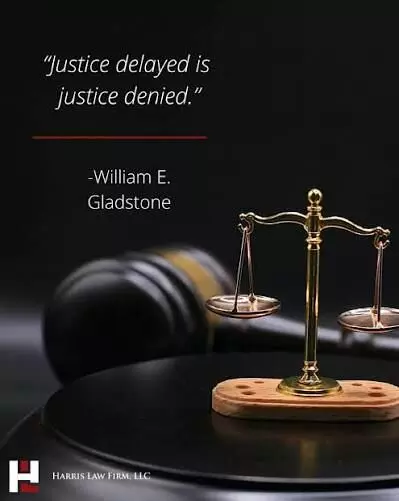
The release of Sonam Wangchuk after 170 days of preventive detention under the National Security Act raises a question far deeper than the legality of one individual’s incarceration—it interrogates the moral architecture of governance within a constitutional democracy. When liberty is curtailed not by conviction but by anticipation, and restored not by adjudication but by executive calculation, the system exposes an unsettling paradox: power may remain lawful, yet profoundly unjust.
The Union government’s decision to revoke the detention, reportedly in anticipation of an adverse ruling by the Supreme Court of India, reflects a pattern that has grown increasingly conspicuous in recent years. Preventive detention laws, originally conceived as exceptional instruments for extraordinary circumstances, are now being invoked with disquieting regularity. The case of Wangchuk is emblematic of this trend. Accused of inciting unrest in Ladakh, he was detained for nearly half the maximum permissible period under the statute, only to be released without any substantive judicial determination on the merits of the allegations. This sequence does not merely suggest administrative overreach; it reveals a systemic reluctance to subject executive discretion to rigorous judicial scrutiny.
The official justification, articulated by the Ministry of Home Affairs, rests on the preservation of public order and the protection of economic activity in Ladakh. It contends that prolonged protests disrupted daily life, adversely affecting students, businesses, and tourism. Yet this rationale sits uneasily with foundational democratic principles. Dissent, even when inconvenient, is not antithetical to order; it is intrinsic to it. To conflate peaceful protest with instability is to erode the very space within which democratic participation operates, insulating governance from the voices it is constitutionally obliged to heed.
More troubling still is the conspicuous absence of accountability for the prolonged deprivation of liberty already endured. In this context, the jurisprudence emanating from Prakash Singh vs Union of India assumes particular significance. While the case is widely associated with structural police reforms, it also embodies a broader constitutional ethos: the misuse of state power must entail consequences. The Supreme Court of India, across a spectrum of rulings, has consistently affirmed that unlawful or unjustified deprivation of personal liberty warrants compensatory relief. The principle is both elementary and profound—where the state errs, it must not merely retract its action but repair the injury it has inflicted.
In Wangchuk’s case, however, the revocation of detention appears to function as a procedural closure, effectively absolving the system of further responsibility. There is no discernible discourse on compensation, no formal acknowledgment of the personal, professional, and psychological costs of extended incarceration. This silence is not incidental; it is symptomatic. It suggests that preventive detention, even when subsequently withdrawn, carries no institutional penalty, thereby incentivising its continued deployment as a pre-emptive mechanism of control rather than as a measure of last resort.
The political response further complicates the narrative. Statements from regional authorities simultaneously welcoming the release and defending the initial detention reveal a dissonance that is difficult to reconcile. On one hand, the revocation is portrayed as a step towards peace, stability, and mutual trust; on the other, it is accompanied by assertions that agitation will not be tolerated. This duality underscores a deeper tension within the state’s approach—an attempt to reconcile democratic optics with administrative dominance. Yet democracy does not subsist on calibrated appearances; it demands coherence of principle and consistency of conduct.
Supporters of Wangchuk, including representatives of Ladakh’s civil society, have rightly underscored that the allegations against him remained unproven. Their calls for the release of other detained individuals and the unconditional withdrawal of charges point to a broader structural concern: selective relief does not rectify systemic injustice. If the detention itself was legally tenuous, its revocation cannot be construed as magnanimity; it must instead be examined as a compelled correction.
The larger issue, therefore, transcends the circumstances of a single individual. Preventive detention without timely judicial validation, followed by strategic withdrawal, establishes a troubling precedent—one in which liberty becomes contingent and accountability discretionary. This undermines the constitutional guarantee of personal freedom, reducing it from an inviolable right to a negotiable privilege subject to executive will.
Political theorists have long cautioned against such a trajectory. The legitimacy of the state, as Harold Laski argued, derives not from its capacity to enforce order but from its responsiveness to individual rights. When the state privileges control over consent, it risks alienating the very society it seeks to govern. The Wangchuk episode illustrates this danger with stark clarity.
It must also be situated within a broader governance paradigm wherein dissent is increasingly approached with suspicion. The expansive invocation of stringent laws, the delays in securing judicial relief, and the absence of post-facto accountability collectively engender a chilling effect. Citizens, apprehensive of potential repercussions, may increasingly refrain from exercising their fundamental freedoms. This erosion of civic confidence is arguably more pernicious than the detention itself, for it undermines the culture of democratic engagement at its core.
The government’s assertion that it remains committed to dialogue with stakeholders in Ladakh is, in principle, commendable. However, dialogue that succeeds detention risks being perceived as coercive rather than consultative. Genuine engagement necessitates trust, and trust cannot be cultivated in an environment characterised by apprehension. If the objective is indeed to foster stability and reconciliation, the means must embody the same democratic ethos.
Ultimately, the release of Sonam Wangchuk should not be construed as the conclusion of a controversy but as the commencement of a necessary constitutional introspection. Should preventive detention laws continue to operate with such expansive latitude? What institutional safeguards can ensure prompt and effective judicial oversight? And crucially, how can the state be held meaningfully accountable for the misuse of its coercive powers?
The answers to these questions will shape not merely the future of dissent in India but the integrity of its democratic framework. A polity that prides itself on constitutional morality cannot be content with episodic corrections; it must institutionalise accountability. Otherwise, each such release will carry an implicit and disquieting message—that justice, when it arrives, does so not as an enforceable right, but as a contingent concession.