From ‘Operation Sindoor’ to Verbal Salvos: The Return of Dangerous Rhetoric in South Asia
Rajnath Singh and Asim Munir’s escalating rhetoric revives Indo-Pak tensions, raising concerns over nuclear brinkmanship and the erosion of diplomatic dialogue.
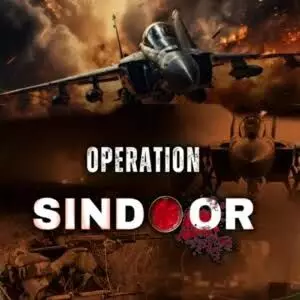
The recent verbal duel between Indian Defence Minister Rajnath Singh and Pakistan Army Chief General Syed Asim Munir has once again reminded the world that the Indo-Pak rivalry remains one of the most volatile flashpoints in global geopolitics. With both leaders issuing statements that stretch beyond conventional deterrence and into the realm of open threat, the uneasy calm established after Operation Sindoor appears to be under fresh strain. This escalation in rhetoric reflects not only mounting domestic pressures in both countries but also the fragility of a nuclearised neighbourhood, where words alone hold the potential to ignite crises.
Rajnath Singh’s assertion that “every inch of Pakistan’s territory lies within the range of BrahMos,” coupled with his remark, “if India could create Pakistan, then if the time comes… I need not say more,” stands out as one of the strongest post-Operation Sindoor statements by any Indian leader. While clearly intended to project India’s defence confidence, his words also serve as strategic signalling aimed at both domestic and international audiences. The message is twofold: India’s defence manufacturing under the Make in India initiative has achieved new credibility, and deterrence is now deeply embedded in the nation’s political discourse.
In response, General Munir’s pointed warning that “there is no space for war in a nuclearised environment,” and Pakistan “will respond decisively to even a minor provocation,” mirrors Islamabad’s longstanding reliance on nuclear deterrence as a counterweight to India’s conventional military superiority. By further stating that “all proxies using Afghan soil would be raised to dust,” Munir sought to redirect attention from Pakistan’s internal security failures, reviving a narrative long employed by the Pakistani military establishment.
Political analyst Ayesha Siddiqa once observed that “whenever the Pakistan Army feels domestic legitimacy slipping, it externalizes threat perceptions towards India.” That analysis feels particularly relevant today. Pakistan’s internal turmoil—economic distress, political instability, and the rising menace of the Tehreek-i-Taliban Pakistan—has left its military leadership battling to preserve its aura of control. In such a scenario, verbal confrontation with India becomes a convenient instrument for rallying national unity.
However, India’s increasingly assertive tone cannot be divorced from its domestic political calculus either. As strategic expert Brahma Chellaney noted after Operation Sindoor, “New Delhi’s muscular responses are not just about counterterrorism; they are about projecting India’s emergence as a state that acts, not merely reacts.” This projection resonates strongly with nationalist sentiment and reinforces the political image of a government determined to secure its borders through self-reliant defence production. The BrahMos missile—born of Indo-Russian collaboration and now manufactured in Lucknow—has evolved into both a technological milestone and a political symbol.
Yet within this confrontation lies a dangerous paradox. As both sides intensify their rhetoric, the space for diplomatic de-escalation narrows. South Asia, described by former UN Secretary-General Kofi Annan as “a powder keg waiting for a spark,” remains perilously vulnerable to miscalculation. The post-Operation Sindoor phase, though militarily controlled, did not lead to substantive dialogue. Instead, the resurgence of inflammatory statements risks reviving the old cycle of provocation and retaliation.
India’s claim of self-defence during Operation Sindoor garnered widespread domestic approval but elicited mixed international reactions. While many nations acknowledged India’s right to retaliate against terrorism, Western diplomats quietly urged restraint. Washington’s recent diplomatic outreach to both New Delhi and Islamabad underscores global concern over renewed hostility between two nuclear-armed states.
Of particular concern is the erosion of backchannel communication—once a critical stabilizer in crises. Veteran diplomat Shyam Saran has cautioned that “in the absence of trusted channels, even routine incidents can spiral into major confrontations.” With bilateral talks suspended, the region is left without a safety valve. Every word now spoken by political and military leaders carries amplified consequences.
Rajnath Singh’s emphasis on India’s growing defence capabilities is understandable in the regional context. But strategic confidence must not bleed into strategic brinkmanship. While India has every right to pursue robust deterrence, its leaders must ensure rhetoric is not misconstrued as aggression. Likewise, Pakistan’s continued invocation of Kashmir and externalisation of internal failures reveals the hollowness of nuclear bravado—it offers neither real security nor lasting stability.
As security analyst C. Raja Mohan recently remarked, “The real test of power is not how loudly one threatens, but how effectively one manages peace.” Both nations would do well to heed that wisdom. The exchange between Rajnath Singh and Asim Munir may be posturing, yet history has shown how swiftly posturing in South Asia can descend into perilous confrontation.
Operation Sindoor remains a shadow over the present. It showcased India’s military readiness and highlighted Pakistan’s vulnerabilities, but it also underscored the necessity of restraint. The lesson from that confrontation should be clear: deterrence must rest on preparedness, not provocation. As long as New Delhi and Islamabad wield nationalism as a weapon and substitute rhetoric for diplomacy, the subcontinent will remain hostage to its own words.
In the end, peace in South Asia will not be secured by missile ranges or fiery speeches, but by political courage—the courage to speak when it is easier to threaten. As former Prime Minister Atal Bihari Vajpayee wisely said, “You can change friends, not neighbours.” That wisdom, now more than ever, deserves to echo across both sides of the border.