Opposition and Its Constitutional Role in India: Post-2014 Drift and Democratic Implications
India’s Opposition faces a credibility crisis post-2014. Dr (Lt Col) Atul Tyagi examines its constitutional role, erosion of faith, and impact on democracy.
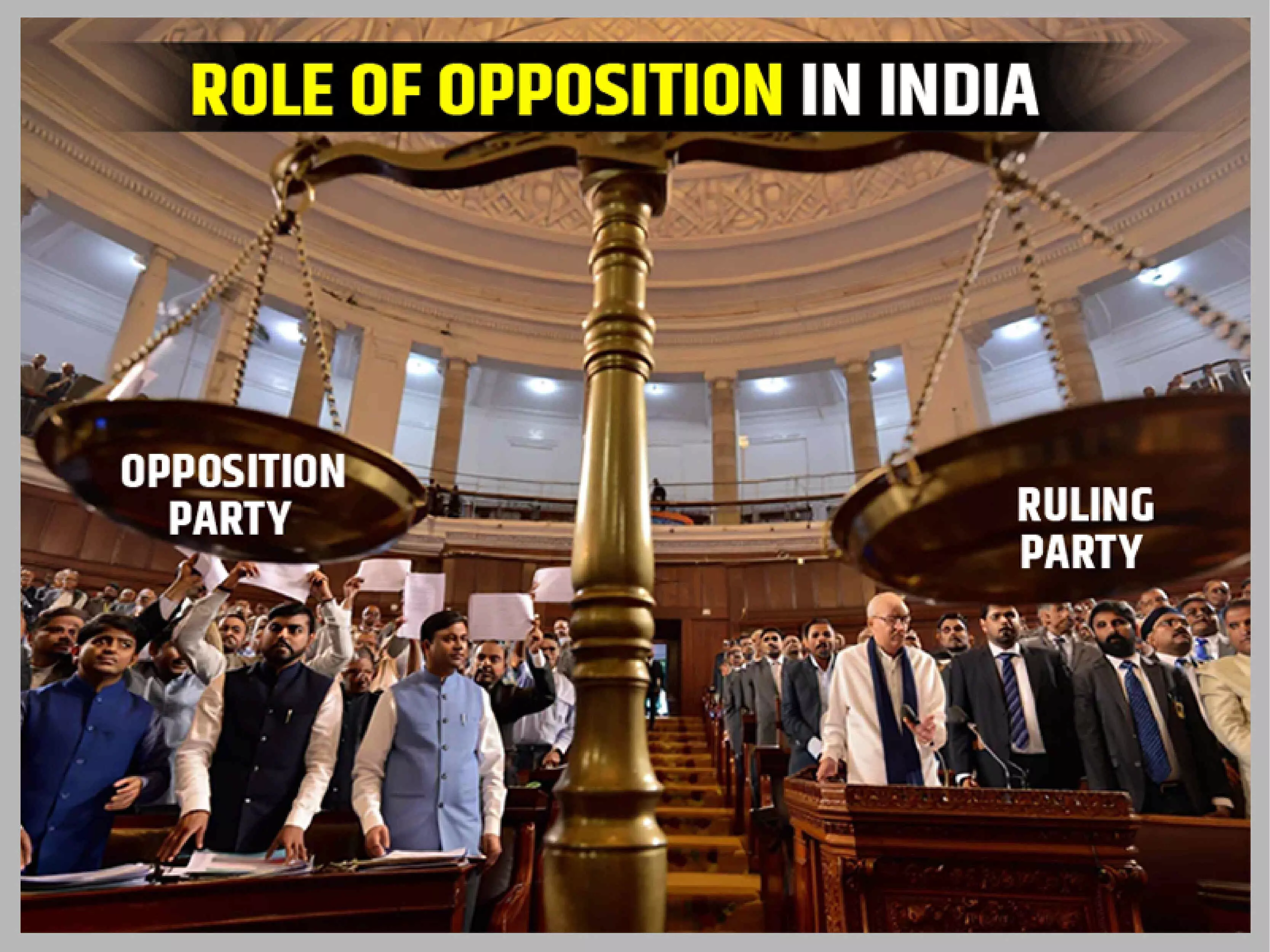
India’s Constitution-makers conceived a parliamentary democracy where a vigilant and constructive Opposition would serve as an indispensable counterweight to the government — guarding against the excesses of executive power and ensuring governance that remains transparent, accountable, and aligned with the public interest.
During the Constituent Assembly Debates, members consistently emphasised that democracy thrives not merely through periodic elections but through the sustained presence of an alternative political voice — one that can scrutinise, question, and, where necessary, restrain the government of the day.
The framers envisaged a passionate Opposition as a watchdog in parliamentary democracy — an essential counterweight to executive power. This principle has been reinforced in judicial dicta such as Kihoto Hollohan v. Zachillhu (1992) and Raja Ram Pal v. Speaker, Lok Sabha (2007), both underscoring the healthy functioning of the legislature.
Articles 74–75, 118, 105, and 19(1)(a) of the Constitution, read together, create a constitutional architecture that guarantees space for debate, dissent, and scrutiny — within and outside the legislature — thereby sustaining the deliberative character of Indian democracy.
The position of Leader of the Opposition (LoP) in the Lok Sabha and Rajya Sabha, though not a constitutional office, is recognised by parliamentary rules and given statutory footing under the Salary and Allowances of Leaders of Opposition in Parliament Act, 1977. This statutory recognition accords the LoP a pivotal role in the appointment of key oversight institutions such as the CVC, CBI Director, and NHRC, embedding the Opposition within the framework of institutional checks and balances.
The Opposition is entrusted with the duty to scrutinise government policy, hold the executive to account, propose credible alternatives, articulate the concerns of diverse social groups, mobilise public opinion, and, where parliamentary avenues prove inadequate, engage in democratic protest.
Every Member of Parliament — whether of the Lok Sabha or the Rajya Sabha — takes an oath of allegiance to the Constitution, binding the Opposition to uphold constitutional values even while vigorously challenging the government of the day.
Post-2014 Reality: From Contestation to Crisis
Since the watershed 2014 General Election and the subsequent consolidation of BJP/NDA dominance, the Opposition has struggled to fulfil this constitutional mandate.
The Congress — historically the principal Opposition — faces a long leadership vacuum and internal factionalism. Regional parties, though influential locally, lack a national figure who can match the Prime Minister’s stature. Successive defeats in 2014, 2019, and multiple state elections have eroded morale and organisation. The Opposition carries no vibrant issue except for Modi-centric rhetoric, which galvanises neither policy debate nor new voters.
Today, the Opposition appears driven less by constructive vision and more by desperation to seize power at any cost. Bereft of ideological coherence, it has failed to offer any credible policy framework or workable solutions to the nation’s pressing domestic and international challenges.
The “hate Modi” syndrome has touched the periphery of anti-national posturing. Instead of engaging in fact-based debate, it often raises issues that undermine national interest, question constitutional authorities, and seek to erode public trust in established administrative systems. Opportunistic coalitions stitched together for electoral gain have replaced principled politics.
Open discourtesy toward the Prime Minister, use of derogatory language, and theatrical disruptions of Parliament have become commonplace. Rather than data-driven analysis, the Opposition relies on repetitive falsehoods, using sensitive issues such as unemployment to misguide the youth and divert attention from substantive policy debates.
Consequences for Constitutional Governance
With a fragmented Opposition, Parliament risks becoming a mere clearing house for government legislation.
Recent statements by Rahul Gandhi and certain regional leaders betray a deeply misguided understanding of constitutional democracy. By invoking the Gen Z–style revolt of Nepal and hinting at its replication in India, they flirt with the language of street upheaval without identifying any genuine constitutional threat.
Rahul Gandhi, for instance, has repeatedly proclaimed that “the youth will save the Constitution and I stand with the youth,” yet fails to specify where the Constitution is actually under threat, or which provision has been violated.
Ironically, those who claim to “save the Constitution” often engage in deliberate parliamentary disruptions — frustrating debate and eroding the institutional safeguards the Constitution establishes. Having suffered repeated electoral defeats, they frequently declare “moral victories,” treating democratic verdicts not as mandates for introspection but as rhetorical tools for self-justification.
Erosion of Institutional Faith by the Opposition
The Opposition’s increasingly vituperative and defamatory approach signals a disturbing lack of faith in India’s constitutional and highest administrative offices. This is evident in:
Reckless accusations: Repeated attacks on constitutional authorities followed by reluctant apologies reveal a pattern of accusation without evidence.
Doubting security forces: From demanding “proof” of surgical and Balakot strikes, the Opposition has cast unwarranted doubt on the credibility of India’s armed forces.
Discrediting the Election Commission: Persistent claims of voter list manipulation betray distrust in constitutional safeguards protecting the electoral system.
Selective scepticism: Even India’s globally recognised foreign policy successes are dismissed, while foreign leaders’ statements are selectively invoked when politically convenient.
Such habitual denigration of institutions undermines the very framework to which every MP has sworn allegiance. A healthy democracy demands scrutiny — but scrutiny must be responsible and grounded in fact, not opportunistic rhetoric.
Rahul Gandhi’s Remarks Abroad
Rahul Gandhi, the Leader of the Opposition in the Lok Sabha, recently spoke of a “wholesale attack on democracy” — not at Columbia University, as widely circulated, but at EIA University in Medellín, Colombia, during his South America tour in early October 2025.
His comments form part of a longer pattern where opposition figures voice concerns about democratic institutions — aligning with some international scholars who have termed India a “hybrid regime” or “electoral autocracy.”
Some of his statements include:
“Single biggest risk is the attack on democracy.”
“Wholesale attack on the democratic system.”
“India cannot do what China does... suppress people and run an authoritarian system.”
Criticism of demonetisation and GST for “destroying small businesses and fostering monopolies.”
Such remarks have drawn criticism for echoing external narratives and for undermining India’s democratic credentials on global platforms.
The Road Ahead
For democracy to remain robust, the Opposition must rebuild from the grassroots — with credible leadership, internal democracy, and a positive narrative that focuses on economic alternatives, federal balance, and social justice.
India has already borne the brunt of unprincipled coalitions in the 1990s and after 2004, when the office of the Prime Minister was overshadowed by extra-constitutional power centres.
Post-2014, India presents a paradox — a strong government and a weak Opposition — producing democratic imbalance. Unless Opposition parties move beyond their fixation with power and embrace issue-based politics, the constitutional promise of a vibrant, accountable democracy will remain unfulfilled.
Gen Z voters, more discerning and politically aware, are likely to look beyond a rudderless and purposeless Opposition in search of leadership that offers purpose, policy, and principle.
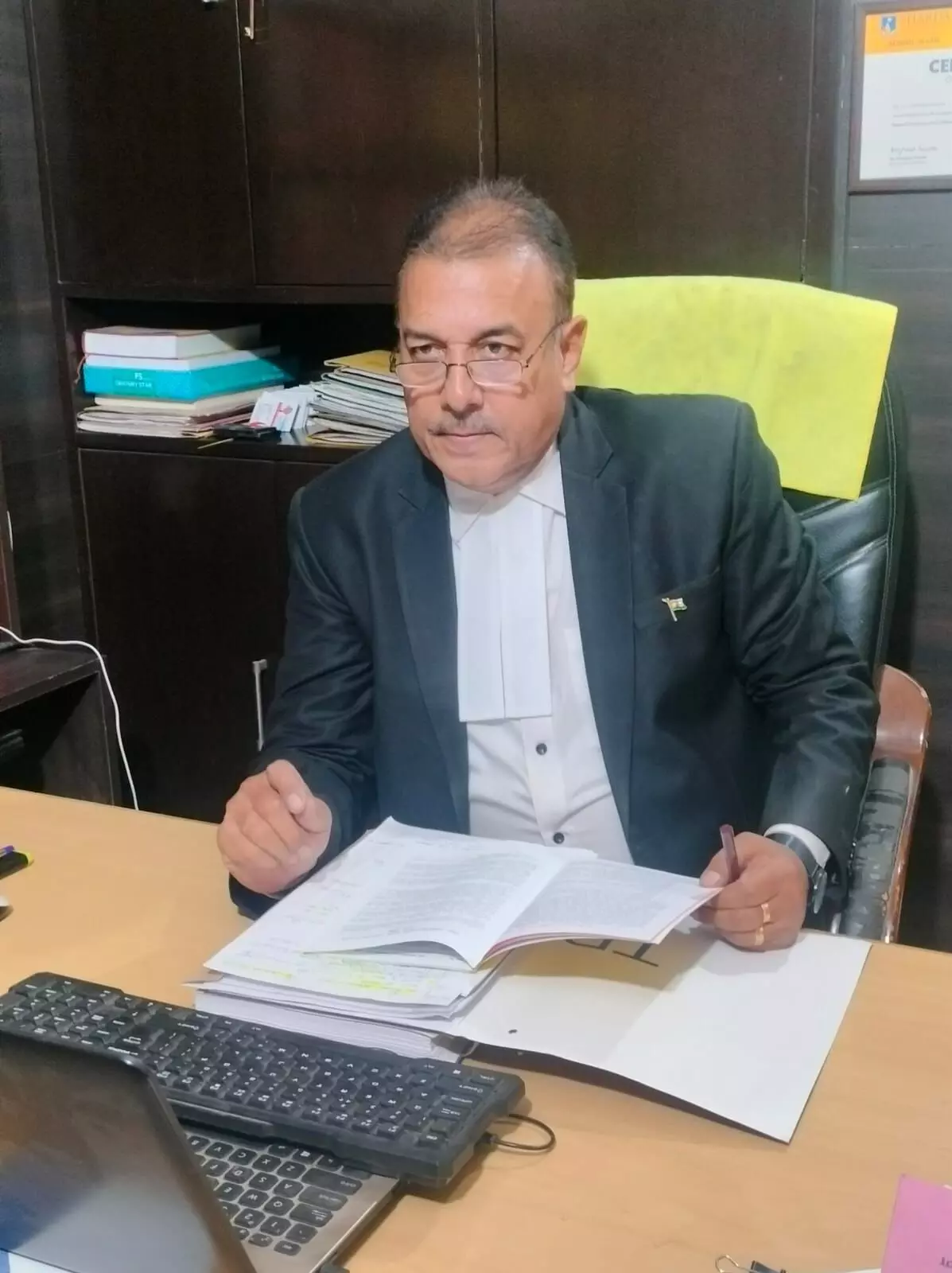
By Dr (Lt Col) Atul Tyagi, Advocate
Member, Bar Association, Supreme Court, New Delhi
📩 atultyagi100@gmail.com | 📞 9540652090