Paris Agreement at Ten: A Decade of Progress, Setbacks, and the Urgent Need for Renewed Commitment

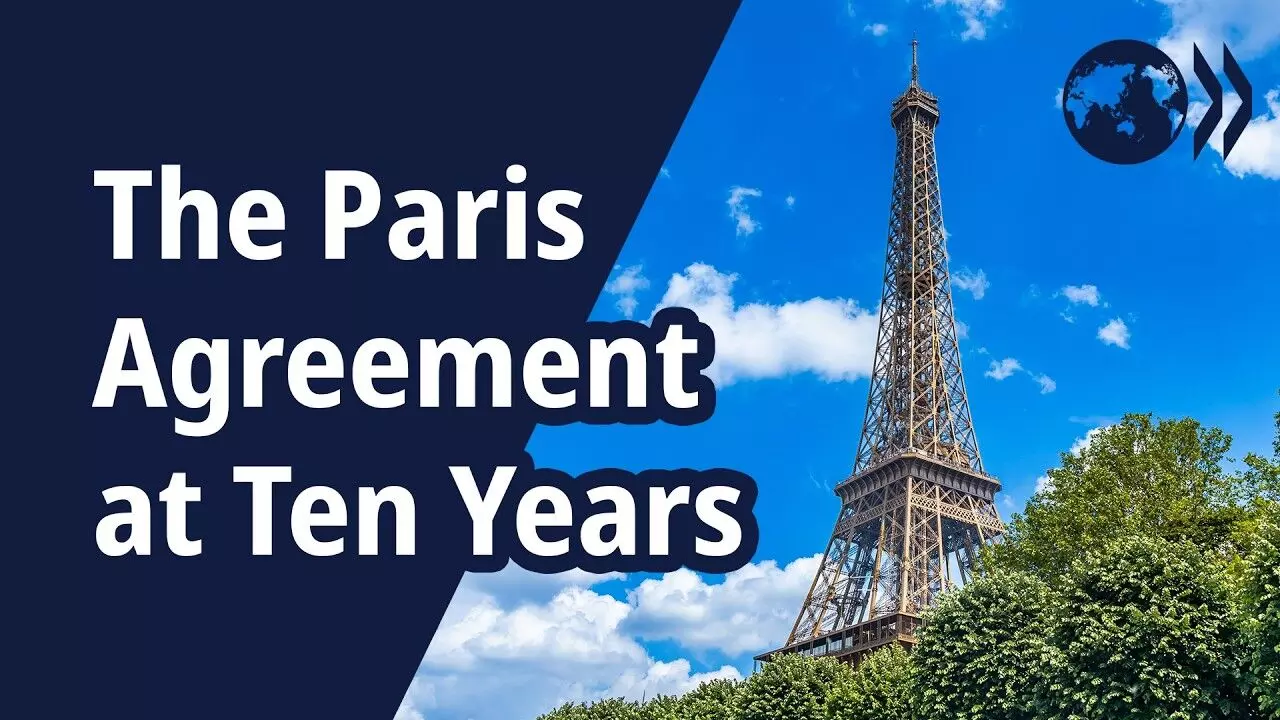
Ten years ago, the world gathered in Paris to forge a historic pact: the Paris Agreement. For the first time, nearly 200 nations committed to a shared vision—limiting global warming to well below 2°C, ideally 1.5°C, above pre-industrial levels. The agreement was a triumph of diplomacy, blending ambition with pragmatism. It introduced a groundbreaking framework of nationally determined contributions, allowing each country to set its own climate targets while fostering global accountability through regular reviews. A decade later, the world stands at a crossroads. The Paris Agreement has undeniably reshaped global climate action, but its promise remains unfulfilled as emissions rise, geopolitical tensions flare, and the most vulnerable nations bear the brunt of a crisis they did little to create.
The question now is not just whether the Paris Agreement has succeeded, but whether it can still deliver on its vision in an era of intensifying climate impacts, economic instability, and geopolitical fragmentation.
*A Framework of Hope and Pragmatism*
The Paris Agreement was never just about targets; it was about trust. After decades of failed climate negotiations, the agreement offered a new approach: bottom-up, inclusive, and flexible. Countries were no longer bound by rigid, top-down mandates but could tailor their climate pledges to their economic and political realities. This flexibility brought nearly every nation to the table, including major emitters like the United States, China, and India, which had previously resisted binding commitments.
The agreement’s dual goals—holding warming to well below 2°C and striving for 1.5°C—were ambitious yet necessary. Scientists warned that exceeding 1.5°C would trigger catastrophic and irreversible impacts: more frequent extreme weather, rising sea levels, and ecosystem collapse. The Paris Agreement also recognized the principle of equity, acknowledging that developed nations, historically responsible for the bulk of emissions, had a greater responsibility to act and support developing countries through climate finance.
Yet, from the outset, critics questioned whether voluntary pledges would be enough. Without enforceable penalties, would countries follow through? Would the $100 billion annual climate finance pledge materialize? And could the world truly unite behind a shared goal when national interests so often pulled in different directions?
*Progress: The Clean Energy Revolution and Shifting Momentum*
The past decade has seen remarkable strides in clean energy and climate action, driven by technological innovation, falling costs, and shifting public sentiment. Renewable energy has moved from the margins to the mainstream. Solar and wind power are now the cheapest sources of new electricity in most of the world, outcompeting coal and gas. Global investments in clean energy have surged, reaching over $2 trillion annually, with private capital playing an increasingly dominant role. Electric vehicles, once a niche market, are now a rapidly growing segment, with sales doubling in many regions.
These advances have begun to bend the curve of global emissions. While emissions continue to rise, the rate of increase has slowed. Some countries, particularly in Europe, have demonstrated that economic growth can be decoupled from emissions through aggressive renewable energy deployment and energy efficiency measures. The Paris Agreement’s global stocktake process has also spurred countries to revisit and strengthen their climate pledges, with many submitting more ambitious targets in recent years.
Climate finance, too, has seen progress. Developed nations finally surpassed the $100 billion annual pledge in 2022, though the delay underscored the challenges of mobilizing funds at scale. Public and private investments in adaptation and mitigation have grown, though they remain concentrated in wealthier nations. Initiatives like the Green Climate Fund have begun to channel resources to vulnerable countries, supporting projects from renewable energy deployment to climate-resilient infrastructure.
Perhaps most importantly, the Paris Agreement has shifted the global conversation. Climate change is no longer a distant threat but a present reality, and the agreement has helped elevate it to the top of the international agenda. From corporate boardrooms to national parliaments, the urgency of climate action is now widely recognized.
*Shortcomings: The Gaps Between Pledges and Reality*
Despite these advances, the Paris Agreement’s track record is mixed at best. The world is not on track to meet its 1.5°C goal. Current pledges, even if fully implemented, would still put the planet on a path to 2.4–2.6°C of warming by the end of the century—a scenario that would devastate ecosystems, displace millions, and exacerbate global inequality. The gap between what countries have promised and what is needed to avert catastrophe remains vast.
One of the agreement’s most glaring failures is the inadequacy of climate finance. While developed nations have finally met their $100 billion commitment, the sum is a fraction of what is needed. Estimates suggest that developing countries require trillions annually to transition to low-carbon economies and adapt to climate impacts. Adaptation finance, in particular, has been woefully underfunded, leaving vulnerable nations—especially in Africa, small island states, and South Asia—exposed to escalating climate disasters.
The agreement’s voluntary nature has also proven to be a double-edged sword. While it encouraged broad participation, it has allowed some nations to set weak targets or delay action without consequence. The lack of enforcement mechanisms means that countries face little repercussion for missing their goals, undermining the agreement’s credibility. Meanwhile, fossil fuel interests continue to wield outsized influence, slowing the transition to clean energy in many parts of the world.
Geopolitical tensions have further complicated progress. The Russia-Ukraine war, for instance, spurred Europe to accelerate its shift away from Russian gas, boosting renewable energy investment. But it also led to short-term reliance on coal and heightened energy market volatility. The U.S.-China rivalry has created both opportunities and obstacles: while both nations have made significant strides in clean energy, their broader geopolitical conflicts have at times overshadowed climate cooperation.
*The Path Forward: Strengthening the Paris Framework*
The Paris Agreement’s next decade will be decisive. To close the emissions gap and deliver on its promises, the global community must take bold, coordinated action.
First, accountability must be strengthened. The current system of voluntary pledges and periodic reviews is insufficient. Countries should face consequences for failing to meet their targets, whether through diplomatic pressure, trade measures, or financial incentives. The global stocktake process should be empowered to drive more ambitious and binding commitments, ensuring that nations continuously raise their ambition.
Second, climate finance must be scaled up dramatically. The $100 billion pledge was a start, but it is nowhere near enough. Developed nations must go beyond this target, with a greater focus on adaptation and loss-and-damage funding for vulnerable countries. Innovative financing mechanisms—such as debt-for-climate swaps, green bonds, and solidarity levies—could unlock additional resources without burdening developing nations with unsustainable debt.
Third, technological and economic levers must be fully deployed. The next wave of clean energy innovation should focus on hard-to-abate sectors like heavy industry, shipping, and aviation. Carbon removal technologies, green hydrogen, and advanced grid storage will be critical to achieving net-zero emissions. Trade policies, including carbon border taxes, could reshape global incentives, but they must be designed to avoid protectionism and support emerging economies.
Finally, geopolitical cooperation must be revitalized. The Paris Agreement cannot succeed in a world fractured by rivalry and mistrust. New alliances—such as the Circle of Finance Ministers or coalitions of progressive nations—can help bridge divides and mobilize action. Regional blocs and multilateral development banks should play a central role in coordinating climate finance and technology transfer, ensuring that no country is left behind.
*A Legacy at Stake*
The Paris Agreement’s first decade has been a story of both progress and missed opportunities. It has proven that global cooperation on climate change is possible, even in an era of deep political divisions. It has spurred a clean energy revolution, shifted trillions in investment, and elevated climate action to the forefront of global policy. Yet, it has also fallen short in critical areas, leaving the world on a dangerous trajectory.
The next ten years will determine whether the Paris Agreement is remembered as a turning point in humanity’s response to climate change or as a missed opportunity. The tools to succeed exist: the technologies, the financial resources, and the political frameworks. What is needed now is the collective will to use them.
The choice is clear. The world can continue on its current path, risking catastrophic warming and irreversible damage. Or it can seize this moment to strengthen the Paris Agreement, close the emissions gap, and build a more equitable and sustainable future. The legacy of Paris—and the fate of the planet—hangs in the balance.