Secularism and Tolerance: Freedom, Faith and the Limits of Acceptance
A democratic society must protect diversity and belief while firmly rejecting practices and ideologies that undermine justice, equality and the rule of law.

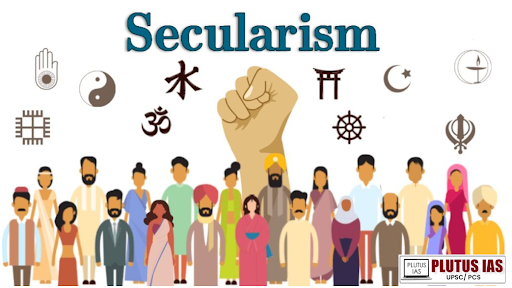
Images Credit - Plutus ias
Secularism and tolerance are often invoked together as ideals essential for peaceful coexistence in diverse societies. In the Indian context, secularism is embedded in the Constitution, while tolerance flows from a long civilisational ethos that values plurality. Together, they form the moral and legal foundation of a democratic society that allows individuals to live according to their beliefs without fear of discrimination or coercion.
Yet, an uncomfortable but necessary question persists: Do secularism and tolerance require society to condone wrongdoing? The answer is no—though arriving at it demands clarity, balance, and moral courage.
At its core, secularism refers to the separation of religion from the state. It ensures that governance remains neutral, treating all faiths and belief systems equally, without preference or prejudice. Tolerance, meanwhile, is the willingness to accept differences—of religion, culture, language, gender, or ideology—without hostility. Together, these principles promote pluralism and social harmony in multicultural societies.
However, both concepts are frequently misunderstood. Tolerance does not mean unconditional acceptance of all practices or ideologies. Secularism does not imply moral indifference or ethical relativism. Neither principle was designed to shield injustice or excuse harm. Rather, they are meant to balance individual freedoms with collective responsibility, ensuring that diversity does not become a pretext for violating rights or undermining the rule of law.
Tolerance, by definition, has limits. Respecting difference cannot extend to practices that perpetuate violence, discrimination, or oppression. Acts such as honour killings, child marriage, female genital mutilation, or racial discrimination cannot be justified in the name of culture or religion. These practices violate fundamental human rights and strike at the very heart of the values that secularism and tolerance seek to uphold.
Philosopher Karl Popper’s concept of the “paradox of tolerance” is particularly relevant here. He warned that unlimited tolerance could ultimately destroy tolerance itself. A society that tolerates intolerant ideologies risks enabling forces that suppress freedom and justice. Therefore, tolerance must be exercised with discernment, not passivity.
Secularism, for its part, guarantees freedom of belief and practice—but within a common legal and ethical framework. A secular state may permit fasting, prayer, or religious observance, but it cannot condone forced conversions, hate speech, or violence justified by faith. The law must apply equally to all, irrespective of belief, to protect individuals from harm and ensure fairness.
Recent global and domestic experiences underline the dangers of misinterpreting these principles. In some societies, excessive tolerance towards extremist ideologies has allowed radical groups to entrench themselves. Failure to act against hate speech or incitement to violence—often defended as free expression or religious freedom—has led to social polarisation and unrest.
Ironically, societies that pride themselves on tolerance often struggle to confront such issues, fearing accusations of intolerance or cultural insensitivity. Yet silence or inaction only perpetuates systemic injustice and emboldens those who exploit freedoms to undermine them.
Secular and tolerant societies must therefore strike a careful balance between freedom of speech and the need to curb hate speech. Open discourse is indispensable in a democracy, but speech that incites violence or hatred corrodes the foundations of a just society.
The resolution lies in balancing freedom with responsibility. Freedom of belief, expression, and practice is vital, but it must coexist with a commitment to equality, justice, and the protection of human dignity. Addressing sensitive issues—whether harmful cultural practices or extremist ideologies—requires engagement with community leaders, civil society, and reform-minded voices from within. Change must be inclusive and dialogic, not coercive, but it must also be firm.
Ultimately, secularism and tolerance are not passive ideals. They demand active engagement and moral clarity. A society committed to these principles must be willing to confront injustice, challenge oppression, and draw clear red lines where harm begins. It must create space for dialogue and dissent while ensuring that no individual or group places itself above the law.
When confronting practices that violate human rights, a secular society must prioritise universal ethical standards over cultural or religious relativism. This is not about erasing identities, but about encouraging their evolution in ways that respect equality and human dignity.
Secularism and tolerance do not mean tolerating wrongdoing. They represent a commitment to building inclusive, just, and equitable societies—where diversity flourishes without compromising fairness, dignity, or the rule of law. By recognising the limits of tolerance and the ethical responsibilities inherent in secularism, India can strengthen its constitutional framework as a tool for progress, social harmony, and collective well-being.
Only then can our democratic ideals translate into real justice and prosperity for all citizens.
By Vijay Shankar Pandey, former Secretary, Government of India