The Great Ethanol Disconnect: When Policy Ambition Meets Industrial Reality
India's ambitious ethanol blending program is facing resistance from automobile manufacturers, threatening to undermine the country's energy security goals and leaving consumers caught in the middle.

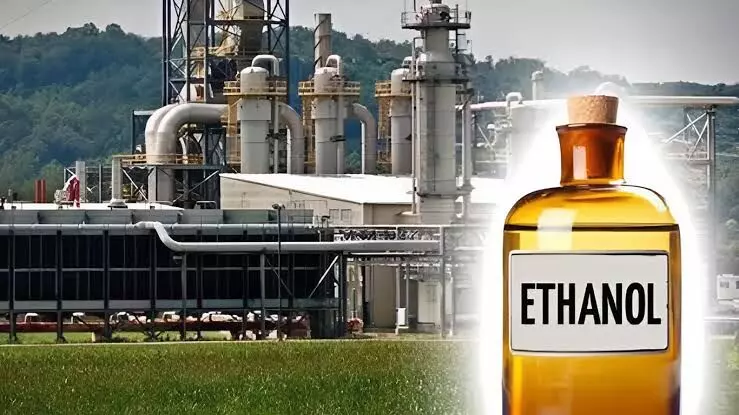
India stands at a peculiar crossroads where environmental ambition collides with industrial pragmatism. The government’s aggressive push toward ethanol blending in petrol—aiming for 20% ethanol blend (E20) by 2025—represents one of the world’s most ambitious biofuel programs. Yet, a jarring disconnect has emerged: automobile manufacturers, including global giant Toyota, are warning consumers that using higher ethanol blends could void their vehicle warranties. This contradiction exposes a fundamental flaw in policy implementation that threatens to undermine India’s energy security goals while leaving millions of consumers caught in the middle.
*The Promise and the Problem*
India, as the world’s third-largest energy consumer, has traditionally depended on oil imports to meet its growing energy demands, leading to substantial foreign currency outflow. The ethanol blending program, launched two decades ago, was designed to address this vulnerability while promoting environmental sustainability. The logic is sound: blend domestically produced ethanol with petrol to reduce crude oil imports, support farmers through sugarcane procurement, and lower carbon emissions.
However, the reality falls short of ambition. The ethanol blending rate for 2024 is expected to drop to 11.5 percent, missing the government’s target of 15 percent by 2023-24. More concerning is the growing resistance from automobile manufacturers who are effectively sabotaging the program through warranty disclaimers.
Auto manufacturers have cautioned that older vehicle models were calibrated for E10 fuels and are not covered under warranty for damage caused by higher ethanol blends like E20. Only newer models—those manufactured post-2023—come equipped with ethanol-resistant components. This creates a two-tier system where the government’s policy applies differently based on when consumers purchased their vehicles.
*The Toyota Paradox*
Toyota’s stance exemplifies this industrial resistance. Despite being a global leader in hybrid technology and environmental sustainability, the company has joined others in warning that higher ethanol blends could damage engines not specifically designed for such fuels. Experts warn that ethanol is corrosive due to its moisture content, and it can damage engines not designed for high-blend fuels like E27.
This creates an impossible situation for consumers. On one hand, the government mandates higher ethanol blending at fuel pumps. On the other, manufacturers threaten to void warranties for using government-mandated fuel. The absurdity is striking: consumers are being forced to choose between following government policy and protecting their expensive vehicle investments.
Toyota’s position isn’t merely obstructionist—it reflects genuine technical concerns. Ethanol blending leads to premature corrosion of fuel line parts, requiring specially designed components that many existing vehicles lack. However, the company’s blanket warranty disclaimers suggest a reactive rather than proactive approach to India’s biofuel transition.
*The Consumer Caught in the Middle*
Two-thirds of petrol vehicle owners oppose the government’s E20 fuel mandate, according to recent surveys. This opposition isn’t rooted in environmental skepticism but in practical concerns about vehicle damage and warranty voidance. When manufacturers explicitly warn against using government-mandated fuel, consumer confidence inevitably erodes.
The situation becomes more complex when considering India’s vehicle demographics. Millions of Indians drive older vehicles that were designed for conventional petrol or low ethanol blends. These consumers now face the prospect of either risking engine damage or seeking increasingly scarce conventional fuel—neither option sustainable in the long term.
*Policy Implementation: Where India Went Wrong*
The fundamental flaw lies in the government’s failure to ensure industry alignment before implementing ambitious blending targets. A Cabinet Secretary meeting in 2020 recognized the need to match “the pace of the automobile industry to manufacture vehicles with new engines with the supply of ethanol”, yet this coordination remains inadequate.
Successful biofuel transitions require synchronized policy implementation across fuel production, vehicle manufacturing, and consumer education. Brazil’s ethanol program succeeded because it mandated flex-fuel vehicles alongside ethanol production. India’s approach—mandating ethanol blending without ensuring vehicle compatibility—puts the cart before the horse.
The government’s response that “ethanol blending is a forward-looking, scientifically supported, and environmentally responsible measure” misses the point. The science supporting ethanol blending is well-established, but the implementation strategy remains flawed.
*The Path Forward*
Resolving this impasse requires immediate action on multiple fronts. First, the government must establish a clear timeline for phasing out non-ethanol compatible vehicles while providing incentives for manufacturers to upgrade existing models. This cannot be a voluntary process—regulatory frameworks must mandate compatibility standards for new vehicles while grandfathering existing ones with appropriate transition periods.
Second, automobile manufacturers must move beyond defensive warranty policies toward collaborative solutions. Companies like Toyota have the technical expertise to retrofit existing vehicles or develop affordable upgrade kits for ethanol compatibility. Instead of voiding warranties, manufacturers should work with the government to establish compensation mechanisms for transition-related damages.
Third, consumer education and protection must be prioritized. Clear labeling at fuel pumps, vehicle compatibility databases, and government-backed insurance for transition damages would restore consumer confidence. The current information vacuum fuels resistance and undermines policy objectives.
*Global Implications*
India’s ethanol blending challenges have global significance. As the world’s most populous nation transitions to biofuels, the approach taken will influence policy frameworks worldwide. Success could provide a blueprint for other developing nations seeking energy security through biofuels. Failure would reinforce skepticism about rapid biofuel transitions in complex economies.
The current standoff between policy ambition and industrial reality serves no one’s interests. The government’s energy security goals remain unrealized, manufacturers face consumer backlash, and citizens bear the cost of poor policy coordination. More critically, environmental benefits from reduced fossil fuel consumption are being sacrificed to institutional inertia.
*Conclusion*
The ethanol blending program represents everything right and wrong with India’s policy-making approach. The vision is sound, the environmental benefits clear, and the economic logic compelling. Yet implementation failures have created unnecessary conflicts that threaten the program’s success.
Toyota and other manufacturers must recognize that opposing government biofuel policies is ultimately self-defeating. As global automotive markets shift toward sustainability, companies that resist this transition will find themselves increasingly isolated. Collaboration, not confrontation, serves long-term business interests.
Similarly, the government must acknowledge that policy success requires industry buy-in. Mandating fuel composition changes without ensuring vehicle compatibility creates the exact consumer resistance now undermining the program. Effective governance requires anticipating implementation challenges, not simply declaring ambitious targets.
The path forward demands compromise, coordination, and shared responsibility. India’s energy security depends not on winning ideological battles between government and industry, but on building sustainable partnerships that serve national interests. The current ethanol impasse is fixable—but only if all stakeholders prioritize solutions over standoffs. The question isn’t whether India can achieve its biofuel ambitions, but whether it can overcome the institutional failures currently blocking that path.