The Great Nicobar Gamble: Development at What Cost?
Explore the controversy surrounding India's ₹72,000 crore Great Nicobar Island project, balancing strategic development with environmental and social concerns.

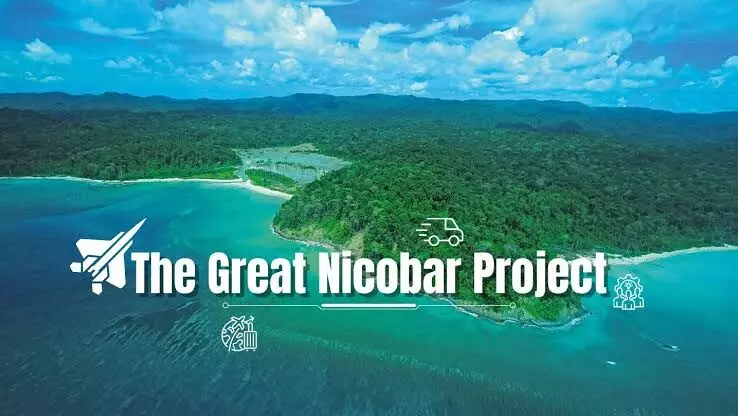
The Indian government’s ambitious Great Nicobar Island project represents one of the most consequential environmental and geopolitical decisions of our generation. As someone who has observed infrastructure development across the Indian Ocean region for decades, I find myself torn between understanding the strategic imperatives driving this ₹72,000 crore megaproject and deep concern about its potentially irreversible ecological and social consequences.
The project’s scope is staggering: a transshipment port, an international airport, a power plant, and a township designed to house nearly 650,000 people on an island that currently supports fewer than 10,000 residents. The strategic logic is compelling. Great Nicobar sits at the mouth of the Malacca Strait, through which 80% of China’s energy supplies pass. In an era of intensifying Indo-Pacific competition, establishing a robust Indian presence here makes geopolitical sense. The proposed port could position India as a major player in global maritime logistics, potentially rivaling Singapore and Colombo.
Yet strategy cannot exist in a vacuum, divorced from environmental reality. Great Nicobar is not just another island—it is a UNESCO World Biosphere Reserve, one of the most pristine and biodiverse ecosystems remaining on Earth. The project requires clearing approximately 130 square kilometers of primary rainforest, habitat to species found nowhere else: the Nicobar megapode, the Nicobar tree shrew, the Nicobar long-tailed macaque. These aren’t just names in a conservation handbook; they are evolutionary marvels that have survived in isolation for millennia.
The Environmental Impact Assessment, which controversially received clearance in record time, acknowledges the destruction of 852 hectares within the Galathea Bay Wildlife Sanctuary—the world’s southernmost nesting site for giant leatherback turtles. These ancient mariners have been returning to these beaches for countless generations. The compensatory afforestation plan, proposing to plant trees elsewhere, betrays a fundamental misunderstanding of ecological systems. You cannot replicate a million-year-old rainforest with saplings planted on degraded land. Primary forests are not merely collections of trees; they are complex, interdependent communities that cannot be recreated through human intervention.
The seismic vulnerability adds another layer of risk. Great Nicobar bore the brunt of the 2004 Indian Ocean tsunami, with parts of the island rising by several meters. It sits directly above a tectonic subduction zone. Building dense urban infrastructure in such a location, particularly after witnessing the devastation of 2004, seems to challenge the lessons that catastrophe taught us. The project proponents argue that modern engineering and early warning systems mitigate these risks, but nature has repeatedly demonstrated its capacity to overwhelm human preparations.
Then there are the Shompen and Nicobarese people. The Shompen, one of the world’s most isolated indigenous tribes, number barely 200 individuals. They have lived on this island for thousands of years, maintaining a lifestyle in harmony with the forest. The project, despite assurances about minimal impact, will fundamentally alter their world. Even indirect contact—the noise, the light pollution, the influx of outsiders—threatens communities that have largely avoided the diseases and social disruptions that decimated other indigenous populations. History offers no examples of isolated tribes benefiting from sudden integration into modern development paradigms.
I recognize the counterarguments. India’s maritime infrastructure lags behind its economic ambitions. The country needs transshipment capacity to reduce dependence on foreign ports. The project promises jobs, economic growth, and enhanced national security. These are not trivial considerations for a developing nation with legitimate aspirations for strategic autonomy and economic development.
But development need not be suicidal. The binary choice presented—either accept this project as designed or remain strategically vulnerable—is false. Alternative locations exist for transshipment ports. The Andaman Islands offer possibilities that wouldn’t require obliterating a biosphere reserve. Even within Great Nicobar, smaller, more sensitive designs could achieve strategic objectives without wholesale environmental destruction. The rush to implement this project in its current form suggests that economic and strategic calculations have entirely overshadowed ecological and social considerations.
What particularly troubles me is the procedural opacity. The EIA process, meant to ensure informed decision-making, appears to have been expedited beyond recognition. Critical scientific voices raising concerns about irreversible biodiversity loss have been marginalized. The tribal consultation process, mandatory under Indian law, remains controversial, with questions about whether genuine consent was obtained or merely assumed.
This project will define how India balances development with environmental stewardship in the 21st century. If we proceed with this massive transformation of Great Nicobar, we send a clear signal that no ecosystem, however unique or fragile, is beyond the reach of development ambitions. We tell the world that India’s environmental commitments—made at Glasgow, at Paris, in our own Constitution—are negotiable when substantial economic or strategic interests are at stake.
The tragedy is that this need not be an all-or-nothing proposition. Scaled-down alternatives, more rigorous environmental safeguards, genuine engagement with scientific and indigenous communities, and transparent decision-making could produce outcomes that serve both strategic interests and environmental responsibilities.
We stand at a crossroads. The Great Nicobar project, as currently conceived, may deliver short-term strategic gains, but at the cost of irreplaceable natural heritage and vulnerable human communities. Having witnessed numerous development projects across Asia over my career, I have seen how initial promises of sustainable development often dissolve into regret once the concrete has been poured and the forests cleared.
India aspires to global leadership. True leadership in the 21st century means demonstrating that development and conservation need not be mortal enemies. It means showing that a rising power can pursue its interests without obliterating the natural world. The question facing policymakers is whether we have the wisdom and courage to pause, reconsider, and pursue a path that doesn’t require us to destroy one of Earth’s last paradises to prove our strategic prowess.
The eyes of the world are watching. So, too, are the generations who will inherit whatever we leave behind.