The Price of a Narrow Strait: Hormuz and the Reckoning
India's LPG crisis worsens as Hormuz Strait closure disrupts supply, exposing energy security vulnerabilities and prompting urgent calls for strategic reserves and diversified import routes.

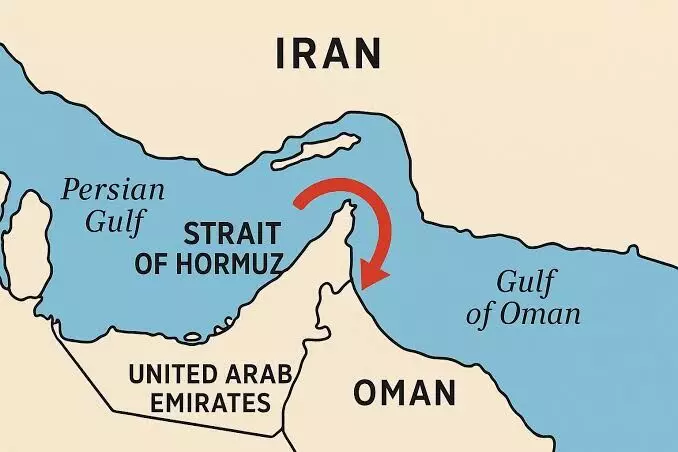
For years, India’s energy vulnerability was a talking point in policy seminars and think-tank briefs. Today, it is a queue outside a gas distribution centre in Jaipur at three in the morning. The closure of the Strait of Hormuz, following the killing of Iranian Supreme Leader Ayatollah Ali Khamenei in a joint American and Israeli strike, has turned a structural problem into a lived emergency. The samosa is off the menu. The chai does not taste the same. And the questions that India’s energy planners should have been answering years ago are now answering themselves, in the worst possible way.
The numbers frame the scale of the exposure. India imports roughly 88 percent of its crude oil, 50 percent of its natural gas, and 60 percent of its LPG. Of that imported LPG, approximately 90 percent has historically come from the Middle East. Before the war broke out, more than half of India’s crude oil came from Saudi Arabia, Iraq, and the UAE, with as much as 85 to 95 percent of LPG and 30 percent of gas transiting the Strait. A single 33-kilometre waterway, controlled at its narrowest by the Iranian Revolutionary Guard Corps, stood between India’s 1.4 billion people and the cooking gas in their kitchens. That was never an acceptable arrangement. It has now become an intolerable one.
The LPG crisis is unfolding in two registers simultaneously. At the household level, residents in several cities have been seen queuing outside gas distribution centres for hours, some arriving as early as 3 a.m. to secure a cylinder. At the commercial level, restaurants across India have been forced to reimagine their menus and retool their kitchens. The uncertainty is disrupting the fast-paced rhythm of Indian street food and quick-service dining , with restaurateurs switching to induction hobs for what can be adapted, and simply removing what cannot. The government has responded by invoking the Essential Commodities Act, curtailing industrial and commercial allocations, and directing refiners to maximise LPG output. These emergency measures have raised domestic LPG output by 25 percent. It is not enough. Drewry projects a supply gap of one million tonnes during March and April 2026 alone, despite those measures.
The structural reason for this vulnerability is straightforward and damning. Unlike crude oil, for which India maintains significant strategic reserves, the LPG supply chain has operated on a just-in-time basis, with current LPG reserves sufficient for only 7 to 10 days of consumption. India holds no strategic buffer for a commodity that 332 million households depend on for cooking. The crisis, in other words, is not a failure of response. It is a failure of foresight. Building strategic LPG reserves is not technologically complex. It requires political will, public investment, and a willingness to treat energy security as a permanent priority rather than a periodic concern. That will was absent. The bill is now due.
There is a second failure layered beneath the first, one more politically sensitive and more contested. In the months leading up to this crisis, India reduced its purchases of Russian crude oil, a shift that most analysts directly linked to the terms of the India-US trade framework finalised in early February. Under that agreement, India committed to buying 500 billion dollars’ worth of American products over five years and to stop purchasing Russian oil, in exchange for a reduction in the reciprocal tariff from 25 percent to 18 percent and the removal of an additional 25 percent penalty imposed for its Russian oil purchases. The diplomatic arithmetic was intelligible. The energy arithmetic was not. India’s crude buying underwent significant changes in early 2026, with substantially lower volumes of Russian crude and incremental growth in Middle Eastern barrels filling the gap. That increased Middle East dependency was a direct consequence of the pivot away from Russia, and it deepened precisely the Hormuz exposure that is now throttling India’s economy. Whether New Delhi fully grasped that trade-off before accepting those terms is a question that demands an honest answer.
Russian crude was not only discounted; it arrived via Arctic and Baltic routes that bypassed the Strait of Hormuz entirely. Prior to Russia’s 2022 invasion of Ukraine, Russian crude accounted for below one percent of India’s oil imports. By mid-2025, that figure had climbed past 33 percent of total seaborne crude imports before Washington’s pressure began to bite. The discount was real, the route was diversified, and the geopolitical leverage was useful. India gave all of that up under external pressure, at precisely the moment when the Middle East was visibly deteriorating. The question is not whether New Delhi was wrong to maintain a relationship with Washington. It is whether it was wise to concede its energy optionality on the specific terms offered, at the specific time.
Now the fiscal consequences loom. Every 10 dollar increase in global crude prices reduces India’s GDP growth by approximately 0.1 to 0.2 percentage points and increases inflation by around 0.2 percentage points. Crude is no longer at 90 dollars a barrel. If it approaches 200 dollars and the Hormuz disruption persists for months, the macroeconomic arithmetic becomes genuinely alarming. The government has already approved 300 billion rupees in compensation to oil marketing companies to offset LPG under-recoveries. That is a down payment on a far larger liability if the crisis is prolonged. India’s fiscal deficit, its current account, and the rupee are all watching the same strait.
The diplomatic silver lining, such as it is, is that Iran has so far allowed Indian-flagged vessels to transit the Strait after verification. Despite New Delhi not openly supporting Iran in the conflict, Tehran agreed to allow ships carrying an Indian flag or heading to Indian ports to sail through. That exemption is fragile, contingent on the goodwill of a government under assault, and should not be mistaken for a permanent guarantee. The fact that India is negotiating passage through a warzone for its cooking gas is itself an indictment of the policy choices that preceded this moment.
The lesson is not that India should retreat from the world economy or sever its relationships with the Gulf. The lesson is that energy security cannot be subcontracted to diplomatic relationships or market signals. It requires physical infrastructure: strategic LPG reserves, diversified import routes, and a serious domestic clean-cooking programme that reduces the country’s aggregate exposure to any single fuel corridor. India has 143 gigawatts of cumulative solar capacity and nearly 200 compressed biogas plants under development. The building blocks of a more resilient energy architecture exist. What has been missing is the urgency to build it.
The queue in Jaipur should supply that urgency.