The Vande Mataram Spectacle: A Distraction India’s Parliament Cannot Afford
India's Parliament is focusing on Vande Mataram celebrations, sparking debate on priorities amidst pressing issues like economy, unemployment, and pollution.

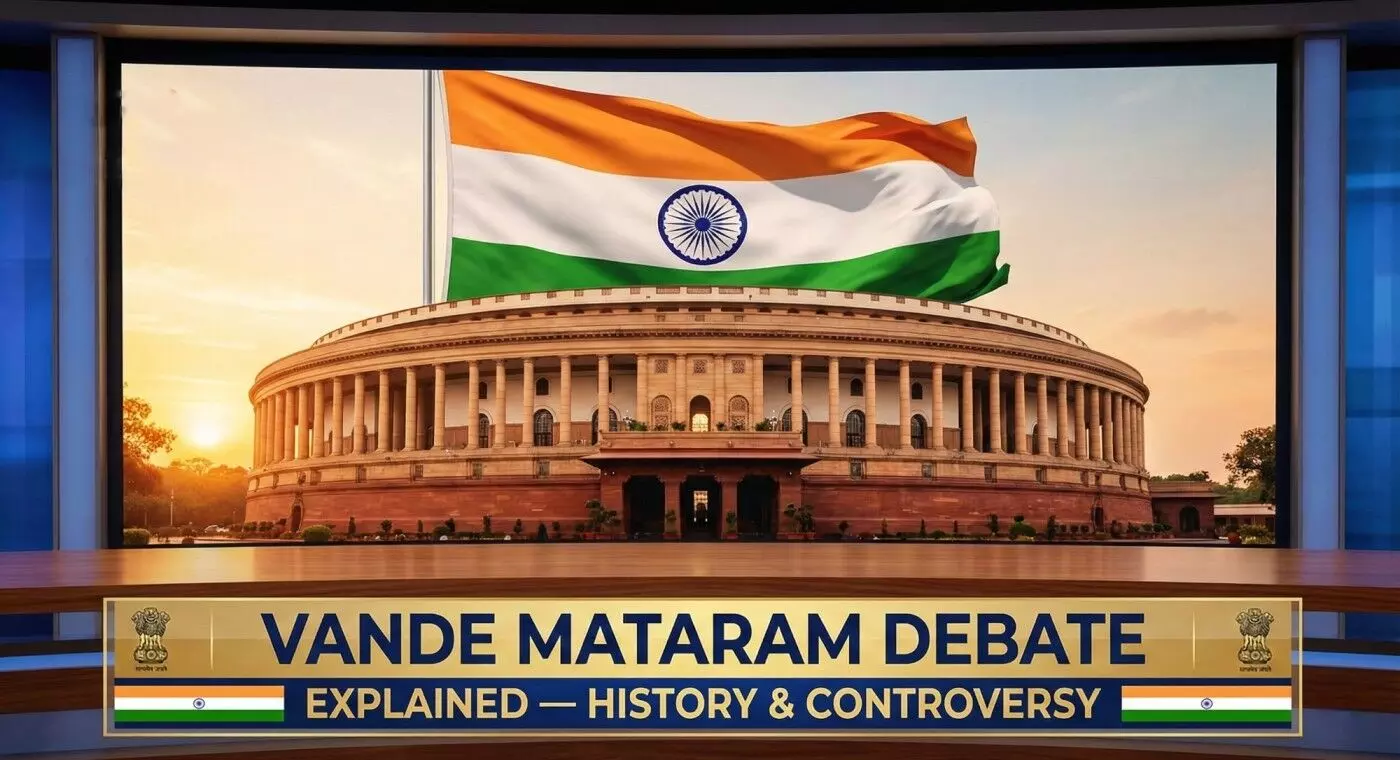
As the winter session of Parliament unfolds in New Delhi, Indian taxpayers have every right to ask a fundamental question: Is this how their elected representatives should be spending time and resources? While the nation grapples with rising Air pollution, economic challenges, unemployment concerns, and critical policy decisions awaiting legislative attention, a significant portion of parliamentary bandwidth has been consumed by discussions, debates, and ceremonial activities surrounding Vande Mataram.
The song’s historical significance is undeniable. Penned by Bankim Chandra Chatterjee in the 1870s and featured in his novel Anandamath, Vande Mataram became a rallying cry during India’s independence struggle. Its invocation of the motherland inspired countless freedom fighters, and its place in the national imagination is secure. However, the current parliamentary preoccupation with organizing elaborate renditions, staging special sessions devoted to its discussion, and allocating funds for commemorative programs represents a troubling misalignment of priorities.
Consider the numbers. Reports suggest that lakhs of rupees have been earmarked for special events, video productions, and promotional materials centered on Vande Mataram during this session. While defenders argue these amounts are trivial in the context of the national budget, this reasoning misses the larger point. In a country where every rupee counts, where development projects often face funding shortfalls, and where millions still lack basic amenities, the optics of such expenditure are deeply problematic. More critically, it’s not merely about money but about the opportunity cost of legislative time.
Parliament sits for a limited number of days each year. The winter session, traditionally a crucial period for passing important legislation and holding the government accountable, has instead witnessed repeated interruptions and diversions. Hours that could have been devoted to debating economic reforms, discussing agrarian distress, or scrutinizing government spending have been spent on what essentially amounts to political theater around a patriotic song that nobody disputes the importance of.
This is not an argument against respecting national symbols or honoring our freedom struggle. Rather, it’s a plea for proportionality and perspective. Vande Mataram doesn’t need Parliament’s validation; its place in Indian history is assured. What it doesn’t deserve is to become a tool for political posturing or a convenient distraction from substantive governance challenges.
From a historian’s perspective, this episode reflects a disturbing pattern in contemporary Indian politics: the substitution of symbolism for substance. When governments find it difficult to deliver on concrete promises like job creation, agricultural reform, or educational improvement, they often resort to grand gestures around cultural and nationalist themes. These cost little political capital, generate favorable headlines among certain constituencies, and create an illusion of purposeful activity.
The irony is particularly sharp given the historical context. The leaders who actually fought for independence and who drew inspiration from Vande Mataram were consumed by the urgent work of nation-building. Nehru, Patel, Ambedkar, and their contemporaries spent their parliamentary time debating land reforms, constitutional provisions, and economic planning. They honored symbols through their dedication to the hard work of governance, not through expensive commemorative programs.
Moreover, this focus on Vande Mataram has an exclusionary undertone that cannot be ignored. While the song is part of India’s national heritage, its controversial aspects have been acknowledged since independence itself. The Constituent Assembly, in its wisdom, adopted only the first two stanzas as the national song, precisely to navigate its more contentious elements. By making such a prominent display of it now, Parliament risks reopening old wounds and alienating sections of the population who have historical reservations about certain verses.
The real tragedy is what remains unaddressed while this drama unfolds. India’s economy is navigating uncertain waters, with questions about growth rates, employment generation, and income inequality demanding urgent attention. The agricultural sector continues to face structural challenges that periodic loan waivers cannot solve. Infrastructure development, while improving, still requires massive investment and policy innovation. Climate change poses existential threats that demand coordinated legislative action. Healthcare and education systems need fundamental reforms.
These are not abstract concerns but daily realities affecting hundreds of millions of Indians. They cannot be addressed through symbolic gestures or patriotic displays, no matter how well-intentioned. They require sustained parliamentary attention, rigorous debate, careful scrutiny of proposed solutions, and the political will to make difficult decisions.
The money being spent on Vande Mataram events could have funded scholarships for students from economically weaker sections. The parliamentary time could have been used to question ministers about implementation failures in crucial welfare schemes. The energy devoted to organizing these programs could have been channeled into substantive legislative work.
What makes this particularly frustrating is that it represents a failure of leadership across the political spectrum. Opposition parties, rather than consistently focusing on substantive issues, often get drawn into these symbolic battles, either in support or opposition. This allows the real work of Parliament to be sidelined while everyone engages in competitive nationalism.
Indian democracy deserves better. Citizens deserve a Parliament that takes its legislative responsibilities seriously, that uses its limited session time judiciously, and that demonstrates respect for public resources through careful stewardship. Honoring our national symbols need not and should not come at the expense of addressing our national challenges.
As this winter session proceeds, one hopes that sanity will prevail and parliamentary attention will return to matters of genuine consequence. Vande Mataram will endure in the hearts of Indians not because Parliament organizes expensive celebrations, but because citizens continue to find meaning in its message of love for the nation. The best way to honor that sentiment is through dedicated, effective governance that actually improves people’s lives. That is the true test of patriotism for any elected representative, and it’s a test that cannot be passed through symbolic gestures alone.