When Ideas Turn Dangerous | How Mahmood Mamdani’s Legacy Is Being Distorted
How Mahmood Mamdani’s Left-Wing Legacy Is Being Distorted — and Why the Radicalization of the Educated Threatens Democracy

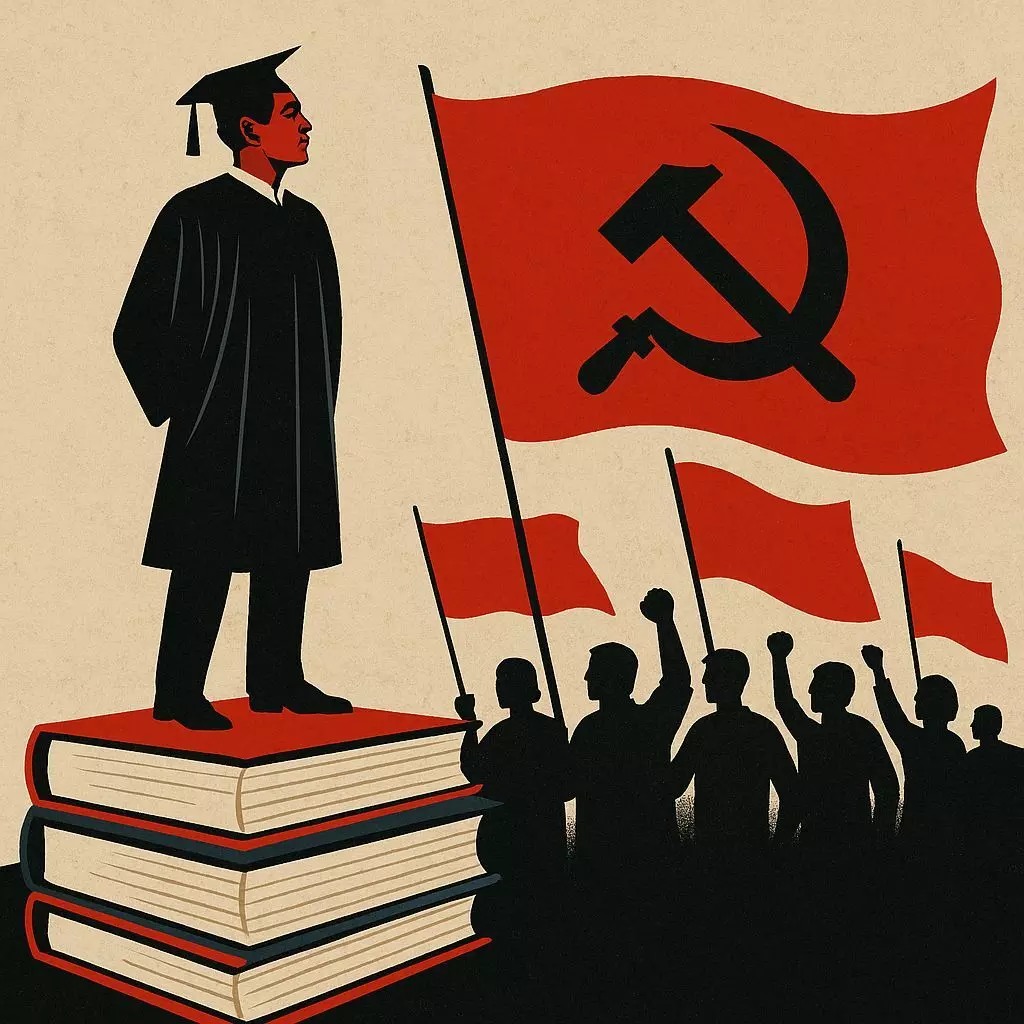
In the lecture halls of universities and on the timelines of social media, a powerful set of ideas has been reshaping global politics: anti-imperialism, postcolonial justice, and resistance to Western domination. These ideas, drawn from the writings of thinkers like Mahmood Mamdani, have inspired new generations to question the global order, colonial legacies, and the moral claims of Western democracies.
But in the echo chambers of the digital age, Mamdani’s nuanced scholarship is being stripped of context and turned into dogma. What began as a moral critique of empire has, in some circles, morphed into a binary worldview—one that divides humanity into oppressors and oppressed, and justifies rage as righteousness.
As a result, the intellectual Left’s most sophisticated critique risks becoming a tool for radicalization, even among the educated elite.
The Professor Who Redefined Power
Mahmood Mamdani’s rise to prominence came in the 1990s with his groundbreaking work Citizen and Subject, which redefined how scholars understood the colonial state in Africa. Later, in Good Muslim, Bad Muslim, he explored how Western narratives of terrorism and civilization perpetuate imperial hierarchies.
For many, Mamdani’s ideas offered liberation from Eurocentric history. He exposed how institutions, laws, and humanitarian interventions often disguise structural domination. His intellectual project was not about resentment—it was about historical understanding, moral accountability, and self-reflection.
Yet, like any powerful idea, Mamdani’s critique took on a life of its own.
Outside academia, his vocabulary of “colonizer and colonized,” “victim and perpetrator,” became rhetorical shorthand for moral struggle. In activist and online spaces, it often lost its subtlety, turning into a moral certitude that sees all institutions of modernity—medicine, science, government, even education—as tainted by colonial sin.
When Critical Thought Becomes Creed
The problem is not Mamdani’s work itself, but the way it has been simplified, radicalized, and moralized.
In the age of social media, complex arguments are flattened into slogans. Academic nuance becomes ideological clarity. And ideological clarity—when unchallenged—turns into intolerance.
Many young professionals, including doctors, engineers, and academics, enter these ideological worlds through legitimate outrage: wars justified as humanitarian missions, economic inequality masked as globalization, and histories of exploitation erased from textbooks.
But over time, moral outrage becomes moral absolutism. The world divides neatly into victims and villains. And for some, the next logical step is action—sometimes peaceful, sometimes not.
What’s striking is that these are not the disenfranchised masses. They are educated professionals, often deeply articulate, who find in radical ideology a moral purpose that transcends their ordinary lives. They see themselves as ethical insurgents in a corrupt world order. But that same conviction can make them blind to the human cost of their certitude.
The Educated Radical: A New Kind of Extremist
Modern radicalization doesn’t always look like the caricatures of the past. It wears a lab coat, a graduation robe, or a social justice badge. It speaks the language of liberation and decolonization.
But beneath the intellectual vocabulary lies the same dangerous psychology: the belief in absolute truth, the delegitimization of dissent, and the moral licensing of violence.
When educated individuals become ideologically rigid, their skills and intelligence amplify the damage. They rationalize fanaticism as justice, activism as revolution, and destruction as necessary cleansing.
This is not merely a problem of religion or politics—it is a problem of ideas divorced from humility.
The Threat to Liberal Democracy
Liberal democracy depends on tension—on the ability to hold conflicting ideas without collapsing into chaos. It thrives on free speech, dissent, and compromise.
But when intellectual movements turn moralistic and militant, democracy itself begins to suffocate.
Universities become battlegrounds of ideology. Debate turns into denunciation. Institutions lose legitimacy in the eyes of those who see them as colonial relics.
The risk is not revolution but erosion—the slow corrosion of trust, reason, and dialogue that keeps democratic societies open and self-correcting.
Reclaiming the Space for Thought
Democracies must learn to protect critical thought without idolizing it. The answer is not censorship or surveillance, but education that restores complexity and self-critique.
Universities need to teach how to argue, not just what to believe. Social media platforms must invest in civic literacy, not just algorithmic outrage. And intellectuals—Left or Right—must defend the difference between critique and creed.
The spirit of Mamdani’s work calls for precisely this: an unflinching look at power without surrendering to fatalism or hate. To honor that spirit, his ideas must remain open, dialogic, and self-questioning—not frozen into slogans of resentment.
The Final Lesson
The radicalization of the educated is one of the great paradoxes of our age. It reminds us that intelligence does not inoculate against fanaticism—sometimes, it sharpens it.
Mamdani’s legacy, at its best, teaches moral clarity without moral arrogance. It demands accountability from power but also compassion for complexity. When that balance is lost, even the most enlightened ideas can become weapons.
In the end, it’s not the rise of Mamdani’s ideology that threatens democracy—it’s our failure to handle his ideas responsibly. For when ideas turn dangerous, they rarely start that way. They start as truth, then become faith, and finally, demand obedience.
And in that moment, democracy begins to die—not with violence, but with certainty.