A Transatlantic Scandal Exposing Geopolitical Hypocrisy from London to New Delhi
In the unforgiving arena of global power politics, where alliances are forged in shadowy boardrooms and betrayals unfold under the glare of judicial scrutiny, the specter of Jeffrey Epstein continues to unravel the facades of the elite. On February 19, 2026—coinciding with his 66th birthday—Andrew Mountbatten-Windsor, the disgraced former Prince Andrew and younger brother of King Charles III, was arrested by Thames Valley Police on suspicion of misconduct in public office. This seismic event, as reported extensively by CNN, The New York Times, and the BBC, stems from explosive revelations in over three million pages of U.S.-released documents detailing Epstein's sprawling network of influence. These files allege that Mountbatten-Windsor, during his tenure as Britain's special representative for international trade from 2001 to 2011, forwarded sensitive government reports on Vietnam, Singapore, and other strategic locales to the convicted sex offender. Such actions, if proven, represent not merely a personal lapse but a egregious breach of national security protocols, potentially compromising Britain's geopolitical leverage in Southeast Asia amid rising tensions with China.
The arrest, executed with clinical precision at Wood Farm on the Sandringham estate, underscores a rare moment of accountability in the stratified echelons of British aristocracy. Thames Valley Police, in a terse statement posted on X, confirmed the detention of a man in his sixties from Norfolk, adhering to national guidelines that shield the accused's identity until charges are formalized. Yet, the identity is an open secret, amplified by a phalanx of unmarked vehicles and plainclothes officers descending upon the royal retreat, as detailed in eyewitness accounts relayed to Al Jazeera and PBS NewsHour. This "misconduct in public office"—a common law offense carrying a potential life sentence—encompasses abuses of power that erode public trust, a charge laden with irony for a figure once emblematic of imperial privilege. Mountbatten-Windsor, stripped of his royal titles in 2025 amid escalating Epstein fallout, has long denied wrongdoing, lamenting only his "ill-judged" friendship with the financier who died in custody in 2019 under suspicious circumstances. Buckingham Palace's silence speaks volumes, while King Charles III, in a measured response via The New York Times, affirmed that "the law must take its course," signaling a monarchy desperate to distance itself from the scandal's radioactive fallout.
Across the Atlantic, American media outlets like NBC News and NPR have framed this arrest as a vindication of persistent investigative journalism and judicial tenacity. The documents, unsealed by the U.S. Department of Justice in late January 2026, paint Epstein not as a mere pedophile but as a geopolitical operator, leveraging his connections to extract intelligence and favors from the powerful. Mountbatten-Windsor's alleged transmissions—detailed in emails where he purportedly shared insights from official trade missions—raise thorny questions about espionage-lite activities. Was Epstein, with his ties to intelligence agencies and billionaires, using these reports to bolster his hedge fund's maneuvers in emerging markets? PBS highlighted a "list of powerful men" in the files, including Elon Musk and former presidents, underscoring how Epstein's web ensnared figures across the ideological spectrum. Yet, the U.K.'s Labour government under Prime Minister Sir Keir Starmer, battered by public outrage and anti-monarchy campaigns like Republic, has opted for decisive action. This move, as AP News notes, aims to restore "eroding public faith" in institutions, a stark contrast to the inertia plaguing other nations entangled in the scandal.
Enter the Indian dimension, where the Epstein saga morphs into a domestic geopolitical maelstrom, exposing fissures in Prime Minister Narendra Modi's ostensibly ironclad administration. Union Petroleum and Natural Gas Minister Hardeep Singh Puri, a career diplomat turned BJP stalwart, finds himself ensnared in the same documentary deluge. As revealed in The Hindu and Economic Times, Puri engaged in 62 email exchanges and 14 meetings with Epstein between 2008 and 2014—well after the financier's 2008 conviction for soliciting prostitution from a minor. Congress party leaders, including Rahul Gandhi, have unleashed a barrage of demands for Puri's resignation, labeling the associations a "compromised" threat to national integrity. In a fiery NDTV interview, Puri dismissed the uproar, insisting the interactions were "strictly professional" and limited to "three or four times," while emphasizing he "did not seek the meetings." Yet, the Epstein files, accessible via U.S. Justice Department datasets, contradict this minimization, showing discussions on energy investments and geopolitical strategies in the Middle East and Asia—regions critical to India's hydrocarbon dependencies and Quad alliances.
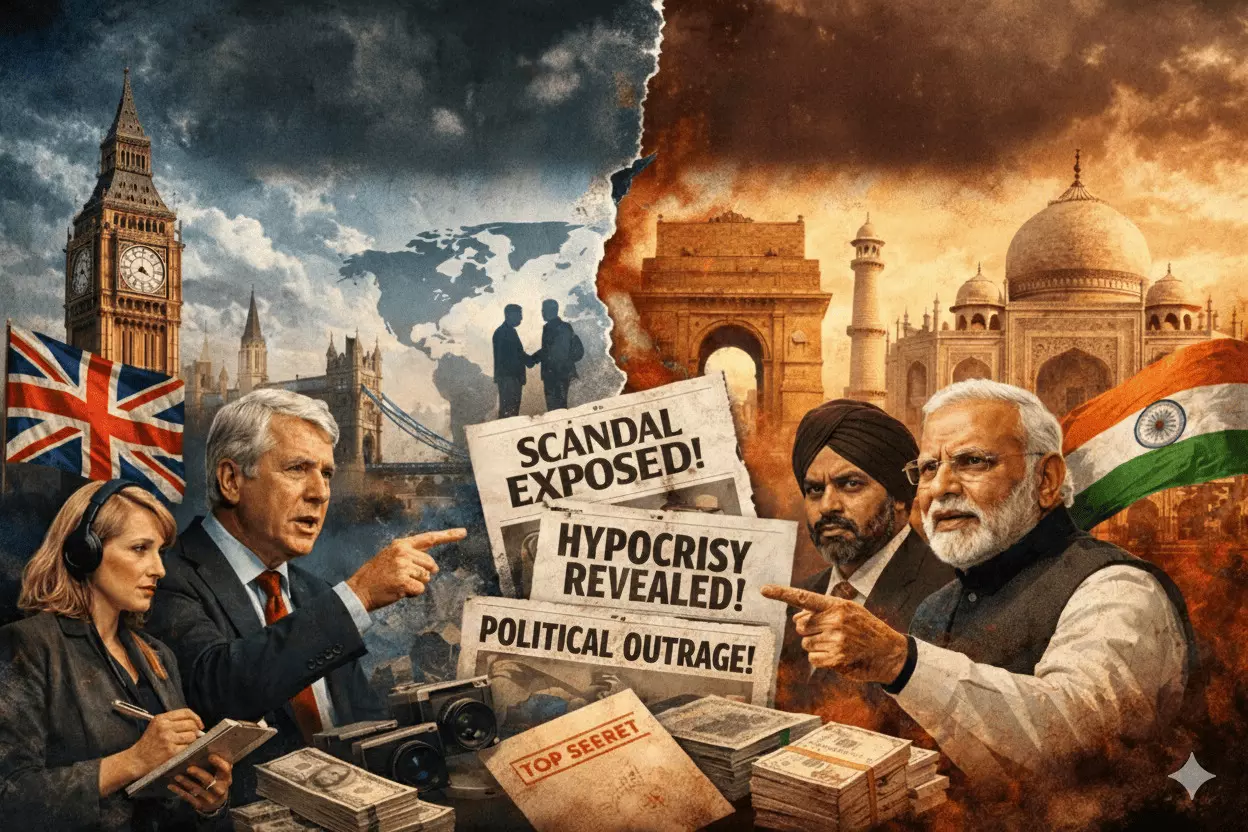
This juxtaposition between British resolve and Indian defensiveness illuminates a broader geopolitical hypocrisy. In London, Starmer's administration, navigating post-Brexit isolation and U.S.-U.K. intelligence-sharing pacts under AUKUS, cannot afford to shield a royal relic lest it undermine transatlantic trust. The arrest bolsters Britain's image as a rule-of-law bulwark, potentially strengthening its hand in negotiations with Washington over trade and security. Conversely, in New Delhi, Modi's government—embroiled in domestic controversies from farm laws to electoral bonds—appears entrenched in a bunker mentality. Times of India reports highlight Congress's accusations that Puri's Epstein links compromise India's energy diplomacy, especially amid OPEC maneuverings and U.S. sanctions on Iran. Why the reluctance to act? As posited in Reddit threads and X posts from users like Prashant Bhushan and Mahua Moitra, it may stem from Puri's insider knowledge of Modi's inner circle or the BJP's fundraising networks. Moitra's scathing op-ed in The Week lambasts Puri's "moral evasiveness," drawing parallels to global figures who resigned over lesser associations, and questions whether India's rising superpower status is built on ethical quicksand.
The scandal's ripple effects extend to the Indo-Pacific theater, where Epstein's ghost intersects with great-power rivalries. India's strategic pivot toward the U.S., via frameworks like the Quad, hinges on mutual transparency—yet Puri's Epstein entanglements could invite American scrutiny, especially under a potentially isolationist Trump administration redux. X posts from Indian users decry the double standards: while Mountbatten-Windsor faces custody, Puri clings to office, defending his actions in YouTube interviews where he claims ignorance of Epstein's full criminality post-2008. This narrative strains credulity; as Instagram reels from opposition voices emphasize, Epstein's conviction was public knowledge, rendering Puri's "friend" reference in emails a damning geopolitical faux pas.
Ultimately, this transcontinental imbroglio exposes the fragility of elite impunity in an era of digital transparency. From Windsor's gilded cages to Delhi's power corridors, Epstein's machinations reveal how personal indiscretions metastasize into national vulnerabilities. Britain's bold arrest may herald a new accountability paradigm, pressuring allies like India to confront their own skeletons. Yet, as geopolitical winds shift— with China exploiting Western divisions and Russia courting energy partnerships—the real casualty is public probity. Will Modi emulate Starmer's fortitude, or persist in a defensive crouch that erodes India's global stature? The world watches, for in this scandal lies a litmus test for democracies grappling with the toxic interplay of power, predation, and politics. As the investigations unfold, one truth endures: no throne or cabinet is impervious to the inexorable tide of justice.