Assam’s Moran Community Turns Up Pressure for ST Status, Testing BJP’s Ethnic Balance
The Morans of Upper Assam intensify demands for Scheduled Tribe recognition, testing BJP’s ethnic balance. Historical marginalisation, land rights, and political stakes are at the heart of the issue.

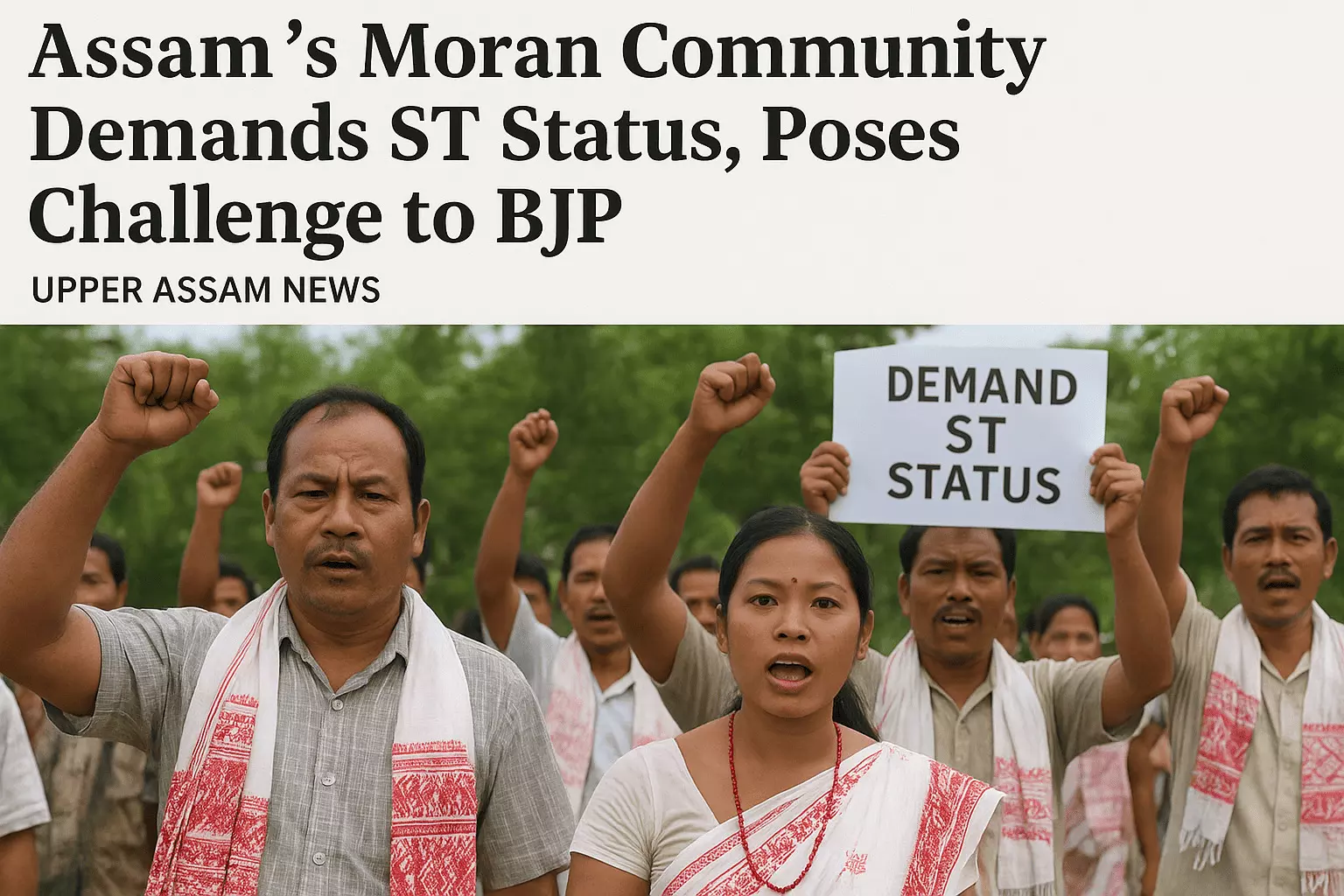
Tinsukia/Dibrugarh/Sivasagar: The Morans, one of Assam’s oldest indigenous tribes, have escalated demands for Scheduled Tribe (ST) recognition, challenging the BJP government’s long-standing “all is well” narrative in the resource-rich Upper Assam belt.
Historically, the Morans were dispossessed under Ahom rule, British colonisation, and post-independence industrialisation. Waves of migration and land alienation have left them among the region’s poorest, despite its oil, coal, tea, and fertile soil.
During the 1980s–90s insurgency, Moran villages were caught between ULFA rebels and counter-insurgency operations, deepening a sense of marginalisation that persists today.
With BJP patronage and welfare schemes, the community had appeared politically accommodated. But Moran leaders say symbolic gestures no longer suffice. They now seek constitutional recognition to secure land rights, jobs, and protection against demographic marginalisation.
Analysts note the agitation is strategic rather than insurgent. Young Morans, backed by historical memory of uprisings like the Moamoria Rebellion, are leveraging a mix of elite bargaining and grassroots pressure.
For the BJP, conceding ST status could trigger similar claims from other indigenous groups, including Motok, Tai-Ahom, Chutia, Koch-Rajbongshi, and Tea Tribes. Yet ignoring the Morans risks alienating a historically loyal community.
“The Morans embody Assam’s paradox: a people of a rich land made poor by history. Their ST demand is about survival and recognition, not opportunism,” said a local observer.
This development signals a new phase in Assam politics, where welfare and patronage alone may no longer hold ethnic groups in check.