Assam’s Political Dilemmas: The Nixonian Playbook of Himanta Biswa Sarma
Explore how Assam Chief Minister Himanta Biswa Sarma's political strategy, reminiscent of Richard Nixon, impacts the state's governance and economy.

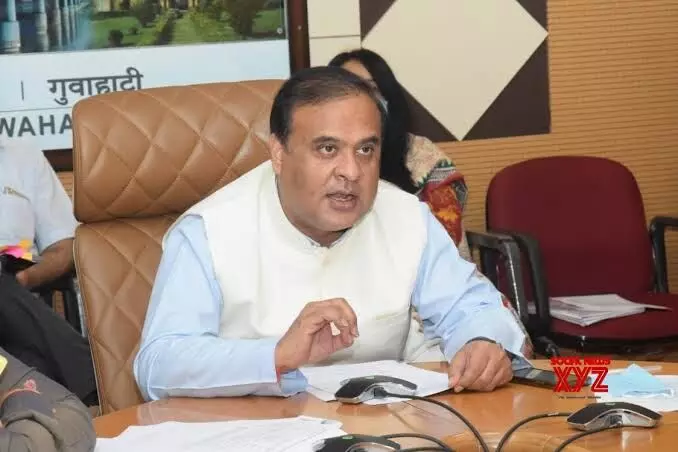
In the contemporary political theatre of Assam, Chief Minister Himanta Biswa Sarma (HBS) operates with a style reminiscent of Richard Nixon — brilliant in manoeuvring, ruthless in strategy, but ultimately prone to overreach and self-defeat. His opportunist instincts allow him to dominate narratives in the short term, but they reveal dangerous fault lines when confronted with real governance challenges. The aftermath of Zubeen Garg’s death, the silence around the tragic deaths of nine Assamese migrant labourers in Tamil Nadu, and the quiet scrapping of the flagship Green Energy project expose the selective empathy and political priorities that define Assam’s ruling establishment.
Dragging Zubeen’s Death: The Nixonian Narrative
The death of Zubeen Garg, Assam’s cultural icon, continues to occupy an outsized space in the Chief Minister’s politics. By dragging the issue repeatedly into the public arena, despite it being under the SIT, Sarma employs a Nixonian tactic — controlling the narrative by keeping it alive. His attempt to project himself as the “guardian of Assamese culture” echoes his larger strategy of personalizing every event, converting tragedy into political capital.
Yet, the results have been uneven. His press conferences, supported by Pijush Hazarika’s tone-deaf statements, came across as dull and defensive, offering photographs of accused persons rather than substantive answers. Instead of strengthening his image, the spectacle looked opportunistic and insecure, shrinking his stature before the public.
The Forgotten Tragedy: Migrant Labourers in Tamil Nadu
While Zubeen’s case is amplified, the death of nine Assamese daily wage earners in Tamil Nadu received little more than passing acknowledgment. This silence is telling. It exposes the structural failure of Assam’s economy — a state unable to retain its youth, forcing them to seek survival wages thousands of kilometres away.
This tragedy directly contradicts the BJP government’s earlier promise, articulated by Pijush Hazarika himself, that no Assamese youth would ever have to work outside the state as labourers. Yet, neither the CM, nor the media, nor civil society mounted the outrage such a betrayal warranted. The absence of sustained debate reflects selective empathy: public grief is mobilized only when it is politically useful.
The Scrapped Green Energy Dream
Adding to the contradictions is the quiet scrapping of the Green Hydrogen Energy Project, once the showpiece of “Advantage Assam.” This flagship initiative, projected to create over 10,000 jobs and anchor Assam’s industrial future, was abandoned without clear justification. The silence of both government and media on this reversal signals either political discomfort or collusion.
Its cancellation raises troubling questions about the economic vision for Assam:
Was the project sacrificed to protect vested interests?
Did governance failures or land disputes make it unviable?
Or was it simply another grand announcement meant for headlines, never intended for execution?
Whatever the case, the fallout is severe: a lost opportunity for industrialisation, a betrayal of employment promises, and another reason for Assamese youth to migrate.
The Role of Media and Civil Society
The Assamese media and civil society have played into this selective politics. Emotional issues like Zubeen’s death receive saturation coverage, while structural economic questions are buried under silence. Whether through fear of political reprisal, ideological alignment, or sheer populist inertia, both institutions fail to hold power accountable where it matters most.
This imbalance weakens democratic discourse. By amplifying cultural grief and ignoring livelihood struggles, they reinforce a politics of symbolism over substance — a space where HBS thrives as an opportunist strategist.
Socio-Political and Economic Implications
The consequences of this selective politics are multidimensional:
Socially, the public is taught to grieve selectively, valuing cultural icons over ordinary lives.
Politically, the CM cultivates a Nixonian aura of indispensability, while risking credibility with each overplayed move.
Economically, the silence around migration deaths and failed industrial projects reflects a deep governance vacuum. Assam continues to export its labour while importing political drama.
The Image That Cannot Hold
Himanta Biswa Sarma’s strategy — part Nixonian narrative control, part opportunist theatrics — may succeed in momentary diversions, but it cannot substitute for governance. The neighbour’s uncle image he tried to build during Zubeen’s death melted quickly, because the public, in the age of social media, reciprocates with its own style — mocking, questioning, and exposing.
In the long run, it is not Zubeen’s memory but Assam’s economic stagnation, jobless youth, and broken promises that will test the durability of Sarma’s politics. The CM, the media, and civil society can continue to stage spectacles, but the people know when politics chooses drama over delivery.