Bihar Elections 2025: Social Media Sparks Political Battle | NDA vs Mahagathbandhan
Bihar elections go digital! NDA, Mahagathbandhan, and independent candidates fight on social media, creating political drama and cyber risks.

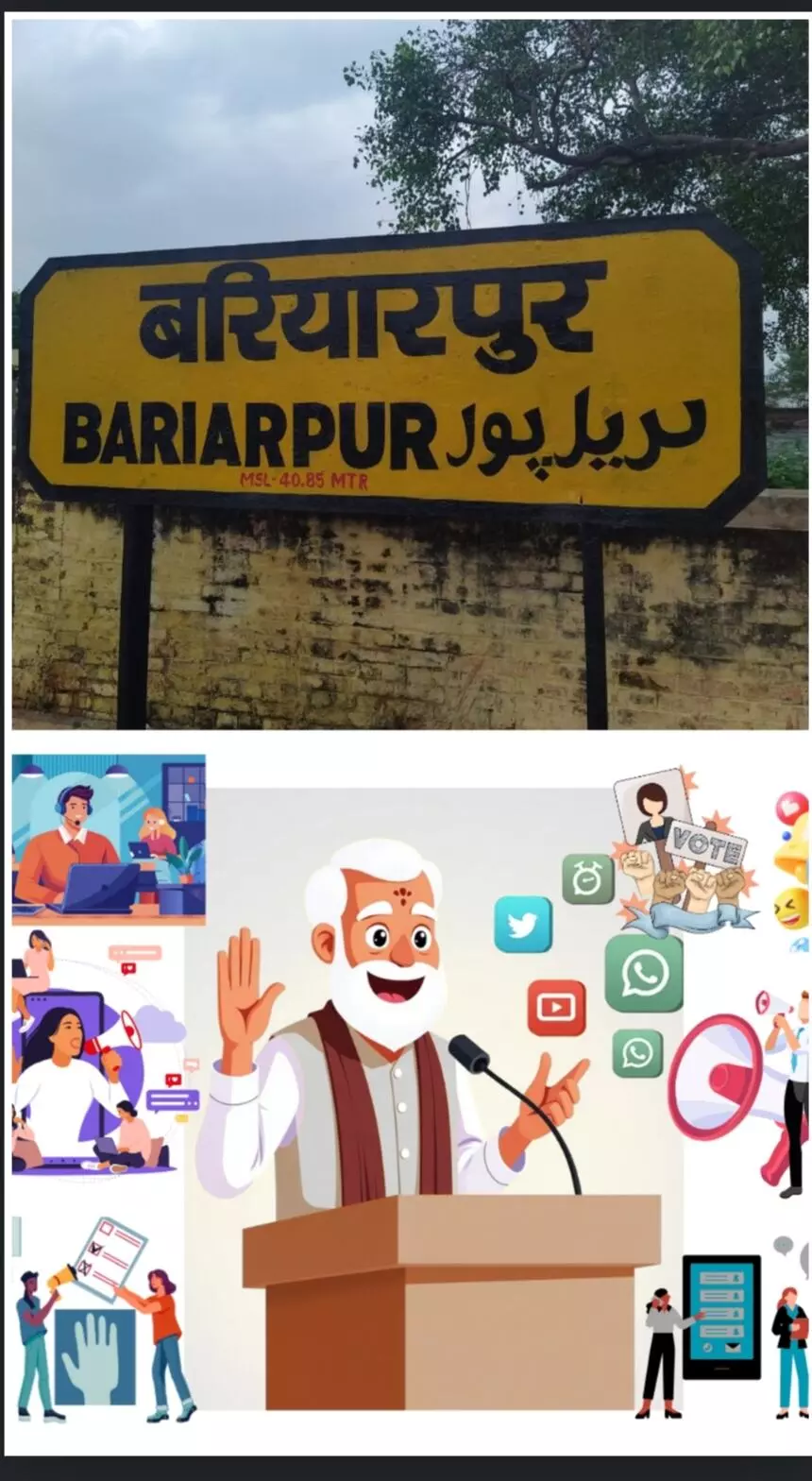
The battle for the Bihar Assembly elections has exploded on social media. Platforms like YouTube, Facebook, WhatsApp groups, Instagram, and Reels have become the new battlegrounds for political warfare. Just like the streets, the virtual world too is divided — some groups rallying behind the NDA, others supporting the Mahagathbandhan, and a few drumming up support for the so-called “Arvind Kejriwal of Bihar.”
However, there is a fundamental difference between the ground war and the virtual war. On the ground, campaigns are being led by big names — from Prime Minister Narendra Modi to Bihar’s own “Kejriwal,” Prashant Kishor — while Tejashwi Yadav and Tej Pratap Yadav are fighting to secure their political futures. Chirag Paswan’s camp, on the other hand, is studying the arithmetic of votes, hoping to pave the way for their leader’s chief ministerial dream under the NDA’s potential victory.
The virtual battlefield, though, is far more fluid. Here, passionate “digital warriors” are crossing party lines — driven less by ideology and more by personal preferences — resulting in unexpected benefits for independent and rebel candidates.
Even alumni groups have turned into political microcosms. Around 400 former students from T.N.B. College, S.M. College, and Marwari College in Bhagalpur have split into factions. Professor Dr. Sanjay Kumar Mishra, for instance, is traveling from Vrindavan to Saharsa to support a former student’s candidacy, while also backing Bhagalpur’s deputy mayor in the assembly race. Meanwhile, many others in the same group are campaigning online for the NDA, warning against the return of the so-called “Jungle Raj.”
Interestingly, women participants seem more measured and thoughtful in their engagement. From Rinku Ji to Pritam Mishra, many are refraining from loud political endorsements, instead framing the NDA versus Mahagathbandhan contest as a struggle for Bihar’s democratic integrity.
It appears that this time, social media itself has entered the election arena as an active player, transforming the campaign narrative and heightening the drama. Yet, the outcome remains unpredictable. Perhaps by November, the clouds of uncertainty will begin to clear.
Meanwhile, the tone of online exchanges is turning increasingly hostile. The weaponization of words on certain platforms is raising the risk of FIRs under cybercrime laws. The Election Commission, too, faces the growing challenge of ensuring effective enforcement of the Model Code of Conduct in the digital space.
A large section of intellectuals, however, is maintaining a deliberate distance — choosing silence over participation in this noisy, polarized digital election war.
Special Report by Manjari