Brahmaputra at Risk: China’s Mega Dam and the Fragile Diplomacy of South Asia
China's plan to construct a $170 billion hydropower dam on the Brahmaputra River threatens the livelihoods of over 160 million people in Bangladesh and poses a risk to regional stability.

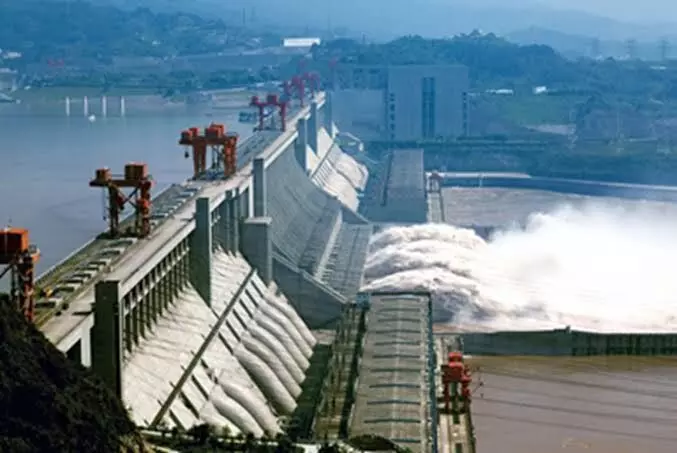
In the shadow of the Himalayas, where rivers carve lifelines through nations, the Brahmaputra—known locally in Bangladesh as the Jamuna—has long been more than just a waterway. It is a source of sustenance, culture, and survival for over 160 million people in Bangladesh alone. But upstream, in the remote reaches of Tibet, China’s plan to construct a colossal $170 billion hydropower dam threatens to transform this river from a giver of life into a geopolitical fault line. While the environmental and economic consequences are grave, the most complex and precarious angle of this story lies in the realm of external affairs—where diplomacy, sovereignty, and strategic calculus collide.
China’s dam project is emblematic of a broader pattern: the assertion of hydro-hegemony in Asia. Unlike most riparian nations, China sits upstream on many of the continent’s major rivers and has consistently refused to enter binding water-sharing agreements. This unilateralism is not new. On the Mekong River, China’s upstream dams have already caused devastating droughts in Southeast Asia, despite Beijing’s claims of responsible management. The Brahmaputra, however, is different. It flows through three nuclear-armed states—China, India, and Bangladesh—making its manipulation not just an environmental issue but a potential flashpoint for regional instability.
For Bangladesh, the stakes are existential. The country is a low-lying delta, acutely vulnerable to climate change, sea-level rise, and seasonal flooding. The Brahmaputra provides critical freshwater for irrigation, drinking, and fisheries. Even small disruptions—such as a few centimeters drop in water level or minor sediment loss—can cascade into food insecurity, economic hardship, and displacement. Yet Bangladesh finds itself in a diplomatic bind. Its growing economic ties with China, particularly through the Belt and Road Initiative, have created a dependency that limits its ability to protest or demand transparency. At the same time, its relationship with India—historically strong but recently strained—has not yielded the kind of trilateral cooperation needed to address the looming crisis.
India, too, is watching warily. The dam’s location near the Line of Actual Control in Arunachal Pradesh adds a layer of military sensitivity. Indian strategists fear that China could weaponize water flows during times of conflict, either by triggering artificial floods or withholding water during dry seasons. India has proposed countermeasures, including its own dam projects on the Siang River, but these face environmental hurdles and local opposition. Moreover, India’s own reluctance to share water data with Bangladesh during monsoon seasons has created mistrust, weakening the potential for a united front.
In this tangled web of interests, the absence of a legal framework is glaring. There is no trilateral treaty governing the Brahmaputra’s waters, no binding mechanism for data sharing, and no regional institution with the authority to mediate disputes. China’s refusal to participate in such frameworks stems from its broader foreign policy doctrine: absolute sovereignty over transboundary rivers. This stance leaves downstream nations like Bangladesh and India with few options beyond reactive diplomacy and strategic hedging.
The complexity deepens when one considers the internal pressures within each country. In Bangladesh, the government must balance its need for Chinese investment with rising domestic concern over environmental degradation and water security. Civil society groups and environmental activists have sounded the alarm, but their voices are often drowned out by the allure of infrastructure funding and economic growth. In India, water management is a state subject, meaning that coordination between the central government and northeastern states is often fragmented. China, meanwhile, operates with a centralized decision-making model that prioritizes national interest over regional cooperation.
What makes this external affairs challenge so intricate is that it cannot be solved by conventional diplomacy alone. It requires a paradigm shift in how nations perceive shared resources—not as instruments of power, but as foundations of mutual survival. Bangladesh must recalibrate its foreign policy to assert its rights without alienating its partners. India must recognize that its own security is intertwined with Bangladesh’s stability and act accordingly. And China, if it wishes to be seen as a responsible global power, must move beyond unilateralism and embrace cooperative water governance.
The Brahmaputra’s future is not just a matter of engineering or hydrology—it is a test of political will, regional solidarity, and ethical stewardship. If managed wisely, the river can continue to nourish millions and foster collaboration across borders. If mismanaged, it could become a symbol of division, scarcity, and conflict. In a world increasingly shaped by climate stress and geopolitical rivalry, the choices made on the banks of this river will echo far beyond its waters.