Defiance in the Fields:Leader of Oppositions's Stand Against the India-US Trade Storm
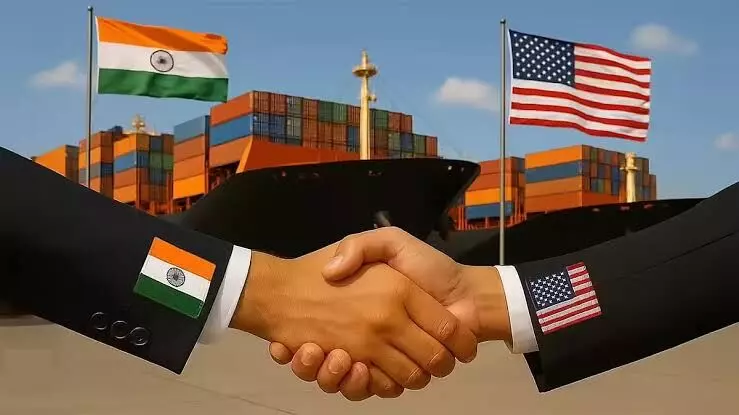
On February 13, 2026, in the Parliament House complex, Leader of the Opposition Rahul Gandhi sat down with prominent farm union leaders, including Guramneet S. Mangat of the Kisan Mazdoor Morcha—India and Hameed Malik of the J-K Zamidara Forum, alongside others from across the nation. The gathering focused on mounting opposition to the India-US interim trade deal, which many fear could flood Indian markets with subsidized American agricultural imports. Discussions centered on launching a large-scale nationwide movement to protect the livelihoods of farmers and farm laborers, particularly those growing corn, soybean, cotton, fruits, and nuts.
The meeting came just a day after Gandhi publicly declared his unwavering support for farmers, stating that no matter if the government filed an FIR, registered a case, or moved a privilege motion against him, he would continue fighting for their cause. He described any trade agreement that jeopardizes farmers' livelihoods or India's food security as fundamentally anti-farmer, vowing not to allow the government to compromise the interests of those who feed the nation.
Critics of the deal argue it represents a dangerous opening for foreign agricultural products, potentially undermining small Indian cultivators who already struggle with debt, unpredictable weather, and market pressures. Union leaders at the meeting expressed deep concerns that mechanized American farms could outcompete domestic producers, leading to greater distress in an already vulnerable sector that supports a significant portion of India's workforce.
In response, government figures have defended the agreement, insisting that sensitive areas like agriculture and dairy remain protected, with safeguards for key crops. Ministers have dismissed opposition claims as misinformation, emphasizing that the pact aims to benefit Indian exporters, entrepreneurs, and farmers through better market access and economic ties.
Yet the political temperature rose sharply when BJP MP Nishikant Dubey filed a substantive motion against Gandhi, seeking not only the cancellation of his Lok Sabha membership but a lifetime ban from contesting elections. Dubey accused Gandhi of colluding with anti-India elements through associations with foreign organizations during visits to countries like Thailand, Vietnam, and Cambodia.
Such allegations fit a broader pattern of attacks portraying the opposition leader as influenced by external forces, diverting attention from the core agrarian issues at stake. Gandhi's supporters see these moves as attempts to silence criticism rather than address legitimate farmer worries.
This confrontation echoes India's long history of peasant resistance, where unified voices have repeatedly forced policy reversals and highlighted rural inequities. From colonial-era struggles against exploitative systems to more recent mobilizations demanding fair prices and debt relief, farmers have proven their power to shape national discourse.
The current standoff raises fundamental questions about India's parliamentary process during the ongoing Budget Session. With proceedings recessed until March, the ruling side faces a choice: pursue aggressive tactics against the opposition or seek dialogue to ease tensions and resolve farmer grievances.
Gandhi's resolve signals a deeper commitment to standing with those at the grassroots, framing the trade deal debate as a fight for sovereignty, equity, and the survival of India's agricultural backbone. As unions gear up for potential nationwide action, the coming weeks could determine whether this moment sparks broader change or deepens political divides.
In the end, the story unfolding in Parliament is not merely about one deal or one leader—it's about whether India's democracy can truly listen to its tillers of the soil before the fields turn silent under mounting pressures.