DMK Expands Coalition and Finalizes Alliances for Tamil Nadu 2026 Polls
In the careful arithmetic that precedes every Tamil Nadu election, alliances are less about sentiment and more about structure. With the 2026 Assembly polls on the horizon, the Dravida Munnetra Kazhagam has moved decisively to tighten the bolts of its coalition machine.
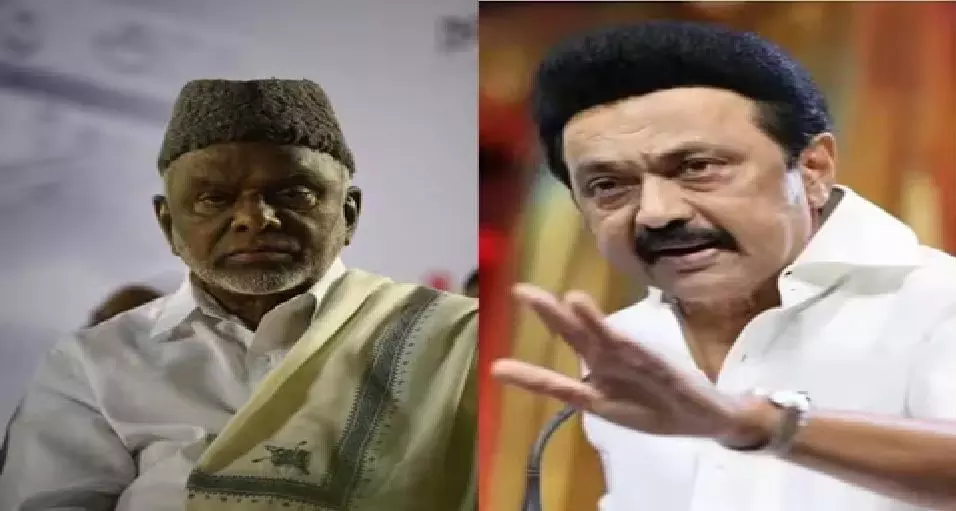
At a meeting held at Anna Arivalayam in Chennai, Chief Minister M. K. Stalin formalised a seat-sharing agreement with the Manithaneya Makkal Katchi. The party will once again contest two Assembly constituencies as part of the DMK-led front.
After the agreement was signed, MMK president M. H. Jawahirullah told reporters that his party would contest two seats under the DMK alliance and, as in the past, under the Rising Sun symbol of the DMK. The choice of symbol is not incidental; it signals both political alignment and campaign coherence, particularly in multi-cornered contests.
In the 2021 Assembly election, MMK had contested from Papanasam and Manapparai on the DMK’s symbol and secured victories in both constituencies. Jawahirullah won from Papanasam, while P. Abdhus Samad emerged victorious in Manapparai. Political circles suggest that the same constituencies may once again be allocated to the party, though a formal announcement is awaited.
Earlier, the Indian Union Muslim League had also finalised its agreement with the DMK, securing two constituencies. These early closures indicate the DMK’s preference to lock in smaller but stable allies before moving to harder negotiations with larger partners.
The 2021 DMK alliance comprised 13 parties. This time, the front has expanded significantly, touching 19 constituents. Among the new entrants are the Makkal Needhi Maiam, the Desiya Murpokku Dravida Kazhagam, the Social Democratic Party of India and the Manithaneya Makkal Katchi, among others.
Not all allies, however, are inclined to contest on the DMK’s symbol. Parties such as Makkal Needhi Maiam and Desiya Murpokku Dravida Kazhagam are understood to be keen on fighting under their own symbols, a reflection of their attempt to preserve independent political identities even within a broad coalition. Others, like the MMK, have opted for the Rising Sun — a strategic calculation that trades distinct branding for consolidated vote transfer.
The principal constituents of the current DMK-led alliance include the Indian National Congress, the Marumalarchi Dravida Munnetra Kazhagam, the Communist Party of India, the Communist Party of India (Marxist), the Viduthalai Chiruthaigal Katchi, the Indian Union Muslim League, the Kongunadu Makkal Desia Katchi, the All India Forward Bloc, the Tamizhaga Vazhvurimai Katchi, the Makkal Viduthalai Katchi, the Adhi Thamizhar Peravai, the Manithaneya Jananayaga Katchi, along with several regional outfits.
For Stalin, the emphasis is on breadth before battle. A wider alliance cushions anti-incumbency, broadens caste and community outreach, and reduces the risk of vote fragmentation. The ongoing seat-sharing talks are therefore less about mere numbers and more about managing egos, expectations and electoral arithmetic.
With negotiations still underway and speculation rife about further additions, the DMK appears determined to approach the 2026 contest not as a solitary force but as the fulcrum of a carefully assembled coalition. In Tamil Nadu, alliances win elections as much as manifestos do — and the groundwork is already being laid.