DMK expands to 19-party front for 2026; seat-sharing talks with Congress hit pause over numbers
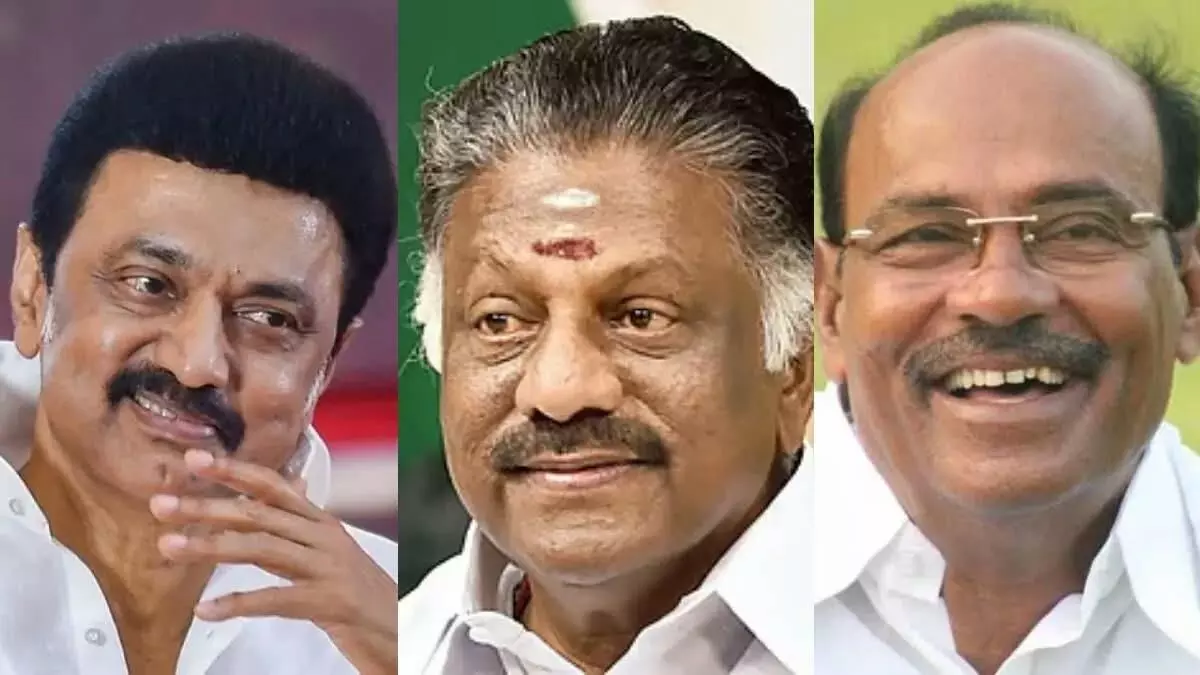
In 2021, the Dravida Munnetra Kazhagam (DMK) stitched together a 13-party alliance and rode it to power in Tamil Nadu. Five years on, as the 2026 Assembly election approaches, that rainbow coalition has not only been retained but significantly expanded — a calibrated political exercise that signals Chief Minister M. K. Stalin’s intent to enter the fray with formidable numerical strength.
Alongside the parties that were part of the 2021 arrangement, new entrants — O Panneerselvam (OPS), Makkal Needhi Maiam, Desiya Murpokku Dravida Kazhagam (DMDK), Social Democratic Party of India (SDPI), Manithaneya Jananayaga Katchi, Mukkulathor Pulipadai and Kongu Ilaignar Peravai — have swelled the ranks. The result: a 19-party combine for 2026.
Seat-sharing negotiations within the DMK-led front are under way. The inclusion of DMDK and Makkal Needhi Maiam has altered the arithmetic. According to sources, the DMK leadership has conveyed that alliance partners may have to reconcile to contesting fewer seats than in 2021, given the expanded coalition.
This has inevitably sharpened discussions with the Indian National Congress, a key constituent. In 2021, the Congress contested 25 seats. This time, it is learnt to have sought a higher number, leading to protracted negotiations. With new parties accommodated, the DMK’s position has reportedly been that available seats are limited. In successive rounds of talks, the Congress is said to have demanded 40 seats and one Rajya Sabha berth.
Sources indicate that the Stalin-led DMK made it clear that such a demand could not be conceded. This is understood to have led to a temporary pause in formal discussions. Subsequently, efforts at compromise gathered pace. Indications are that the Congress may be allotted between 25 and 27 seats, with assurances of a larger role in the forthcoming local body elections.
Even as negotiations continue, the DMK has moved to consolidate its flank, a strategy that exerts pressure on the Congress. By inducting select parties into the alliance and drawing certain leaders directly into the DMK fold, Stalin has sought to send a political message. With DMDK already on board, there is speculation that Ramadoss, too, may join the alliance. More strikingly, former Chief Minister O. Panneerselvam — who has held the office thrice — is now aligned with the DMK.
Compared to 2021, the 2026 contest thus finds the DMK front enlarged and assertive. The 13-party alliance of the previous Assembly poll remains intact, with additions including Makkal Needhi Maiam, DMDK, SDPI, Manithaneya Jananayaga Katchi, Mukkulathor Pulipadai and Kongu Ilaignar Peravai, taking the tally to 19.
At present, the constituents of the DMK alliance are: DMK; Congress; MDMK; Communist Party of India; CPI (Marxist); Viduthalai Chiruthaigal Katchi; Indian Union Muslim League; Kongunadu Makkal Desia Katchi; Manithaneya Makkal Katchi; All India Forward Bloc; Tamilaga Vazhvurimai Katchi; Makkal Viduthalai Katchi; Adi Tamilar Peravai; Makkal Needhi Maiam; DMDK; SDPI; Manitha Neya Jananayaga Katchi; Mukkulathor Pulipadai; and Kongu Ilaignar Peravai.
Further, O Panneerselvam — who had been leading the AIADMK Cadres’ Rights Retrieval Committee — has now moved closer to the DMK. His son, former MP Ravindranath, along with supporters such as Manoj Pandian and Vaithilingam, are also learnt to have joined the party. All of them, observers note, have wielded significant influence in previous elections.
With these additions, there is palpable confidence within the DMK that it could cross the 200-seat mark in the 2026 Assembly election — an ambition that underlines Stalin’s expansive coalition blueprint and recalibrates the balance within the alliance itself.