Hagrama Mohilary: The Evergreen Kingmaker in Assam’s Shifting Political Chessboard
Veteran Bodo leader Hagrama Mohilary remains a decisive force in Assam’s political landscape, balancing regional aspirations and national strategy as the 2026 elections near.

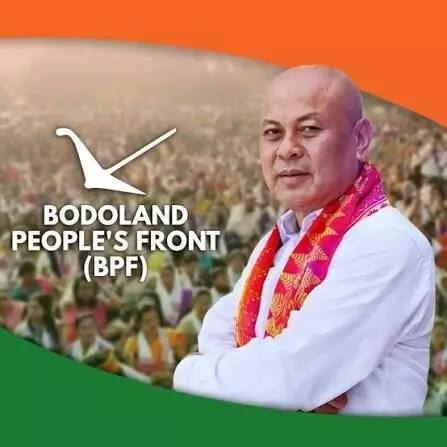
Assam’s politics has long been a theatre where regional aspirations, ethnic identities and national strategies collide. At the heart of this complexity stands Hagrama Mohilary—once the undisputed king of the Bodoland Territorial Region (BTR), now a seasoned kingmaker whose influence still reverberates across the state. His resilience, adaptability and shrewd instinct make him a stakeholder of enduring relevance, even as Chief Minister Himanta Biswa Sarma (HBS) casts the longest shadow in Assam.
From Jungle Politics to Corridors of Power
Hagrama’s journey mirrors the evolution of Bodo politics itself. Emerging from the jungles during an era of armed struggle, he recast himself within the democratic framework, leading the Bodoland Territorial Council (BTC) as its chief executive. That transformation—from insurgent commander to administrator—was not merely personal but emblematic of the Bodo movement’s integration into Assam’s democratic and developmental mainstream.
Though he retreated briefly into political hibernation, Hagrama has repeatedly returned, stronger and sharper, underscoring his durability. Many contemporaries have vacated their seats or faded into irrelevance. Hagrama remains green—politically vibrant, credible and capable of reshaping outcomes.
A Regional Power with Statewide Reach
Though rooted in BTR, Hagrama’s presence extends across Assam. Even during the public outpouring after cultural icon Zubeen Garg’s death, Hagrama’s name surfaced in news cycles—testament to his staying power in the wider Assamese imagination. He projects himself as both a community custodian and a state-level stakeholder, reflecting the breadth of his political identity.
BTR: Geopolitics and the National Imperative
The BTR is more than a regional theatre. Bordering Bhutan and Bangladesh and lying beside the narrow Siliguri Corridor—the strategic “Chicken’s Neck” connecting mainland India to the Northeast—the region is central to India’s security, defence logistics and connectivity. A politically stable BTR reduces the risk of ethnic unrest, thwarts external vulnerabilities and facilitates infrastructure development.
For both New Delhi and Dispur, dependable Bodo leadership is a strategic necessity. Here Hagrama offers a tested hand: he has negotiated peace, sustained stability and delivered developmental governance. His presence is not just a regional reality but a national asset.
The People’s Man: Simplicity with Shrewdness
Hagrama’s political style contrasts sharply with the rhetoric-heavy campaigning of many contemporary leaders. His “no gyan, just words” approach—direct, simple and personal—connects with ordinary people. Beneath this soft exterior lies an astute political mind. He has consistently displayed patience, timing and maturity, ensuring he is rarely outplayed in the long game of Bodo politics.
His identity as a people’s man—combined with his shrewd adaptability—remains his greatest political capital.
Hagrama vs. Himanta: Coexistence or Eclipse?
The 2026 elections sharpen the question: will Hagrama’s shadow fade under HBS’s dominance, or will it continue to weigh heavily on Assam’s political balance?
HBS as the Dominant Sun: Himanta Biswa Sarma is today Assam’s most powerful political actor. His grip on the state machinery, media visibility and alliance-building skills allow him to centralize authority and overshadow smaller allies. His style thrives on absorption—where regional actors risk becoming satellites to his orbit.
Hagrama as the Evergreen Survivor: Yet Hagrama has shown he cannot be eclipsed easily. His survival strategy lies not in direct confrontation with HBS, but in holding firm to his ethnic and regional base. For the Bodos, Hagrama is more than a politician—he is a protector of community dignity, commanding a legitimacy HBS cannot replicate.
Complementary or Counterbalance?
The Hagrama–HBS equation is both complementary and competitive.
Complementary Role: Hagrama offers HBS stability in BTR, a region too sensitive for neglect. His control over ethnic politics makes him indispensable in alliance arithmetic.
Counterbalancing Role: If Bodo aspirations are ignored, Hagrama can leverage his influence to swing alliances and disrupt the BJP’s electoral calculations. In a fragmented battlefield, even a smaller but decisive bloc can tilt outcomes.
The 2026 Shadow Equation
Hagrama’s political shadow will not disappear under HBS’s dominance. Instead, it will evolve: less visible than the Chief Minister’s expansive reach, but no less weighty. In an era where alliances determine outcomes, his subtle, understated influence may prove more decisive than overt power.
HBS may cast the largest shadow, but Hagrama’s evergreen presence ensures his role as kingmaker remains intact. His shadow is not about size—it is about depth.
The Evergreen Kingmaker
Hagrama Mohilary’s journey encapsulates resilience, reinvention and relevance. From rebel leader to regional administrator, from king to kingmaker, he remains central to Assam’s turbulent political script. As 2026 approaches, Hagrama’s influence will again shape the arithmetic of power.
In the shifting balance of Assamese politics, Himanta Biswa Sarma may dominate the stage, but Hagrama remains the indispensable stabilizer. His shadow—evergreen, understated yet strategically decisive—ensures that on Assam’s grand chessboard, the Bodo leader will continue to matter, not as a relic of the past but as a stakeholder of the future.