HBS and the Politics of the Gun: Lessons from Northeast India
Assam CM Himanta Biswa Sarma's emphasis on guns invokes a deep Northeast political tradition where armed assertion has been a route to power. What lessons can be learned from NorthEast India ?

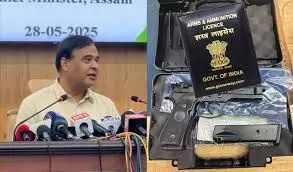
When Assam CM Himanta Biswa Sarma speaks of the importance of guns, he isn't just talking about literal firepower — he's invoking a deep Northeast political tradition where the gun has been a passport to power. From the Naga hills to the Mizo ranges, from Assam’s tea gardens to Tripura’s forests, armed assertion has been the quickest route from the margins to the negotiating table.
The Precedent Set by the Nagas
Early Start: The Naga National Council (NNC) began its armed struggle in the 1950s, decades before ULFA or Bodo militancy in Assam.
China Connection: By the 1960s, Nagas were receiving arms and training from China via the Kachin Hills in Myanmar.
Political Outcome: The decades-long armed resistance forced Delhi into ceasefire deals and autonomy arrangements, making the Nagas the first to prove that in the Northeast, Delhi listens more when the hills are armed.
Lesson Learned: Strength wasn’t measured in votes but in barrels. Other ethnic movements in the Northeast, including in Assam, absorbed this message.
The Mizo Model
MNFF to Mizo National Front: The Mizo National Front (MNF) launched an armed rebellion in 1966 after famine and neglect by the government.
External Links: Like the Nagas, Mizos also tapped into cross-border routes via East Pakistan and Myanmar for arms.
Turning Point: After 20 years of insurgency, the 1986 Mizo Accord turned former rebels into rulers — Laldenga went from jungle hideouts to the Chief Minister’s office.
Lesson Learned: A well-disciplined, politically shrewd armed movement could transform into mainstream political power without losing ethnic legitimacy.
Assam’s Own Gun Politics
1960s Communist Armed Struggle: Maoist-inspired militancy set the stage for the gun as a political tool.
ULFA, NDFB, BLT: Proved that armed groups could force political recognition, influence negotiations, and even secure autonomous councils.
Tripura and Manipur as Reinforcement Cases
Tripura’s Sengkrak & TNV: Early tribal outfits evolved into TNV, which transitioned into political authority after peace accords.
Manipur’s Constant Militancy: Dozens of armed outfits still influence political and social dynamics, from Meitei valley groups to Kuki and Naga hill militias.
The Gameplan Behind HBS’s Words
HBS is leveraging this regional memory:
Boosting Assamese Nationalism: Positioning himself as the inheritor of a “protective, armed readiness” mindset.
Regional Strongman Image: Signalling to neighbouring states that he understands the real currency of power in the Northeast — the legacy of the gun.
Ethnic Legitimacy vs. Seat Arithmetic: Reminding Assamese voters that ruling effectively isn’t about numbers alone — it’s about commanding respect, the way Nagas and Mizos once did with arms in hand.
The Contradiction
Politically Correct: Yes — this rhetoric taps into regional pride and identity politics.
Logically Flawed: Today’s politics is fought through development projects, bureaucracy, and control over narrative, not through armed campaigns. The age of functional gun politics is over — but its symbolic power still works.
By referencing the gun, HBS isn’t calling for militancy — he’s borrowing the emotional capital built by the Nagas, Mizos, Tripuris, Manipuris, and Assamese insurgents over decades. In the Northeast’s political theatre, the gun remains the most potent prop, even when it’s no longer loaded.