India–Bangladesh Relations Tested as Minority Lynchings Expose Diplomatic and Moral Faultlines
Geopolitical Faultlines and the Fragile Morality of India-Bangladesh Relations in the Shadow of Minority Lynchings

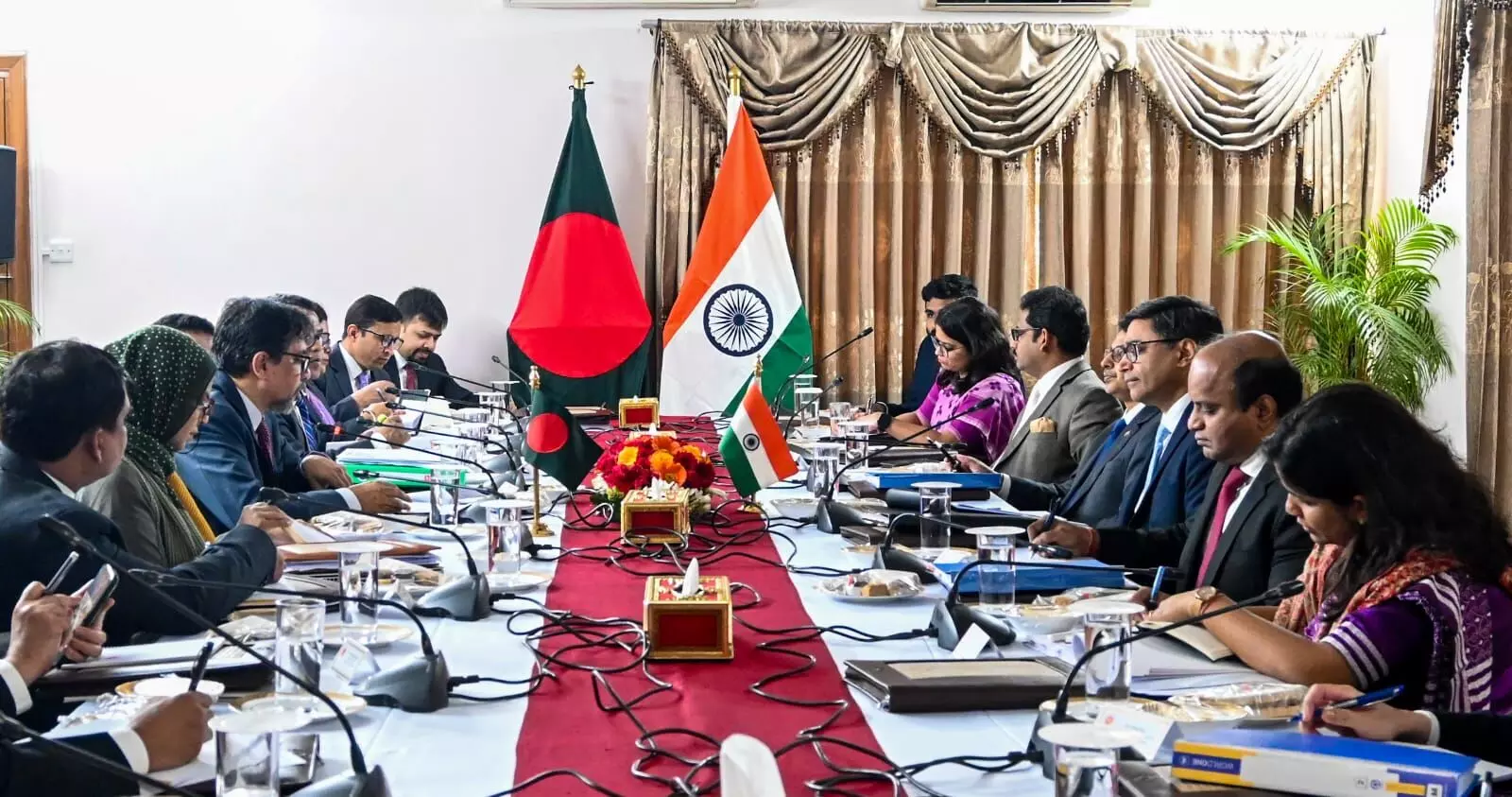
The recent lynching of two Hindu men in Bangladesh has once again exposed the fragile undercurrents of South Asian geopolitics, where the rhetoric of fraternity collides with the realities of communal violence and the diplomatic posturing of sovereign states. India’s condemnation of these killings, voiced through the Ministry of External Affairs, carries both moral weight and political calculation. Yet, the timing and tenor of the statement reveal the dilemmas of New Delhi’s foreign policy, caught between its own domestic record of minority violence and the need to project itself as a guardian of Hindu interests across borders. This tension is not new; it is rooted in the complex historical trajectory of India-Bangladesh relations, where shared cultural bonds, liberation war memories, and economic interdependence coexist uneasily with suspicions, political divergences, and the ever-present specter of communalism.
The lynching of Amrit Mondal in Rajbari and Dipu Chandra Das in Mymensingh are not isolated aberrations but symptomatic of a deeper malaise in Bangladesh’s socio-political fabric. The interim government led by Muhammad Yunus has promised accountability, while BNP’s Tarique Rahman has spoken of building a “safe Bangladesh” for all communities. Yet, the persistence of mob violence against minorities underscores the fragility of law and order and the vulnerability of marginalized groups in times of political unrest. India’s reaction, couched in diplomatic language of concern and condemnation, is both expected and necessary. However, seasoned observers rightly point out that the Modi government’s delayed response betrays a reactive rather than proactive stance, raising questions about whether moral outrage is being subordinated to political expediency and domestic constituency pressures.
The historical backdrop of India-Bangladesh relations adds layers of complexity to this episode. India played a decisive role in the liberation of Bangladesh in 1971, providing military, diplomatic, and humanitarian support to the Mukti Bahini and millions of refugees fleeing genocide. That intervention was not merely altruistic; it was also a strategic move to weaken Pakistan and reshape the regional balance of power. Since then, India has sought to cultivate Bangladesh as a friendly neighbor, a buffer against Islamist extremism, and a partner in trade and connectivity. Yet, the relationship has been punctuated by disputes over water sharing, border management, illegal migration, and accusations of interference. Communal violence in Bangladesh, especially targeting Hindus, has often been a flashpoint, with India positioning itself as a defender of minority rights while simultaneously grappling with its own internal contradictions.
The contradiction lies in India’s domestic record. Since 2014, lynchings of Muslims, Dalits, and Christians under the shadow of cow protection vigilantism and majoritarian politics have tarnished India’s moral authority. To condemn lynchings in Bangladesh while failing to decisively curb similar violence at home risks exposing India to charges of hypocrisy. Diplomacy thrives on credibility, and moral posturing without internal consistency weakens the legitimacy of external advocacy. This is the dilemma New Delhi faces: how to balance its responsibility to speak for minorities abroad with the imperative of addressing minority insecurity within its own borders. The BJP’s Hindutva constituency may demand strong words against Dhaka, but the international community will judge India by its actions at home as much as by its statements abroad.
Bangladesh, for its part, is navigating its own turbulent transition. The interim government’s rhetoric of a “New Bangladesh” resonates with aspirations for inclusivity and reform, but the persistence of mob justice reveals the challenges of institutional weakness and societal polarization. Tarique Rahman’s call for a safe Bangladesh echoes the foundational ideals of 1971, when the liberation struggle was framed as a fight for dignity, equality, and pluralism. Yet, the recurrence of communal violence suggests that those ideals remain contested. For India, the challenge is to engage Dhaka constructively, pressing for accountability without appearing to exploit minority suffering for political gain. Heavy-handedness risks alienating Bangladeshis, while silence risks betraying the very minorities India claims to champion.
The geopolitical stakes are significant. Bangladesh is not merely a neighbor; it is a critical partner in India’s Act East policy, a gateway to Southeast Asia, and a linchpin in regional connectivity projects like BIMSTEC. It is also a theater of strategic competition, with China investing heavily in infrastructure and seeking to expand its influence. India’s ability to maintain goodwill in Dhaka is essential to counterbalance Beijing and to secure its own northeastern frontier. In this context, communal violence becomes more than a human rights issue; it becomes a test of India’s diplomatic dexterity. Condemnation must be coupled with engagement, moral clarity with strategic pragmatism. To navigate this terrain, India must draw upon its historical role as Bangladesh’s liberator while acknowledging the limits of moral authority in the face of its own domestic challenges.
The lynchings in Bangladesh thus serve as a mirror, reflecting both the vulnerabilities of minority communities in South Asia and the dilemmas of statecraft in a region where religion, politics, and geopolitics are deeply intertwined. India’s condemnation is necessary, but it must be more than performative. It must be part of a broader commitment to minority rights, both at home and abroad. Only then can India reclaim the moral high ground and speak with credibility in Dhaka and beyond. The history of India-Bangladesh relations teaches us that fraternity cannot be sustained by rhetoric alone; it requires consistency, courage, and the willingness to confront uncomfortable truths. In the shadow of lynchings, the challenge for both nations is to rise above communal faultlines and reaffirm the ideals of justice and humanity that once bound them together in the crucible of liberation. The world is watching, and history will judge whether South Asia’s leaders choose expediency or principle in this moment of reckoning.