Navigating Political Shifts: The NCP's Strategic Position in Thane's Municipal Landscape
NCP's strategic shift in Thane's political landscape, highlighting their opposition role and potential alliances.

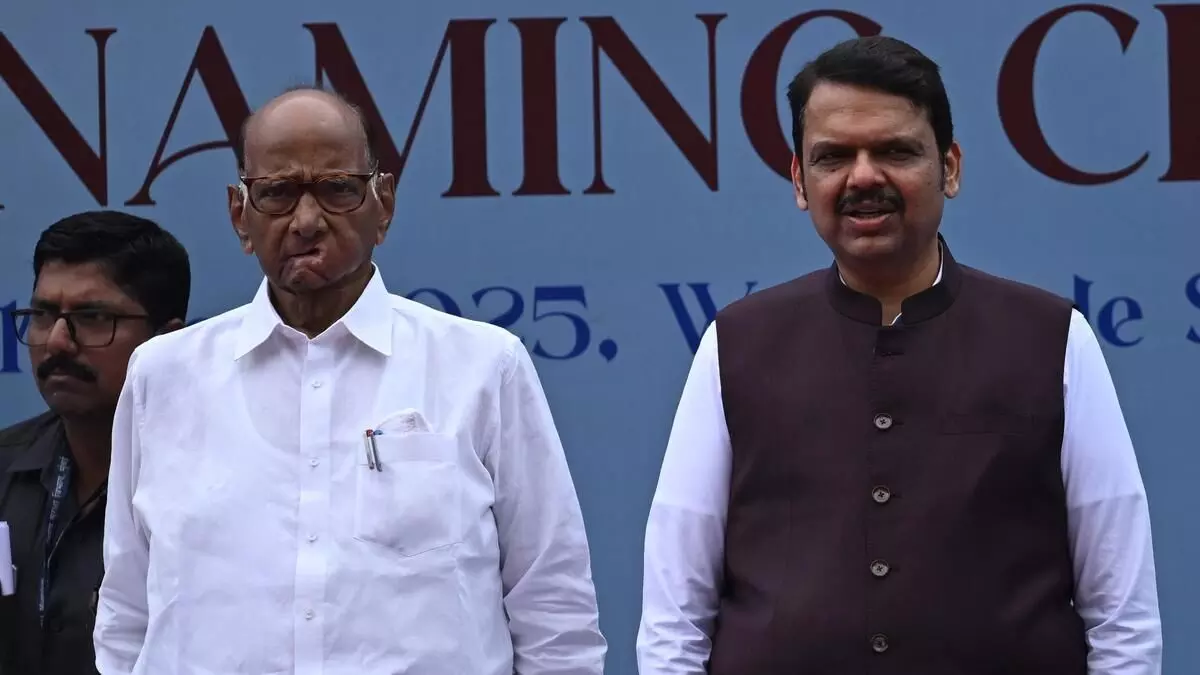
In a seismic shift within Thane's political sphere, the NCP (Ajit Pawar faction) has opted to take a seat on the opposition benches, despite being part of the ruling Mahayuti alliance at the state level. This unexpected move comes on the heels of recent mayoral elections, where Sharmila Pimpalolkar from the Shinde Sena was elected as Mayor, and Krishna Patil from the BJP assumed the role of Deputy Mayor.
A New Role for NCP in Thane Municipal Corporation,Najib Mulla, the Thane City President for NCP (Ajit Pawar), has made it clear that the party's strategy is to operate as the opposition in the Thane Municipal Corporation (TMC). Mulla stated, "While we are part of the ruling coalition in the state, we will fulfill the role of opposition in Thane." This statement reflects a growing trend in local politics where parties often reassess their strategic alignments based on localized contexts. The NCP's decision underscores a commitment to prioritize Thane's development, with Mulla emphasizing that they will “support good work and oppose the bad.”
The Quest for Leadership: Two Options Ahead ,Now that the NCP has established its opposition stance, the party is evaluating two significant options to claim the Leader of the Opposition (LoP) position. Option A involves aligning with the NCP (Sharad Pawar faction), while Option B considers forming a coalition with the AIMIM. As Mulla articulated, the goal is to consolidate scattered opposition votes to strengthen their claim for the LoP post. This strategic maneuvering is essential, especially after the recent elections on January 15, 2026, which left the opposition fragmented.
The recent elections significantly altered the political landscape in Thane. The Shinde-led Shiv Sena emerged as the dominant force with 75 seats, followed by the BJP with 28 seats, both part of the ruling Mahayuti alliance. On the other hand, the NCP (Sharad Pawar faction) holds 12 seats and is in opposition, while the NCP (Ajit Pawar faction) has declared itself in opposition with 9 seats, and AIMIM holds 5 seats. This division highlights the challenges faced by opposition parties in forming a cohesive front against a strong ruling coalition. The NCP's potential tie-up with either faction could lead to a more formidable opposition bloc.
The Power of Unification
If the two factions of the NCP were to unite for this purpose, it would create a significant bloc of 21 seats, positioning them as the primary opposition force. This consolidation could potentially shift the dynamics of Thane's political environment, making it crucial for both factions to consider the benefits of alignment. Conversely, an alliance with AIMIM would still bolster their numbers, creating a combined force of 14 seats. However, this path may be more complex, given the need to navigate the positions of smaller parties.
What’s Next for Thane's Politics?
In the wake of these developments, one cannot help but speculate on how these political maneuvers will unfold in the coming weeks. The NCP's approach signals a broader trend in Indian politics where strategic realignments are becoming more commonplace. As the political landscape continues to evolve, the focus will remain on how these alliances will shape the future of Thane's governance. Will the NCP manage to consolidate power and effectively challenge the ruling coalition? Only time will tell, but one thing is certain: the political drama in Thane is far from over.