Patna University Students’ Union: The Nursery of Bihar’s Political Leadership
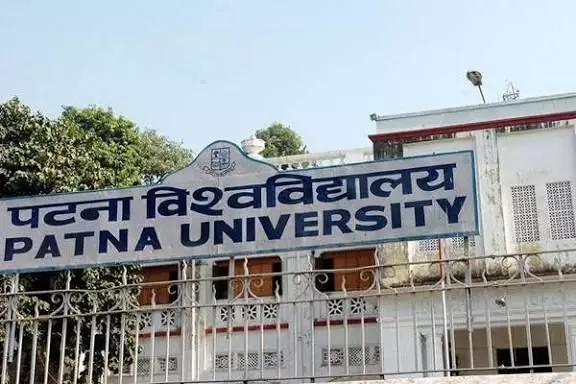
Patna, February 22 — The forthcoming election of the Patna University Students’ Union (PUSU), scheduled for February 28, has once again brought into focus the turbulent yet politically formative history of one of Bihar’s most influential student bodies. On Saturday, the Vice-Chancellor briefly announced the postponement of the polls citing security concerns. However, amid mounting pressure from the student community, the decision was reversed close to midnight — a development that underscores both the intensity and the legacy of campus politics at Patna University.
Violence Shadows the Poll Process
The run-up to the election has been marred by disturbing incidents. At Science College, an English professor was allegedly assaulted inside his classroom. At Patna Women’s College, reports emerged of female students being harassed. Police recovered crude bombs from Minto Hostel, and eight students were taken into custody.
The developments raise critical questions: Who is responsible for maintaining order? Why does violence continue to shadow student politics? And how prepared is the administration to ensure a free and fair poll?
A Legacy Dating Back to 1959
Established in 1959, the Students’ Union today represents nearly 20,000 members. Its first president was Shailesh Chandra Mishra, son of the then Chief Justice of the Patna High Court, Satish Chandra Mishra. The inaugural function was attended by the then Defence Minister, V. K. Krishna Menon — an indication of the Union’s early prestige.
Over the decades, PUSU evolved into a crucible of Bihar’s political leadership.
The 1972 Turning Point
In the 1972 election, a young Lalu Prasad Yadav contested and lost — his first electoral defeat. He was defeated by Ramjatan Sinha of Science College, while Narendra Singh of B.N. College became General Secretary. The contest reflected emerging social churning, marking one of the first visible political confrontations between upper-caste and backward-caste student groups.
The following year, Lalu Prasad Yadav, then associated with the Samajwadi Yuvjan Sabha, forged an alliance with Sushil Kumar Modi of the Akhil Bharatiya Vidyarthi Parishad. The coalition consolidated Yadav and Bania voters. Leaders such as Ravishankar Prasad also featured prominently in that electoral landscape.
Lalu defeated Ramsharan Prasad Singh, a Bhumihar candidate from the Engineering College, signalling the assertive rise of backward-caste leadership in campus politics.
Organisational Strategy and Mobilisation
Much of the mobilisation among backward-caste students was attributed to grassroots organisational efforts linked to the Rashtriya Swayamsevak Sangh. Ram Bahadur Rai, then a Vidyarthi Parishad pracharak residing at Banaras Hindu University’s Ayyar Hostel, reportedly played a key role in coordinating the campaign in Patna.
Campaign Style and Student Connect
As a former student of Patna University, I recall the vibrancy of those elections. Candidates distributed fragrant, colourful handbills — a novelty that added theatre to politics. Lalu Prasad Yadav’s speeches revolved around student welfare but were delivered with wit and spontaneity.
At Magadh Mahila College, he famously promised that if elected president, he would ensure that drinking water taps were raised so that female students would not have to bend. Addressing Science College students, he declared that every sports player would receive a free tin of Bournvita each month — blending populism with symbolism.
The Returning Officer for that election was S.K. Bose, Principal of B.N. College. Counting took place on the second floor under heavy CRPF deployment. Late at night, darkness enveloped the hall amid a loud commotion. Lalu Prasad Yadav shouted that a bomb had exploded, and counting was suspended. The District Magistrate of Patna rushed to the scene. Subsequent inquiry revealed that some ballot boxes had been thrown from the hall.
The next day, Lalu Prasad Yadav was declared elected by a substantial margin. His entire panel secured victory, and the first cabinet meeting was held at the Students’ Union office.
The Power of the Union
In those years, the Union wielded considerable institutional influence. The university provided the president with telephone connections at both office and residence, expenses borne by the administration. The president and general secretary were nominated to committees of the Bihar government and Patna administration. Even cinema halls in Patna reportedly set up special ticket counters on their recommendation.
The Union has produced leaders who later shaped state and national politics. Ashwini Kumar Choubey served as president before rising to ministerial office. Political stalwarts such as Karpoori Thakur and George Fernandes campaigned during Students’ Union elections, underlining its political weight.
In the 1978 election, Narayan Narayan Lal Nadda — father of J. P. Nadda — served as Returning Officer. Violence erupted to such an extent that he had to vacate his residence in Rani Ghat Professor Colony and seek refuge at the home of an MLA on Harding Road.
The history of Patna University’s Students’ Union reflects Bihar’s broader socio-political transformation — caste realignments, ideological shifts, and the interplay of student activism with mainstream politics.
As the university prepares for another election on February 28, the central question remains: will the Union reclaim its role as a training ground for democratic leadership, or continue to be overshadowed by violence and factionalism?
The answer will shape not only campus politics but, as history suggests, the political future of Bihar itself.