Sasikala’s counter-move against Dinakaran signals fresh churn in Theni politics
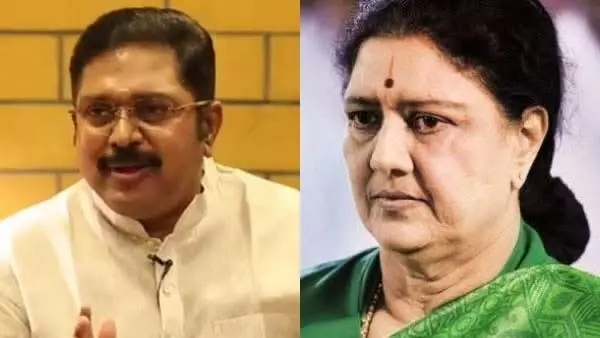
Politics in Tamil Nadu’s Theni district appears to be heading towards a sharp and possibly decisive turn, with former allies now preparing rival strategies ahead of the next Assembly election. What was once a closely aligned political network has gradually splintered into competing camps, and the emerging contest is being closely watched as a signal of shifting equations in the southern districts.
Theni has long occupied a distinctive place in Tamil Nadu’s political landscape. Considered one of the traditional strongholds of the All India Anna Dravida Munnetra Kazhagam, the district has produced several leaders whose influence extends beyond local politics into the state’s wider power structure.
It was from this political soil that T. T. V. Dhinakaran first stepped into parliamentary politics in 1999, with the backing of V. K. Sasikala. Over the years, however, multiple political shifts and internal disagreements have strained that relationship. What began as differences within the extended political family has gradually evolved into an open contest for influence.
The latest developments suggest that the rivalry could intensify in the run-up to the next Assembly polls. After contesting the 2024 Lok Sabha election from the Theni constituency and finishing second, Dhinakaran is now believed to be eyeing the Andipatti Assembly seat as his next political battleground. Political observers say his decision to stay in a large bungalow in Theni and closely monitor local developments indicates a serious attempt to rebuild his base in the district.
Even if Dhinakaran does not contest personally, speculation within political circles suggests that a member of his family — possibly his wife Anuradha or another relative — could be fielded from the constituency.
These developments appear to have triggered counter-moves from Sasikala. According to political sources, she has begun meeting key figures in Theni district privately, an exercise that has created visible unease among cadres of the Amma Makkal Munnetra Kazhagam, the party led by Dhinakaran.
At the same time, the All India Anna Dravida Munnetra Kazhagam organisation under the leadership of Edappadi K. Palaniswami has been working to consolidate its position in the southern districts.
In this triangular political space, Sasikala’s manoeuvres have drawn particular attention. Observers say her outreach could be an attempt to reassert political relevance after a prolonged phase of marginalisation. Her camp is also believed to be unhappy with what it perceives as a tacit understanding between the political strategies of the Dhinakaran and Palaniswami camps.
Against this backdrop, Sasikala is said to be exploring the possibility of building an alternative political force by foregrounding members of her extended family in the Theni region. Supporters close to her claim that she may field either Jai Anand, son of her brother V. N. Sudhakaran Divakaran (widely known as Divakaran), or Vivek, the son of Ilavarasi, against Dhinakaran in the coming election.
The possibility of Divakaran’s party joining hands with Sasikala’s proposed new political outfit for the electoral contest has also been discussed within political circles. Their combined effort, sources suggest, could be aimed at weakening Dhinakaran’s electoral prospects in his perceived stronghold.
Interestingly, the strain between Sasikala and Dhinakaran became publicly visible during a recent visit to the Anna Memorial. Witnesses say that when Dhinakaran saw Sasikala at the memorial, he left the premises hurriedly without exchanging even a customary greeting — an episode that has further fuelled speculation about the deepening rift.
For political observers, the emerging contest in Theni is not merely about control of a single constituency. Instead, it represents a broader struggle over who will dominate the political landscape of southern Tamil Nadu. In districts like Theni, where personal relationships and family identities often shape electoral loyalties, such contests tend to carry wider political implications.
Analysts say Sasikala’s announcement of a new political party could potentially split the vote base of both the AIADMK and the AMMK. At the same time, attempts to curb Dhinakaran’s resurgence may also create new strategic challenges for Palaniswami’s camp.
Taken together, the evolving three-cornered rivalry in Theni has the potential to reshape the political balance in southern Tamil Nadu ahead of the next Assembly election. More than determining the fate of a single leader, the contest could influence the future trajectory of the AIADMK’s traditional support base.
For now, the battle lines are still forming — but in Theni, the political temperature is clearly rising.