Sau Lao, Sarkar Banao: Akhilesh’s Gambit in Uttar Pradesh
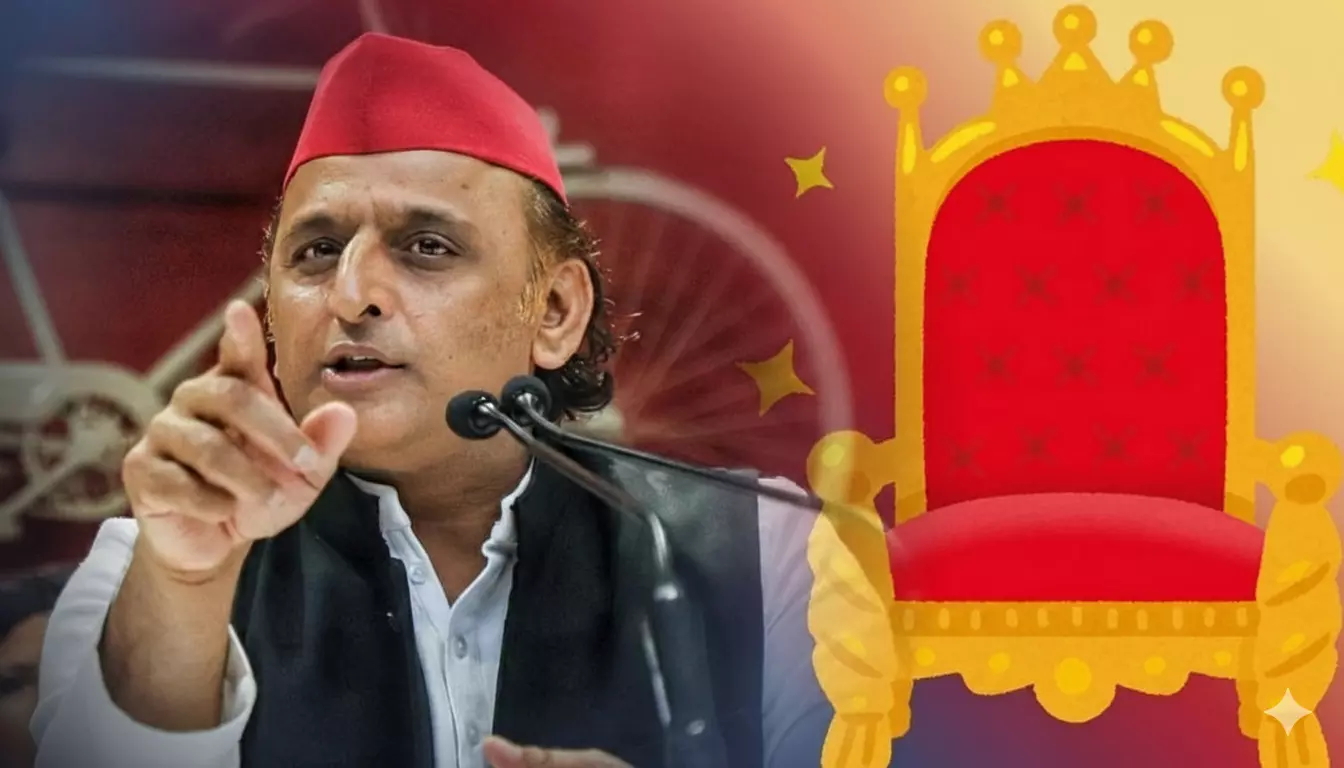
Politics in Uttar Pradesh has always thrived on theatre, and Akhilesh Yadav’s recurring “100 MLAs offer” is the latest act in this long-running drama. On Sunday, as Chief Minister Yogi Adityanath embarked on a foreign tour to woo investments, the Samajwadi Party president revived his now familiar refrain: “Bring 100 MLAs with you and be chief minister.” The remark, delivered in Lucknow, was aimed at fishing in troubled waters within the BJP, where murmurs of discontent have occasionally surfaced among its leaders. Akhilesh’s words were couched in satire, but the political intent was unmistakable—he was dangling the possibility of power before disgruntled BJP figures, particularly the deputy chief ministers Keshav Prasad Maurya and Brajesh Pathak, who have long been seen as aspirants for the top post.
This was not the first time Akhilesh deployed this gambit. In December 2022, at a public meeting in Rampur, he had made the same offer to the two deputy CMs, mocking their limited authority and suggesting that they could seize the chief ministership if they managed to bring 100 MLAs along. Again in July 2024, amid speculation of a rift in the BJP following the Lok Sabha results, Akhilesh posted cryptically on X: “Monsoon offer: Sau lao, Sarkar banao.” Each time, the timing of the offer coincided with moments of perceived vulnerability within the ruling party, and each time it was designed to project Akhilesh as a leader ready to exploit cracks in the saffron fortress.
The arithmetic behind the offer is simple but politically potent. In the 403-member UP Assembly, the SP holds 111 seats. With the support of another 100 MLAs, the party could cross the majority mark of 202 and form a government. By repeatedly extending this invitation, Akhilesh is not only mocking the BJP’s internal rivalries but also reminding his own cadre and the electorate that the SP remains a viable alternative, capable of leading a coalition if the ruling party falters. It is a way of keeping the possibility of regime change alive in the public imagination, even when the BJP’s numbers appear secure.
The political effect of this strategy lies less in its feasibility and more in its symbolism. By offering the chief ministership to potential defectors, Akhilesh positions himself as a kingmaker, someone who can broker power rather than merely aspire to it. It also underscores his narrative that the BJP is internally divided, with leaders dissatisfied and waiting for an opportunity. Whether or not any BJP MLA takes the bait, the repeated offer plants seeds of doubt about the ruling party’s cohesion. It is a psychological tactic, aimed at unsettling the BJP while energising the opposition.
At the same time, the move reflects Akhilesh’s own challenges. The SP’s 111 seats in 2022 were a significant gain, but not enough to dislodge the BJP. The alliance with Congress in 2024 gave the BJP a jolt in the Lok Sabha polls, but translating that into Assembly arithmetic remains a formidable task. By floating the “100 MLAs” formula, Akhilesh acknowledges that the SP alone cannot topple the government; it must rely on defections and alliances. This is both a strength and a weakness—strength in that it keeps the door open for coalition politics, weakness in that it concedes the SP’s limited reach.
The conclusion is that Akhilesh’s gambit is less about immediate government formation and more about shaping the narrative. It is a reminder to BJP leaders that ambition can find a home outside their party, a signal to voters that alternatives exist, and a message to his own supporters that the SP is ready to seize power if the opportunity arises. In the theatre of UP politics, where perception often matters as much as numbers, the “100 MLAs offer” is a clever device. It may never materialise into a change of government, but it keeps the conversation alive, keeps the ruling party on edge, and keeps Akhilesh in the headlines. In a state where political fortunes shift with the winds, that in itself is a victory of sorts.