Seat-Sharing Standoff Deepens in DMK Alliance as VCK Insists on 10 Constituencies
Tamil Nadu elections: DMK faces fresh trouble in alliance talks as VCK insists on 10 seats. Congress deal settled, Left talks ongoing, final decision expected soon.

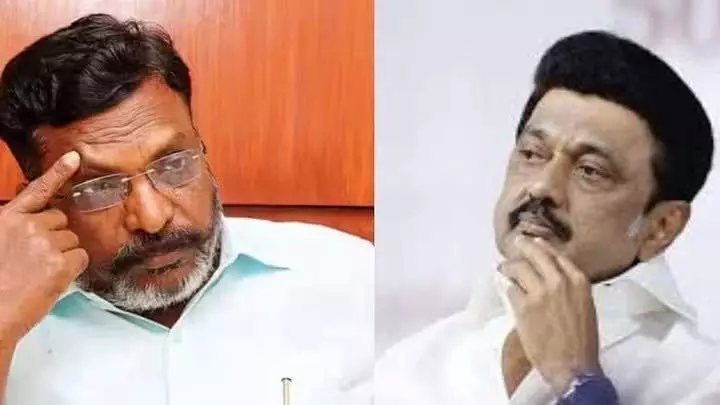
With the Tamil Nadu Assembly election schedule announced and barely over a month left for polling, seat-sharing negotiations within the DMK-led alliance have entered a decisive phase, even as differences persist with key partners.
The ruling Dravida Munnetra Kazhagam (DMK) has accelerated talks to finalise constituency allocation among its expansive alliance, which includes more than 20 parties. Party strategists are working with a twin objective — to retain a comfortable majority while accommodating allies within a tighter seat matrix. Sources indicate that the DMK plans to contest in over 180 constituencies under its ‘Rising Sun’ symbol, leaving limited space for partners compared to the 2021 arrangement.
This recalibration has led to friction across the alliance. The Indian National Congress, which was allotted 25 seats in the previous election, initially resisted the DMK’s offer of around 21–23 seats this time. After a series of backchannel negotiations, the Congress is learnt to have settled at 28 seats, averting a potential rupture.
However, other allies have not been as accommodating. Parties such as the MDMK, Indian Union Muslim League, and regional Kongu outfits have reportedly been asked to settle for fewer constituencies. The Left parties, including the Communist Party of India (Marxist) and the Communist Party of India, which previously contested six seats each, have been offered five seats this time. Talks with the Left are scheduled to continue, with indications that a compromise may be reached.
The more challenging impasse, however, remains with the Viduthalai Chiruthaigal Katchi (VCK) led by Thol. Thirumavalavan. The party, which contested six seats in the last election, has now taken a firm stand, demanding at least 10 constituencies. According to party insiders, the VCK leadership has submitted a broader list of 12 seats underscoring its claim of expanded grassroots presence across Tamil Nadu.
Negotiations between the DMK and VCK, last held on March 2, have since seen little movement. VCK functionaries maintain that the party’s electoral growth warrants a higher share and are awaiting a fresh round of talks from the DMK leadership.
On its part, the DMK appears reluctant to go beyond the earlier allocation of six seats, citing constraints arising from accommodating multiple allies while safeguarding its own electoral prospects. This divergence has kept the alliance agreement with the VCK unresolved so far.
Political observers note that with time running short, the coming days will be crucial. A final round of negotiations is expected imminently, and both sides are under pressure to arrive at a workable formula to prevent any last-minute disruptions in the alliance framework.