Shadows on the Screen, Sparks in the Street: The Thalapathy Effect and the Politics of Jana Nayagan
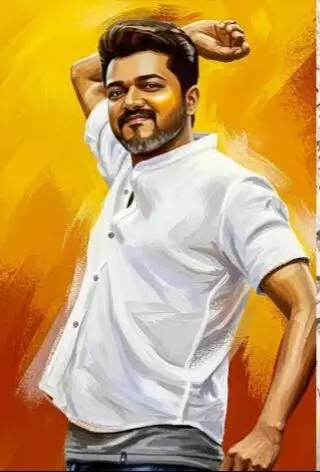
It was a humid evening in Kanyakumari when conversations drifted from the sea breeze to the poster of a film that had become more than cinema—it had become a controversy. Jana Nayagan, the much-anticipated final film of actor-turned-politician Vijay, popularly known as Thalapathy, was supposed to be a farewell to the screen before his full embrace of politics. Yet, its release has been delayed multiple times, caught in the web of government scrutiny, censorship hurdles, and political anxieties. What began as whispers in tea shops and restaurants has now become a chorus across Tamil Nadu, echoing in districts from Thanjavur to Madurai: why is a film at the center of politics, and why does it seem to terrify the establishment?
Tamil Nadu has always been unique in its relationship with cinema. Films here are not mere entertainment; they are cultural beacons, shaping morality, identity, and political imagination. The DMK rose on the back of Karunanidhi’s screenwriting and MGR’s charisma, while the AIADMK was built on the cinematic aura of Jayalalithaa. In this state, leaders do not merely finance films to polish their image, as often seen in North India—they emerge from cinema itself, embodying its narratives of justice, heroism, and resistance. Against this backdrop, the repeated postponement of Jana Nayagan feels less like a bureaucratic hiccup and more like an attempt to silence a tradition. For many, it is a dangerous precedent: if cinema is the crucible of politics, then censoring a film is akin to censoring a movement.
The controversy surrounding Jana Nayagan is layered. The Central Board of Film Certification raised objections over its themes, hinting at military references and communal undertones. Legal battles ensued, with petitions withdrawn and courts intervening. Economically, the absence of Vijay’s film during the festive season caused massive losses to the Tamil Nadu box office, underscoring how deeply cinema is tied to the state’s economy. Politically, the delays have only heightened anticipation, turning the film into a metaphor for resistance against central authority. Director H. Vinoth’s remark that speaking openly about politics could be dangerous reflects the climate of fear surrounding politically charged cinema. In a state where films have historically been the launchpad for leaders, the silencing of one carries immense symbolic weight.
At the heart of this storm is the “Thalapathy effect.” Vijay’s fan clubs already function like grassroots political cadres, mobilizing with the same fervor as moviegoers. His transition into politics is not hesitant, unlike Rajinikanth’s wavering attempts; it is decisive, with Jana Nayagan positioned as his farewell to cinema. The delays, ironically, amplify his political aura, making the film a rallying point for those who see him as a disruptor of Tamil Nadu’s entrenched binaries. Vijay represents a generational shift, a leader who could challenge both DMK and AIADMK dominance while unsettling the BJP’s attempts to expand in the South. His appeal lies in merging cinematic heroism with political aspiration, embodying the archetype of the savior who steps off the screen into real life.
Why might the central government fear this? The BJP has often promoted films aligned with its ideological vision, granting tax exemptions and prime-time slots. Leaders in Uttar Pradesh and Delhi have seen their images polished through cinema, with films financed to glorify their narratives. In contrast, a film like Jana Nayagan—with undertones of dissent and a star poised to enter politics—threatens to create counter-narratives. With elections looming, a politically charged film starring a mass leader could sway public sentiment more effectively than rallies or advertisements. Tamil Nadu’s tradition of film-politics fusion makes Vijay’s entry uniquely potent, and the fear is not of the film itself but of the political momentum it symbolizes.
Yet, the debate is not one-sided. Supporters argue that cinema democratizes politics, making leaders relatable and accessible. It provides cultural continuity, linking myth, morality, and governance. It mobilizes masses beyond traditional party structures, giving voice to those who might otherwise remain unheard. Critics, however, warn that cinema risks reducing governance to spectacle, blurring lines between art and propaganda. It sidelines policy expertise in favor of charisma, turning politics into theater rather than administration. The Jana Nayagan controversy forces Tamil Nadu to confront whether cinema should remain the crucible of politics or whether it is time to separate the two.
The irony is sharp: while films glorifying northern leaders are celebrated, granted tax-free status, and broadcast widely, a film by a southern actor-politician faces hurdles. This asymmetry raises uncomfortable questions about cultural hegemony and political bias. Tamil Nadu’s leaders have historically come from cinema, and its people see films as moral compasses. To stall a film in this context is not just censorship—it is an attempt to disrupt a cultural-political tradition. It is no surprise, then, that conversations in restaurants and street corners frame the issue as dangerous, a sign that politics is increasingly fearful of cinema’s power.
In the end, the repeated postponements of Jana Nayagan are symbolic of a larger struggle over narrative, power, and cultural identity. For Tamil Nadu, where cinema has always been the beacon of political imagination, the silencing of a film is tantamount to silencing a movement. Vijay’s entry into politics, amplified by the controversy, could mark a turning point. Whether he becomes a disruptor or merely another player in the state’s cinematic-political tradition remains to be seen. But one thing is clear: in Tamil Nadu, when the projector stalls, politics begins. The screen may be darkened, but the sparks it ignites in the streets are already illuminating a new chapter in South Indian politics.
Amit Pandey
(Having journeyed to Tamilnadu and returned)