Tambaram Twist: Stalin’s ‘Master Plan’ Turns Dissent into Support in DMK’s Poll Strategy
S.R. Raja backs Krithika Devi after initial protests, signalling DMK’s strong internal cohesion ahead of polls

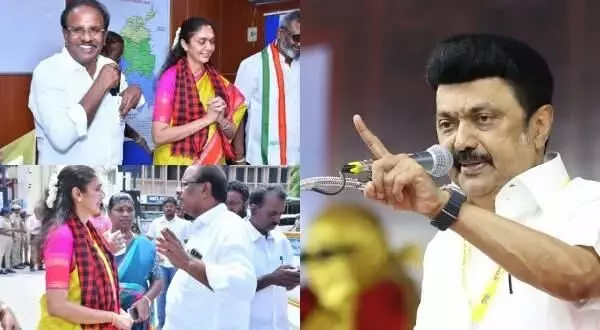
Chennai:“The party leadership’s decision is final; there is no room for individual preference.” This line has once again been underlined through developments in the Tambaram Assembly constituency, reflecting the functioning style within the DMK.
Tambaram has long held political significance, often drawing heightened attention as a key entry point to Chennai. With its standalone municipal status and electoral weight, the constituency remains closely watched during Assembly elections. Against this backdrop, the announcement of Dr. Krithika Devi as the DMK candidate from Tambaram came as a surprise to many, particularly given the strong local influence of sitting MLA S.R. Raja.
The announcement triggered an immediate reaction from supporters of S.R. Raja. Backers of the sitting MLA, seen as a strong and established leader in the constituency, expressed discontent, raising slogans questioning the denial of a ticket to him. The situation escalated as a section of supporters gathered at the residence of senior DMK leader T.R. Baalu.
The atmosphere was tense. However, T.R. Baalu, drawing on his experience in handling intra-party issues, engaged with the supporters, acknowledging their concerns while explaining the leadership’s rationale and the party’s broader electoral strategy. His intervention helped defuse tensions at a critical moment.
Attention then turned to how Chief Minister M. K. Stalin would address the situation. Slogans were raised even at the party headquarters as he arrived, signalling the intensity of sentiment among cadre.
Stalin’s calibrated approach marked a turning point. Acknowledging S.R. Raja’s loyalty and contributions, he conveyed—through party channels—the importance of senior leaders providing guidance at this juncture. The messaging appeared to have a stabilising effect.
The outcome became evident in Tambaram soon after. When candidate Dr. Krithika Devi filed her nomination, S.R. Raja stood beside her, extending support. Despite not being fielded, his public endorsement of the party’s candidate, coupled with his assertion that the DMK’s victory remained the primary goal, struck an emotional chord among party workers.
Party functionaries now view the episode as a resolved internal matter. Within the DMK, despite differences of opinion, adherence to the leadership’s decision—from senior leaders to grassroots workers—remains structured and disciplined.
In contrast, similar cohesion appears less visible in rival camps. Internal frictions within the Bharatiya Janata Party have at times spilled into the open. The All India Anna Dravida Munnetra Kazhagam continues to grapple with leadership questions, while actor Vijay’s emerging political outfit is still evolving its communication channels between leadership and cadre.
By contrast, the DMK’s ability to quickly address internal discord and present a united front has once again been underscored through the Tambaram episode.