The Fall of Hasina, The Rise of BNP: Who Really Owns Bangladesh’s Future?

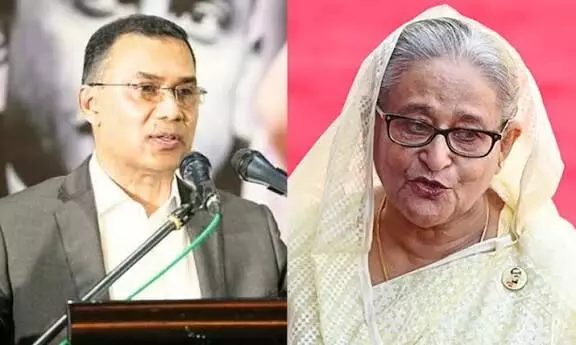
The ouster of Sheikh Hasina and the return of the Bangladesh Nationalist Party (BNP) in the 2026 election is not just a domestic upheaval; it is a geopolitical earthquake that reverberates across South Asia. For nearly two decades, Hasina’s Awami League dominated politics, holding 323 seats in the last parliament. Yet by 2026, the BNP surged past the 200‑seat mark, aided by tacit military support and a fractured opposition landscape. Voter turnout exceeded 70%, reflecting both the intensity of public anger and the mobilization of youth who had once been the backbone of Hasina’s legitimacy.
The collapse of the Awami League was not sudden. Inflation hovering around 9%, graduate unemployment above 40%, and corruption scandals eroded credibility. Student unions, once celebrated as the conscience of Bangladesh’s democracy, became shock troops of dissent in Dhaka and Chittagong during 2024–25. Their protests, met with repression, dismantled Hasina’s grip. Yet the irony is sharp: the very youth who once rallied behind the Awami League’s liberation legacy turned against it, exposing the fragility of power built on historical symbolism rather than present accountability.
Experts like Ali Riaz have long warned that Bangladesh’s democracy was sliding into authoritarianism under Hasina, with curtailed press freedoms and politicized institutions. The BNP’s rise, however, does not automatically signal renewal. Tarique Rahman’s leadership is shadowed by corruption allegations, and the BNP’s historical tilt toward China and Pakistan raises alarms in New Delhi.
For India, the implications are profound. Hasina was a reliable partner: she cracked down on cross‑border insurgents, facilitated connectivity projects like the BBIN Motor Vehicle Agreement, and aligned Dhaka’s foreign policy with New Delhi’s strategic interests. Under the BNP, these gains are uncertain. China’s Belt and Road Initiative already has deep roots in Bangladesh, with over $10 billion in infrastructure investments. Pakistan, too, sees an opportunity to re‑engage Dhaka, particularly in defence cooperation.
But the deeper story is Western intervention. The violent mobilizations of youth were not simply spontaneous eruptions of anger; they were shaped by external encouragement and geopolitical calculations. America and other Western nations, eager to recalibrate influence in South Asia, saw in Hasina’s fall an opportunity to weaken India’s strategic foothold and expand their own leverage. This is not new. From Hong Kong’s protests to Myanmar’s coup, from Iran’s uprisings to Sri Lanka’s debt crisis, Western interventions have repeatedly destabilized Asian societies. Democracy becomes a bargaining chip, not liberation.
The losses are borne by ordinary citizens. In Bangladesh, inflation, unemployment, and fractured institutions remain. In Myanmar, democratic aspirations collapsed into military rule. In Sri Lanka, debt crises fuelled by external loans left citizens queuing for fuel and food. The pattern is unmistakable: Asian countries are treated as pawns in a larger chessboard, their sovereignty compromised, their identity disregarded. Neutrality is eroded, and every deal with external powers risks becoming a bargain that undermines domestic resilience.
India must ask itself hard questions. Did New Delhi over‑rely on Hasina’s regime, ignoring the grievances of Bangladesh’s youth and opposition? Has India underestimated the BNP’s capacity to mobilize discontent into electoral victory? And most crucially, how will India safeguard its strategic interests in a neighbourhood where alliances can shift overnight? Analysts like C. Raja Mohan argue that India’s dependence on Hasina was a strategic miscalculation, leaving it vulnerable to sudden political shifts.
The solution, though difficult, is clear. Asian nations must strengthen themselves internally — economically, socially, and institutionally — so that they are not dependent on Western patronage. Regional cooperation, investment in local industries, and empowerment of citizens must replace reliance on external validation. Only then can neutrality be preserved and sovereignty defended.
The question for India and Asia is urgent: what has truly changed in the last 100 years of politics? Colonial exploitation gave way to postcolonial authoritarianism, and now democracy itself risks becoming another mask for greed and power. The hunger for money and influence continues to shape politics, whether through corridors of development or corridors of protest.
Sheikh Hasina’s fall is not just Bangladesh’s story; it is a warning to India that its neighbourhood remains volatile, contested, and deeply entangled in global currents. Unless India and its neighbours reclaim agency, their politics will continue to be scripted in Washington, London, or Beijing. Development without justice, and democracy without sovereignty, is dispossession. The silence of power in Dhaka today could echo as a strategic setback for New Delhi tomorrow. The question is whether India will act swiftly to rebuild trust, recalibrate its diplomacy, and recognize that South Asia’s stability cannot rest on personalities alone.