The Khalid Quagmire: Modi's Iron-Fisted Rule and India's Fading Geopolitical Halo
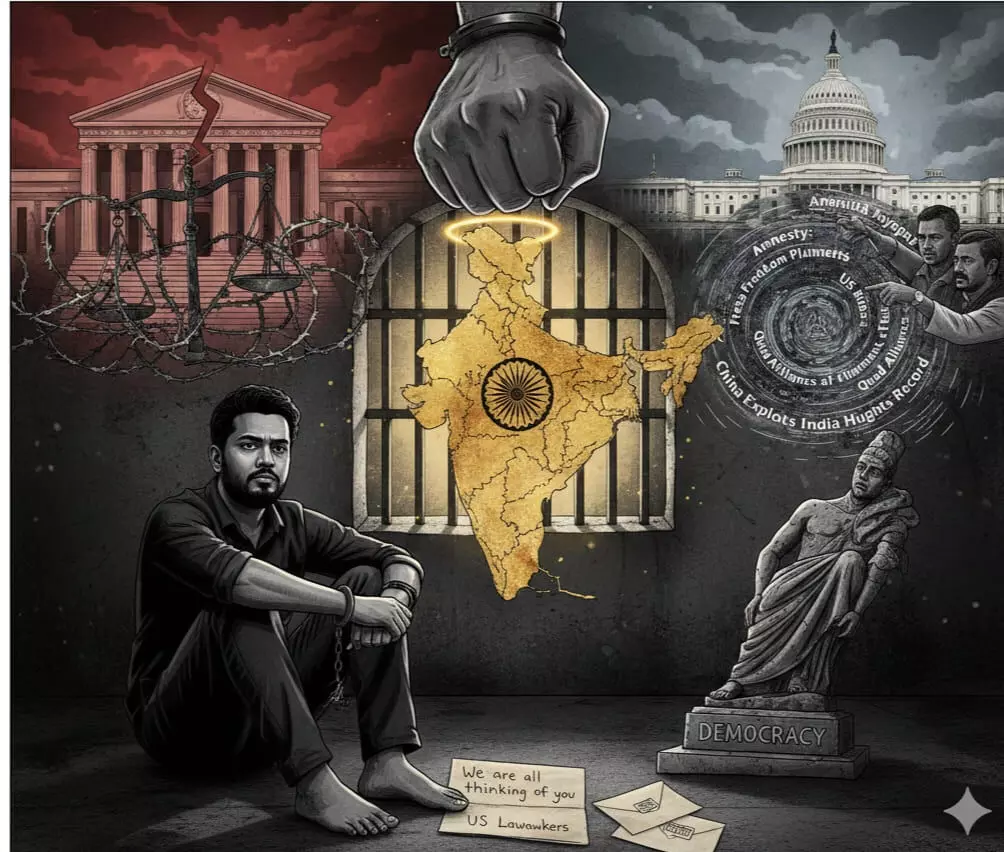
In the labyrinth of global power plays, where nations jostle for alliances amid rising Sino-American tensions, India's Narendra Modi has positioned himself as the architect of a resurgent "Vishwa Guru"—a world teacher of democracy and economic might. Yet, the protracted detention of activist Umar Khalid, languishing in prison for over five years without trial under the draconian Unlawful Activities (Prevention) Act (UAPA) for his alleged role in the 2020 Delhi riots, exposes the rotting underbelly of this facade. The riots, which claimed 53 lives and injured over 700 in a frenzy of communal violence, have become a symbol of Modi's polarizing Hindu nationalist agenda, where dissent is criminalized and minorities are scapegoated. Now, with New York Mayor Zohran Mamdani's poignant handwritten letter to Khalid—"We are all thinking of you"—and a bipartisan cadre of eight US lawmakers, including progressive firebrand Pramila Jayapal, urging India to ensure a fair trial, the case has catapulted into the international arena, inflicting a self-inflicted wound on Modi's geopolitical ambitions.
This spotlight, ignited by Mamdani's gesture and the lawmakers' missive to India's ambassador, underscores a brutal irony: while Modi courts Western capitals with promises of strategic counterweights to China's hegemony, his regime's authoritarian excesses are alienating the very partners he needs. The UAPA, a relic of colonial-era repression retooled into a weapon against critics, shifts the burden of proof onto the accused, making bail a rarity and trials a distant mirage. Khalid's case, emblematic of thousands ensnared in this legal netherworld, has drawn scathing rebukes from Amnesty International, which decries it as a "mockery of international human rights standards" and a "derailment of justice." For Modi, this is no mere domestic hiccup; it's a geopolitical landmine detonating at a time when India's image as the world's largest democracy is crucial to its ascent on the global stage.
Modi's troubles stem from a toxic brew of hubris and myopia. Domestically, his Bharatiya Janata Party (BJP) apparatus has weaponized the state machinery to stifle opposition, from the Citizenship Amendment Act (CAA) that institutionalized religious discrimination to the brutal crackdowns on farmer protests and the muzzling of independent media through raids and arrests. These actions, coupled with the abrogation of Kashmir's autonomy and the rise in hate speech against Muslims, have fostered a climate of communal polarization that reeks of majoritarian tyranny. Internationally, such moves have invited censure from human rights watchdogs and Western governments, painting India as a backsliding democracy akin to Hungary or Turkey rather than a beacon of pluralism. The Khalid saga amplifies this narrative, with US lawmakers warning that prolonged detentions sans due process violate core tenets of justice, eroding trust in India's judicial independence. For a leader who thrives on photo-ops with global titans, this scrutiny is a personal affront, forcing the Ministry of External Affairs into awkward silence while BJP mouthpieces deflect with accusations of "anti-India lobbies."
The rift with America, India's linchpin ally in the Indo-Pacific chessboard, is particularly acute. Under Modi, decisions like the CAA and the suppression of dissent have clashed head-on with Washington's professed values of human rights and rule of law, even as strategic imperatives—containing China's Belt and Road ambitions and bolstering the Quad alliance—keep the partnership afloat. Yet, this is a fragile equilibrium. Biden's administration repeatedly flagged Modi's "grave human rights concerns," from minority persecutions to media freedoms, during summits where Modi preemptively defended India's diversity. Even with Trump's return, who shares Modi's populist streak, the US Congress and civil society remain vocal critics, as seen in the lawmakers' intervention on Khalid. Modi's other blunders, such as the alleged transnational repression of critics abroad—including plots against Sikh activists in the US—have further strained ties, prompting FBI probes and diplomatic expulsions that undermine mutual trust. These actions propel India away from America's orbit, towards a lonely multipolarity where New Delhi flirts with autocrats in Moscow and Beijing, diluting its leverage in global forums.
The dent to India's international stature is colossal and multifaceted. Once hailed as a soft power juggernaut exporting Bollywood, yoga, and democratic ideals, Modi's India now ranks abysmally in press freedom indices and human rights assessments, inviting boycotts and condemnations that tarnish its brand. Economically, this erodes investor confidence; foreign direct investment wavers amid fears of arbitrary governance, while tech giants like Google and Apple hedge bets on a nation where rule of law is selective. Socially, it alienates the Indian diaspora, whose remittances and influence are vital, as seen in Mamdani's intervention—a Ugandan-Indian-American mayor channeling global outrage. Geopolitically, the Khalid case symbolizes a broader regression: India's human rights lapses have led to downgrades in freedom rankings, weakening its moral authority in bodies like the UN Human Rights Council, where it once championed Global South causes but now faces isolation.
Looking ahead, the implications for future geopolitics are dire if unchecked. In an era of great-power rivalry, India's strategic heft as a counterbalance to China hinges on its democratic credentials; without them, the Quad morphs into a hollow pact, susceptible to fractures over values. Modi's regime risks pushing India into a pariah status, akin to Saudi Arabia's pre-reform isolation, where economic ties persist but soft power evaporates. This could embolden adversaries: China exploits the narrative of Indian hypocrisy to woo African and Asian nations, while Pakistan amplifies Kashmir grievances on global stages. Domestically, sustained repression breeds social unrest, diverting resources from military modernization essential for border standoffs. In the most ominous scenario, a human rights-blind India drifts towards a Eurasian axis with Russia and China, forsaking Western tech transfers and alliances, ultimately diminishing its role in shaping a multipolar world.
Modi's gamble—that geopolitical utility trumps ethical scrutiny—betrays a profound shortsightedness. As Mamdani's letter reverberates, amplifying voices from Amnesty to Capitol Hill, India stands at a crossroads: reclaim its democratic soul or descend into authoritarian isolationism. The Khalid quagmire isn't just a human tragedy; it's a geopolitical harbinger, warning that suppressing dissent at home invites eclipse abroad. For a nation aspiring to superpower status, this is a lesson in hubris that could cost dearly in the unforgiving arena of international realpolitik.