Vijay Wave Reaches Kerala; Survey Sparks Surprise for Pinarayi Vijayan, Political Twist Ahead
Internal survey hints at 4–5% support for actor Vijay in Kerala, sparking discussions within Left circles as CPM leaders weigh the political impact ahead of upcoming elections.
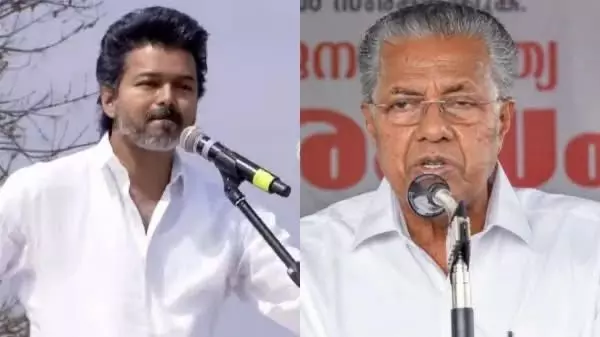
Political discussions centred on actor-turned-political figure Vijay are no longer confined to Tamil Nadu. The growing influence of the popular star has begun to echo in neighbouring Kerala, triggering fresh political calculations and debates among major parties.
In Tamil Nadu, Vijay’s fan base and potential political influence have already unsettled established parties. The ruling Dravida Munnetra Kazhagam has been working to strengthen its alliance network, while the opposition bloc led by All India Anna Dravida Munnetra Kazhagam and the Bharatiya Janata Party reportedly explored ways to bring Vijay into their fold. Although those efforts stalled publicly, political observers say quiet attempts to engage him continue. Vijay, however, has so far managed to avoid being drawn into any formal alliance.
Kerala Angle Emerges
A new dimension has now emerged from Kerala. According to internal survey assessments discussed among left-leaning political circles, an anti-incumbency wave may be building against the ruling Communist Party of India (Marxist) government. Political analysts suggest that the opposition Indian National Congress could be positioned to regain power in the next election if current trends continue.
Amid this scenario, recent survey findings reportedly indicate that Vijay enjoys around 4–5 per cent support among voters in Kerala. Though modest, such a vote share could prove decisive in a tightly contested election. Leaders within the Communist Party of India in the state are said to have informally discussed whether bringing Vijay into the broader Left alliance could help retain power.
Sources indicate that Pinarayi Vijayan, the Chief Minister of Kerala, recently discussed the state’s electoral outlook with the national leadership of the Communist Party of India (Marxist). During the meeting, he reportedly highlighted survey findings about Vijay’s growing appeal in Kerala and suggested that engaging him politically might strengthen the Left coalition.
According to those familiar with the discussion, Vijayan proposed that party leaders in Tamil Nadu could attempt to open informal talks with the actor. The idea, he reportedly argued, was that Vijay’s popularity—particularly among young voters—could help consolidate support and prevent a potential loss of power.
However, leaders of the Communist Party of India (Marxist) in Tamil Nadu are said to have expressed reservations. They reportedly told the national leadership that the party currently holds a respectful and stable position within the Dravida Munnetra Kazhagam-led alliance in the state.
Party leaders argued that aligning with a film star for electoral advantage could undermine the party’s independent identity. They also pointed out that since the CPM is part of the DMK alliance in Tamil Nadu, opening talks with Vijay could create friction with the ruling party leadership there.
According to sources, Tamil Nadu leaders conveyed that if Kerala’s Left parties wished to pursue the idea, they could attempt contact independently rather than through the Tamil Nadu unit.
Within Left circles in Tamil Nadu, the issue has quietly become a topic of discussion. Some party members believe that only if a serious dispute over seat-sharing arises with the Dravida Munnetra Kazhagam could the CPM consider exploring alternative political options involving Vijay. For now, however, such a scenario appears unlikely.
Supporters of the alliance point to the political management skills of M. K. Stalin, the Chief Minister of Tamil Nadu, who has largely maintained unity among coalition partners.
Regardless of the immediate political outcome, one fact remains clear: Vijay’s political entry is already generating discussions beyond Tamil Nadu. From alliance calculations to electoral strategy, the actor’s potential role in politics is being watched closely across multiple states, including Kerala—where the next political twist may yet unfold.