Vijay’s Decision to Contest Alone in 2026 Tamil Nadu Polls Raises Strategic Questions
Actor Vijay’s Tamilaga Vettri Kazhagam plans to contest the 2026 Tamil Nadu elections alone, triggering debate over alliances, vote split and political strategy.

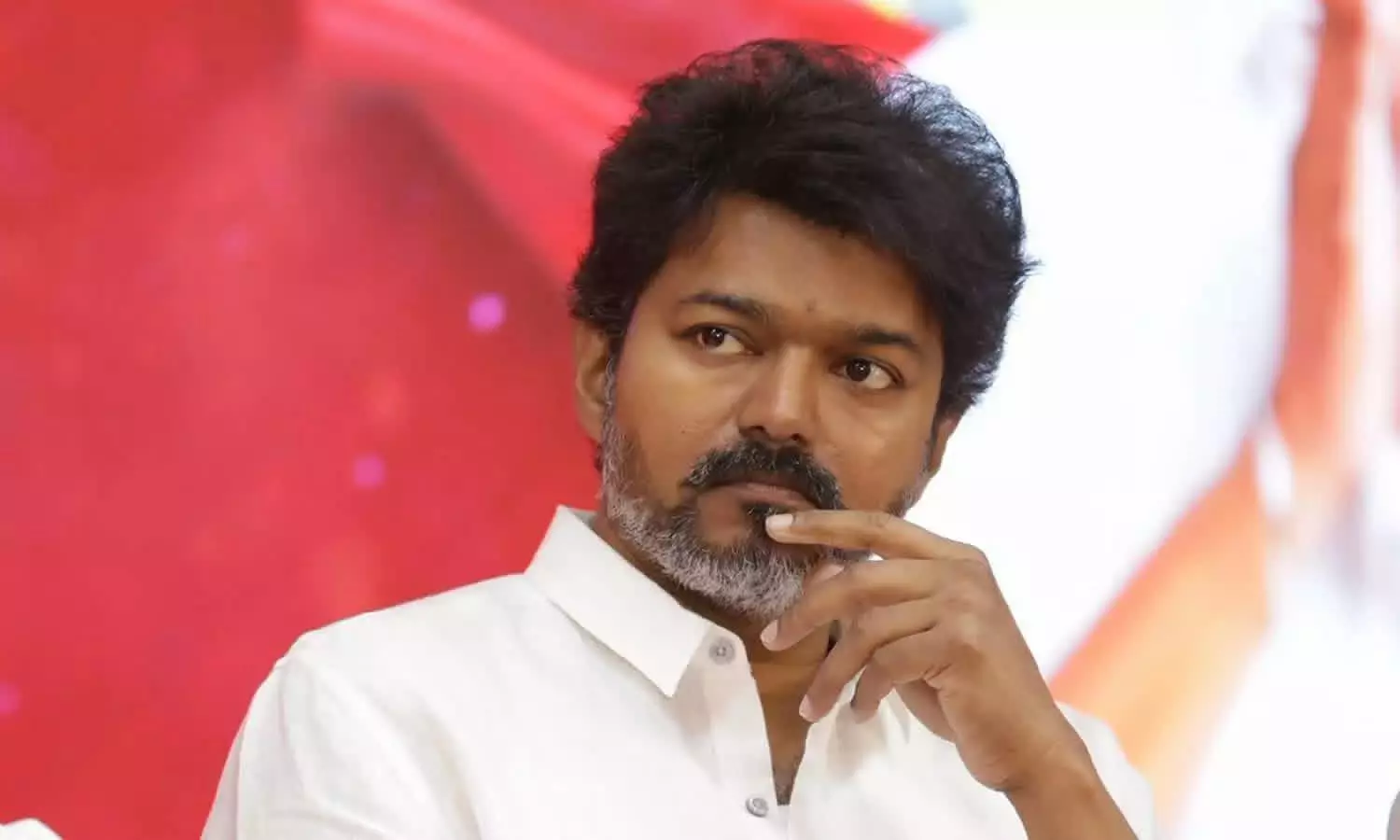
The announcement by actor Vijay’s Tamilaga Vettri Kazhagam (TVK) that it plans to contest the 2026 Tamil Nadu Assembly elections independently has triggered intense debate in political circles. With strong alliances already in place among major parties such as the DMK and the AIADMK, some political commentators have warned that a new party with limited electoral experience contesting all 234 constituencies alone could amount to “political suicide.” Reports suggest that some of Vijay’s close friends and senior advisers have urged him to reconsider the decision. Their central argument is that for a newly formed party, securing victories independently is an enormous challenge and could ultimately benefit the major political players.
Both the DMK and the AIADMK, the two dominant Dravidian parties, have decades of electoral experience and strong vote banks across the state. Even these parties, despite their organisational strength, rarely contest elections entirely on their own and instead prefer building broad alliances by bringing smaller parties into their fold. In such a scenario, critics argue that if Vijay contests independently, his chances of victory may largely be limited to the constituency he personally contests or a few areas where his individual influence is particularly strong. Even if the party manages to secure a notable share of votes statewide, converting those votes into constituency-level victories could prove difficult. The question has begun to surface even among supporters: did Vijay launch his party merely to help another major party win?
Another concern raised by Vijay’s close associates is the challenge of simultaneously opposing both the Central and State governments. Taking on the political power of the BJP-led government at the Centre while also confronting the ruling DMK in Tamil Nadu could place enormous pressure on a newly formed political party. According to those offering advice to Vijay, confronting two powerful political poles at the same time could hinder the party’s growth. They also believe that antagonising both centres of power simultaneously might create unnecessary legal and administrative challenges during the election period.
Political observers also point out that when anti-incumbency votes are split among multiple parties, it often ends up benefiting the ruling party. If Vijay contests independently, the votes his party attracts could potentially divide the opposition vote, weakening the AIADMK’s chances and indirectly aiding the DMK’s return to power. Alternatively, a split in the Dravidian vote could also open political space for the BJP to expand its influence in the state. In such a scenario, critics argue, Vijay could end up becoming a factor that determines others’ victories rather than emerging as a “kingmaker” himself.
Some of Vijay’s political advisers and friends reportedly believe that instead of joining a coalition merely as one among many partners, it would be strategically wiser to lead a strong alliance. They emphasise that forming alliances is not necessarily a compromise of ideology but rather a pragmatic electoral strategy. According to them, only a broad alliance can provide the political and financial strength needed to counter the pressures from both the Central and State governments.
Despite these concerns, Vijay appears to remain firm in his decision to follow an independent political path. So far, he has reportedly reiterated to party functionaries that TVK will contest the elections on its own. However, as the election approaches, evolving political realities could still influence strategic decisions.
For Vijay, who aims to present an alternative to the traditional Dravidian political structure, the coming months will be crucial. Whether he can overcome these challenges and establish his party as a significant political force remains one of the most closely watched questions ahead of the 2026 Tamil Nadu Assembly elections.