V.K. Sasikala Chooses Avadi Seat, Signals Comeback Strategy in Tamil Nadu Politics
New party launch and Avadi candidature position Sasikala for a direct contest with DMK and AIADMK, aiming to reshape opposition vote dynamics.

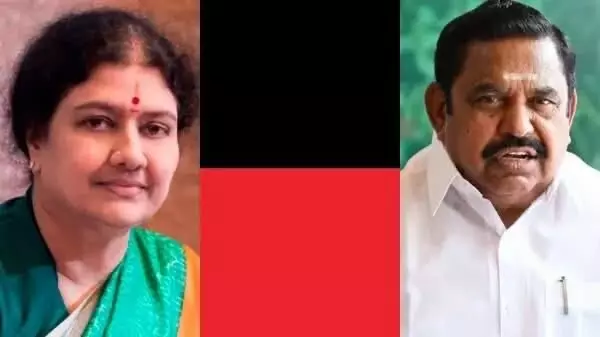
Chennai: In a move that has stirred fresh debate within Tamil Nadu’s political circles, V. K. Sasikala has chosen the Avadi constituency near Chennai as her electoral battleground, marking a significant shift in her political strategy after a prolonged hiatus.
The decision comes alongside the launch of her new outfit, the All India Puratchi Thalaivar Makkal Munnetra Kazhagam, under the “Thennanthoppu” (palm grove) symbol—an attempt to carve an independent political identity after years of factional battles within the All India Anna Dravida Munnetra Kazhagam following the death of J. Jayalalithaa.
A Calculated Departure from Southern Strongholds
Sasikala’s choice of Avadi has raised eyebrows among political observers. Traditionally perceived as having a strong support base in southern districts, her pivot to a constituency on Chennai’s outskirts suggests a broader ambition—to transcend caste and regional confines and project herself as a statewide leader.
Analysts point out that contesting from the south could reinforce her image as a community-centric figure. By contrast, a victory in Avadi—closer to the state capital—would carry greater symbolic and political weight.
Additionally, Avadi’s demographic mix, which includes a sizeable population with roots in southern Tamil Nadu, may offer Sasikala a familiar voter base within an urban setting.
The Avadi constituency is far from an easy contest. It is currently represented by S. M. Nasar of the Dravida Munnetra Kazhagam, who secured a decisive victory in the last election and continues to wield considerable influence.
On the other side, the AIADMK retains a strong organisational presence, with leaders like K. Pandiarajan maintaining a foothold in the region. This sets the stage for a triangular contest with high political stakes.
Sasikala’s gamble appears rooted in her enduring appeal among a section of AIADMK cadre, many of whom still regard her as “Chinnamma.” If even a fraction of this support translates into votes, it could dent the AIADMK’s electoral prospects significantly.
Her entry into the fray is thus seen not merely as an attempt to win a seat, but as a strategic intervention aimed at reshaping the opposition space—particularly challenging the leadership of Edappadi K. Palaniswami within the AIADMK.
Whether the Avadi experiment yields electoral success remains uncertain. However, politically, it marks a decisive moment in Sasikala’s comeback bid. By choosing a high-stakes constituency and confronting entrenched players, she appears intent on reasserting her relevance in Tamil Nadu politics.
For now, her Avadi move is being closely watched—not just for its electoral outcome, but for its potential to redraw alignments within a fragmented opposition landscape.